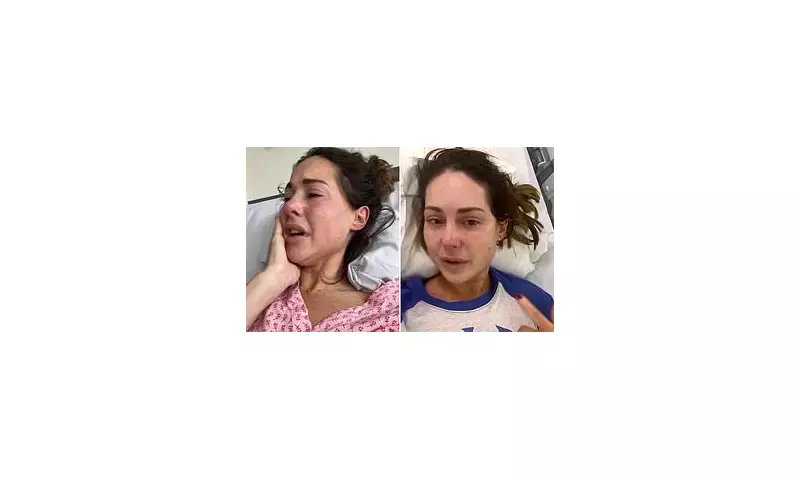
Reality television star Louise Thompson has released deeply emotional and previously unseen footage from her traumatic childbirth experience, while simultaneously calling for an urgent meeting with Health Secretary Wes Streeting to address what she describes as systemic failures in UK maternity care.
A Personal Ordeal Fuels National Campaign
Four years after her own harrowing experience, the Made In Chelsea personality has partnered with former Conservative MP Theo Clarke to spearhead a campaign demanding the appointment of a dedicated maternity commissioner. This collaboration follows a comprehensive Parliamentary inquiry, led by the pair, which uncovered what they term 'shockingly poor quality' within maternity services nationwide.
Thompson, who was diagnosed with Post-Traumatic Stress Disorder following the difficult birth of her son Leo in 2021, shared the poignant videos on her Instagram platform. She dedicated her post 'to those who didn't survive or lost their babies,' framing her advocacy within a context of collective grief and urgent need for change.

Launching a Petition for Parliamentary Debate
The star has formally launched a public petition calling for the establishment of a maternity commissioner. She is urging her substantial following to add their signatures, with the goal of reaching 100,000 signatories to trigger a debate in Parliament. In her powerful narration accompanying the videos, Thompson articulated the widespread nature of the issue.
'I didn't know birth could break you,' she stated. 'Women are leaving maternity care injured and silenced. Some are living with pain that never goes away. Some lose their mental health, so don't feel safe in their bodies anymore. And some babies don't survive. This isn't rare, this isn't unavoidable, this isn't acceptable in a country like ours.'
She emphasised the lack of overarching strategy and accountability, saying, 'We don't have a national maternity strategy, and we need one. We don't have one person accountable for protecting birthing parents and their babies, and we need one.'
The Lasting Impact of Trauma
Thompson has previously disclosed that the injuries sustained during childbirth, which include developing Asherman's Syndrome—a condition where scar tissue causes the uterine walls to adhere—along with worsening bowel problems and emergency surgery after a post-natal haemorrhage, have rendered her unable to carry another child.
Speaking recently, she also revealed the profound psychological aftermath, admitting that her experience made her wary of being around other pregnant women, feeling like a 'black cloud' in their presence due to her own trauma.
Parliamentary Inquiry Reveals Systemic Failings
Thompson and Clarke established the Birth Trauma All-Party Parliamentary Group in the summer, leading to the first national inquiry into this critical issue. A damning 2024 report into the 'postcode lottery' of NHS maternity care concluded that good care is 'the exception rather than the rule'.
The inquiry gathered evidence from more than 1,300 women, including testimonies of new mothers left in blood-soaked sheets for hours and others verbally chastised by midwives. One woman carrying twins, who went into premature labour at 19 weeks, was told by a consultant to 'stop stressing' after losing her first baby. Another, dismissed as merely 'anxious', later lost her baby to complications she had repeatedly warned about.
The report's stark finding was that 'poor care is all too frequently tolerated as normal, and women are treated as an inconvenience.'
The Scale of the Problem and Financial Cost
The Birth Trauma Association charity estimates that approximately 20,000 women develop post-natal PTSD each year, with up to 200,000 more feeling traumatised by childbirth and exhibiting symptoms of the disorder. The financial implications for the NHS are staggering, with around 65 per cent of the budget for clinical negligence claims—totalling £69.3 billion in 2022-23—relating to maternity and neonatal liabilities.
An interim report into England's maternity services published in early December by Baroness Amos acknowledged that the system is 'still struggling to provide safe, reliable maternity and neonatal care everywhere in the country.'

A Call for Standardised Care and Action
In her social media plea, Thompson connected the 30,000 signatures already on her petition to the estimated 30,000 women who develop PTSD after childbirth annually. 'This number is significant,' she wrote. 'I believe that we NEED a maternity commissioner in this country - because every woman deserves the right to a safe and dignified birth.'
She called on the government to enact some of the 748 recommendations made from various inquiries over the past decade, stating, 'We need standardised care for all. Childbirth is the inception of life. What is more important than that?'
Thompson concluded with a direct appeal for engagement: 'So if you've given birth, if you love someone who has, if you believe that women deserve to leave childbirth whole, then please sign here, please share this, please don't scroll past it. This is for all those that didn't make it, and for every parent who deserved better.'