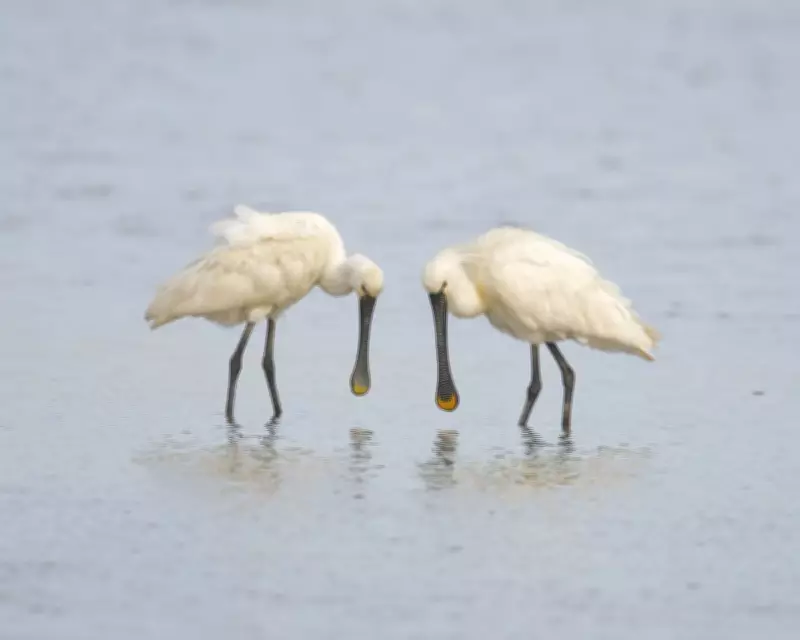
Spoonbills Illuminate a Rain-Soaked Somerset Ramble
In the heart of Somerset, a seemingly dreary and waterlogged walk transformed into an extraordinary wildlife spectacle, as a flock of rare spoonbills graced the wetlands. This encounter underscores the unexpected joys of braving Britain's inclement weather for nature enthusiasts.
A Damp but Determined Excursion
Setting out under grey, drizzling skies, the initial prospects appeared bleak, with mud squelching underfoot and rain peppering the landscape. However, perseverance paid off as the sodden terrain revealed its hidden treasures. The wetlands, swollen from recent downpours, created an ideal habitat for aquatic birds, setting the stage for a remarkable sighting.
The Spoonbill Spectacle
Amidst the reeds and shallow pools, a group of spoonbills—distinguished by their unique spatulate bills and elegant white plumage—were observed foraging. These birds, a rare sight in the UK, are known for their distinctive feeding technique, sweeping their bills through water to catch small fish and invertebrates. Their presence in Somerset highlights the region's ecological significance as a haven for migratory and resident species.

Weather as an Ally, Not an Obstacle
Contrary to common assumptions, wet conditions often enhance birdwatching opportunities. The rain dampens noise, making it easier to approach wildlife, and encourages birds to congregate in open areas. This walk demonstrated that adverse weather can unveil nature's subtleties, from the shimmer of water droplets on foliage to the heightened activity of wetland fauna.
Conservation and Community Insights
The sighting of spoonbills in Somerset is not merely a stroke of luck but a testament to ongoing conservation efforts. Wetland preservation projects have helped restore habitats, supporting biodiversity and attracting rare species. Local birdwatching communities play a crucial role in monitoring these populations, contributing valuable data to environmental studies.
Embracing the elements can lead to profound connections with the natural world. This experience serves as a reminder that Britain's landscapes, even when drenched, offer unparalleled opportunities for discovery and appreciation of wildlife.