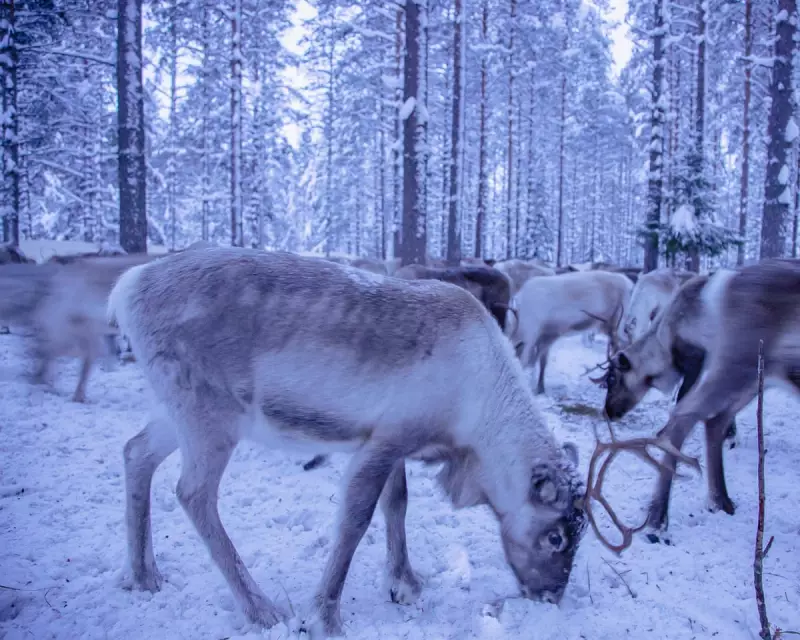
Iconic Arctic reindeer are facing a paradoxical and severe threat from climate change, as warmer winters create icy barriers that prevent them from reaching their vital food sources. This environmental shift is now directly linked to declining birthrates within herds across Scandinavia.
The Icy Barrier: How Rain-on-Snow Events Starve Reindeer
Reindeer are superbly adapted to survive bitter Arctic winters. Their specially evolved hooves allow them to scrape through deep snow to forage on the lichen and moss beneath, a critical food reserve. However, a warming climate is triggering more frequent 'rain-on-snow' events. When rain falls onto snow, it melts and then refreezes, forming hard, impenetrable layers of ice over the vegetation.
This icy crust locks away their food, forcing the animals to expend immense energy scraping with little reward. The problem is intensifying; climate records dating back to 1960 confirm that warmer winters are increasing these rain-on-snow occurrences across the Arctic.

Research Links Ice to Falling Birthrates
The direct impact on reindeer populations has been quantified by scientists. By comparing historical weather data with detailed herd statistics from Norway and Finland, researchers established a clear pattern. Birthrates within reindeer herds consistently drop in the summers following winters with high numbers of rain-on-snow events.
The findings, presented at the American Geophysical Union's annual conference in New Orleans in December, revealed these damaging weather events are not only becoming more common but are also starting earlier and spreading into interior regions. Areas supporting dense reindeer populations are suffering the most, as increased competition for the scarce, accessible food exacerbates the crisis.
Conservation Implications and Future Herding
This research provides crucial evidence for conservationists and indigenous herding communities. Understanding the link between winter weather patterns and herd health is vital for sustainable management. The study suggests that land-use planning could help mitigate the impact, potentially by ensuring herders have winter access to geographical regions less affected by rain-on-snow events.
The plight of the reindeer stands as a stark indicator of the rapid and complex changes underway in the Arctic ecosystem. It underscores how climate change can disrupt ancient survival strategies, threatening both wildlife and the cultures that depend on it.