
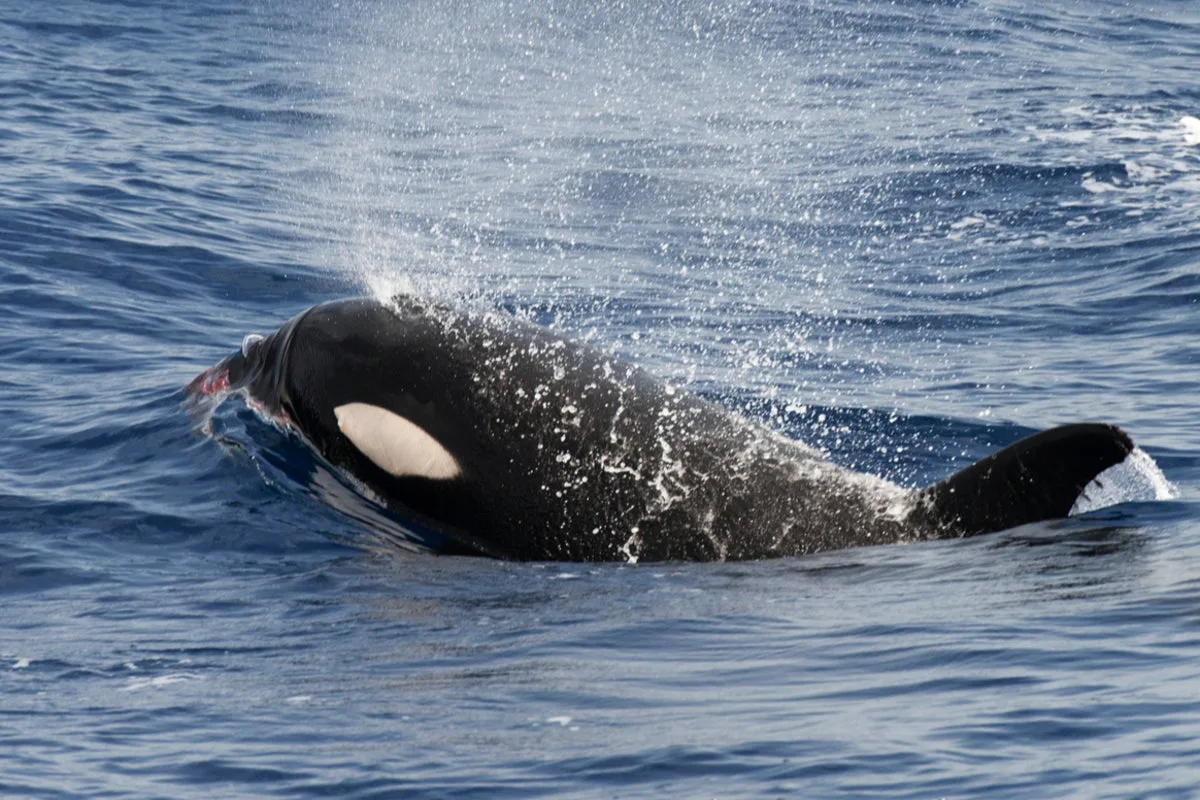
When three killer whales struck the Lady L, Heath Samples thought a tanker had collided with his yacht, as everyone on board was knocked off their feet. After the orcas repeatedly buffeted the yacht, the British businessman was forced to call mayday and feared for his life. “It was terrifying. We thought, if we are thrown in the water, what are they going to do to us? They have just thrown a 10-tonne yacht all over the place, what are they going to do to you?” says Samples, reliving the run-in off the coast of southern Spain.
According to 2024 research and the International Whaling Commission, at least 673 incidents have been documented since May 2020, prompting a nautical riddle: Why do orcas attack boats? Samples, 57, a businessman and experienced yachtsman from Scarborough, Yorkshire, suffered £24,000 damage to his yacht, which took 11 months to repair after it was attacked in 2022. The latest incident of orcas hitting a boat came off the coast of Portugal earlier this week – with four people needing to be rescued. It was the third such attack on a boat in the past seven days.
Scientists are currently studying the underwater “dialect” that killer whales use, to see if they can solve the puzzle which has alarmed sailors navigating through the Strait of Gibraltar, one of the world’s busiest seaways, running between Spain and Morocco. Convinced the orcas are playing with yachts much like children toy with anything to hand, researchers do not believe that when the marine mammals ram boats’ rudders, it is an aggressive act, even if sailors are often shaken up.
Killer whales communicate in a dialect of sounds at between 1-50 kilohertz, most of which can be heard by humans. Dr Javier Almunia, of the Loro Parque Foundation, a research institute based in the Spanish Canary Islands, is using floating buoys to record the “dialect” that killer whales use when they hunt tuna in the Strait of Gibraltar. Dr Almunia wants to compare these sounds to the ones the orcas make during “interactions” with boats.
“In some cases, the killer whale makes a ‘joyful call’ when they finish a catch of tuna. Once they kill the tuna, they share the food, and it is a playful interaction. If we can find that during interactions [with boats] it is the same, then it will help us to understand this. Is it an aggressive interaction or playful interaction?” he tells The Independent. “I am more inclined to think it is playful interaction. When the animals approach the vessel, they are approaching the rudder in a gentle way; they are exploring the environment. When you have a four-tonne animal playing with a sailboat, the perception for the people on board… is that they are being attacked, but if you look at their movement underwater, it looks like a playful event.”
Dr Almunia, whose research is backed by the Conservation, Information and Study on Cetaceans research body, the Spanish Ministry for Ecological Transformation and the Sea Observer company, says orca could sink small sailing boats if they wished but, apart from a few rare cases, they have not done this. “These animals have the strength to probably sink one of these sailboats, but it has only happened in a few cases when it has broken the fibreglass. But in those cases, they were playing with the rudder,” he says.




