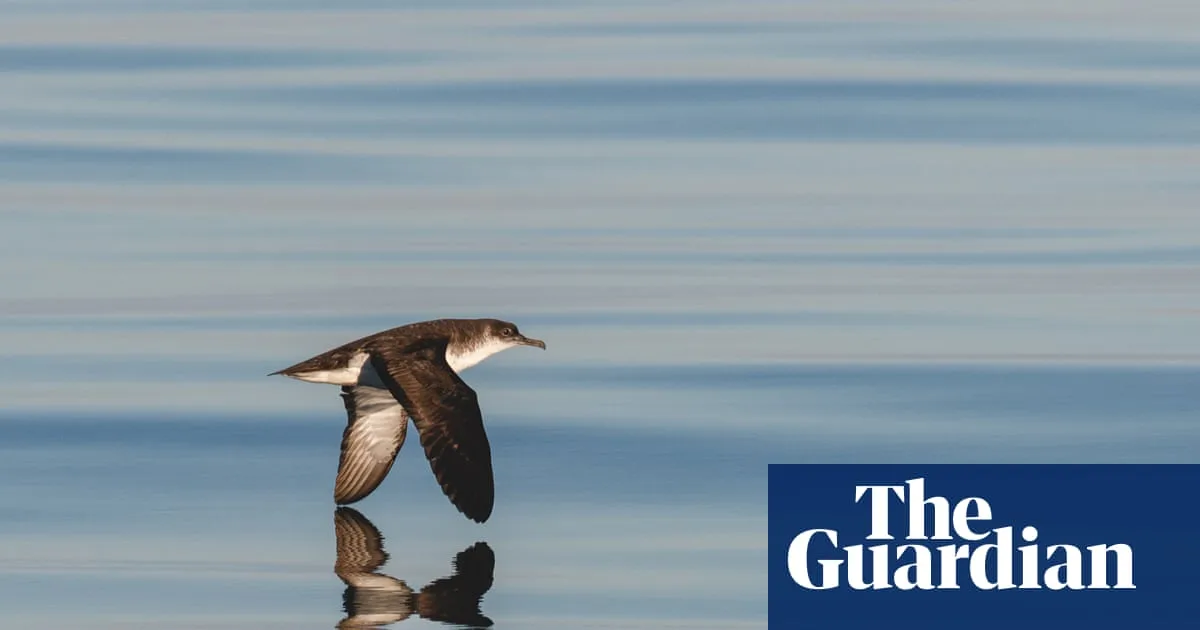
With many harbingers of spring arriving early this year due to the warming climate, birdwatchers on the Isle of Man have been asking whether the island's famous Manx shearwaters would also return ahead of schedule. Last week, on St Michael's Isle in the Langness peninsula, the first birds were spotted sweeping over the Irish Sea, right on time.
The Manx shearwater takes its name from the Isle of Man, a distinction granted in 1835 because of the large colony on the Calf of Man, an island off the south-west corner. That population was devastated by rats from a shipwreck, but after a successful rodent eradication programme by the Manx Wildlife Trust, numbers have rebounded to more than 1,500 breeding pairs.
Watching from the shore with a telescope, the distinctive sweeping flight of the 'Manxies' appeared within about 30 minutes. These birds had just completed a round trip of 10,000km from their wintering grounds off Brazil and Argentina, returning to occupy their nest burrows on the Calf.
Each pair will raise a single chick, which will be left in July or August. The young bird will then set off alone on that epic journey to join the adults in the southern hemisphere.
For many, these birds hold a special appeal. One observer recalled seeing them from Tierra del Fuego to the Isle of Rùm, but a memorable early encounter at Dungeness in Kent, where 'sea watchers' lay on their backs with telescopes trained on the Channel, left a lasting impression. The shearwaters' arrival home was very welcome indeed.