Farmer Exposes 'Ridiculous' Waste Licence System by Registering Cow as Official
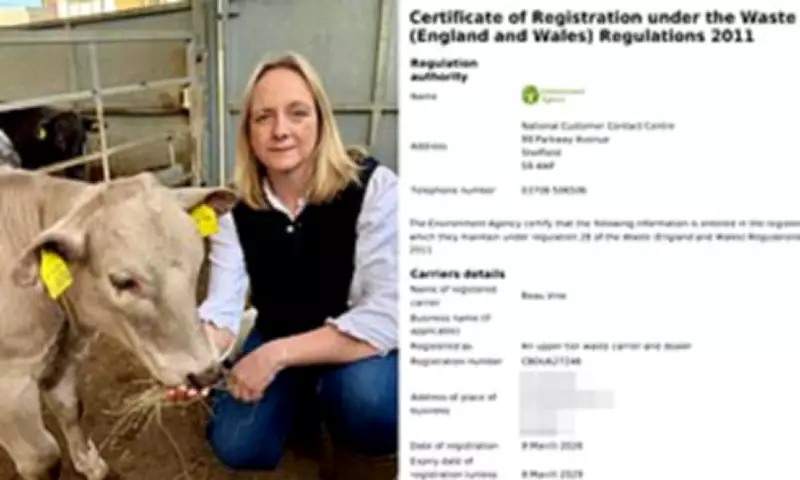
A farmer has exposed what she calls a "ridiculous" licence system that allows criminals to blight the countryside with flytipping, by successfully registering her prize cow as a legitimate waste disposal official. Ann Maidment, a 42-year-old rural surveyor and director of the Country Land and Business Association's South West branch, took just five minutes and £184 to sign up her animal, Beau Vine, highlighting severe flaws in the process.
Lax Checks Enable Criminal Exploitation
Ms Maidment, who works on her family's cattle and horse farm in north Wiltshire, made the move after their farmland fell victim to flytipping. She aimed to demonstrate how easily criminals can pass themselves off as waste management businesses to the public, due to a lack of formal identity, business, or criminal record checks. "A system that cannot stop a cow cannot stop a criminal," she told the Daily Mail, adding that Beau excels at eating grass and lounging in the sun, but waste management remains beyond his remit.
The application process for a waste carrier, broker, or dealer licence through the Environment Agency involves providing a name, address, and contact details, along with a fee of just under £200. However, applicants are not required to submit any official identification or proof of business credentials. They simply tick a box to confirm no history of environmental offences, but without verification, it is unclear how the agency ensures truthfulness.

Immediate Approval and Public Risk
Ms Maidment noted that the system approves applicants instantly, taking less than five minutes, which she fears smooths the path for more criminals to dump waste illegally. This allows rogue traders to charge unsuspecting members of the public for rubbish disposal, only to dump it on others' land instead. Flytipping costs the economy an estimated £1 billion annually, with councils dealing with 1.26 million cases in 2024/25, up from 1.15 million the previous year.
Mark Hall, a waste management expert at BusinessWaste.co.uk, emphasized that weak identity checks make it easier for bad actors to present themselves as legitimate operators. "This example underlines the potential for criminals to register under false or misleading identities to feign legitimacy," he said, urging stronger verification to tackle the ongoing flytipping problem.
Growing Crisis and Call for Reform
Official figures show that 52,000 cases across England involved tipper lorry loads or more of rubbish, an 11% increase, costing councils £19.3 million to clear. John Roberts, Chief Service Officer for Kingdom LA Supports, called for greater checks and public education, suggesting that submitting photos of driving licences or passports could help verify identities. He also stressed that waste carriers should provide documentation of where waste is taken, aiding enforcement if it ends up flytipped.
According to a survey by the CLA, nine out of ten farmers reported being victims of flytipping in the past year alone, with cleanup costs running into tens of thousands of pounds. In one case, a Hertfordshire farmer faced a £40,000 bill to remove roofing material and household rubbish from his land.
Government Response and Future Measures
The government is now planning to update the registration system to introduce stricter background checks and enforce tougher record-keeping requirements. A Department for Environment, Food and Rural Affairs spokesperson stated that waste crime is a scourge on local communities, with reforms to the carriers, brokers, and dealers regime underway. This includes a £43 million boost to waste crime enforcement and tougher sentences for offenders, though no timeline for implementation has been provided.
Ms Maidment concluded, "The government needs to introduce more urgent checks, verification and standards, so that it's not a simple rubber stamping exercise for fly tippers. And then we can start protecting the countryside and the community that they harm so much."