Kabul's Water Crisis Deepens as Aquifers Deplete and Population Swells
Kabul Faces Severe Water Crisis as Groundwater Vanishes

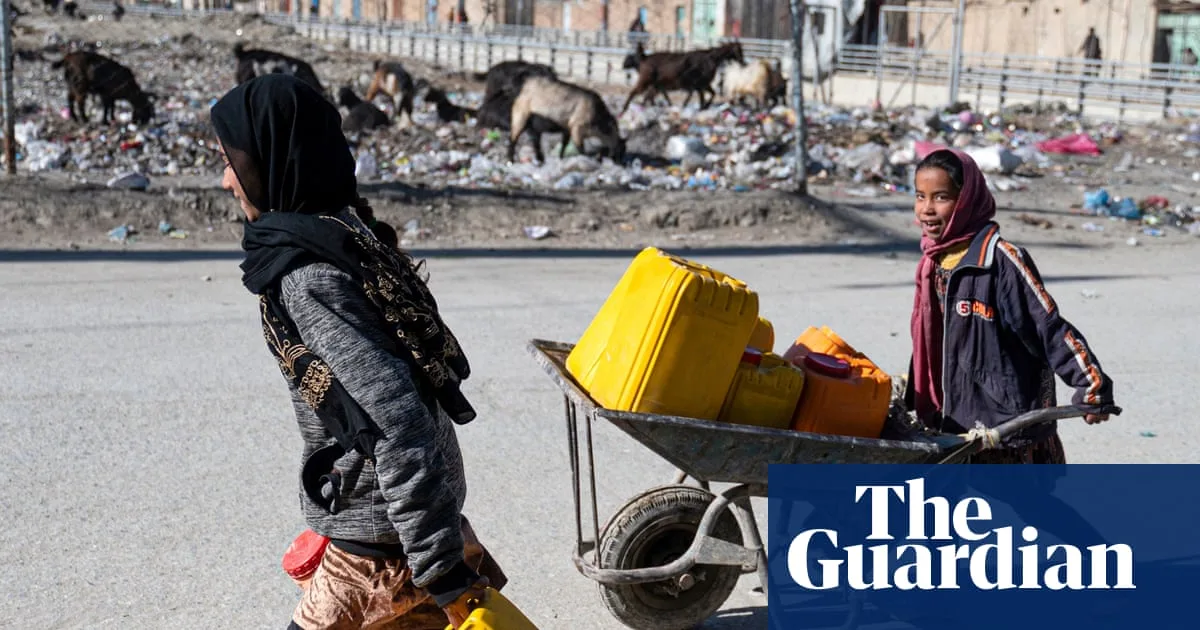
Kabul's Dire Water Shortage Leaves Residents Carrying Heavy Burdens

Afghanistan's capital city, Kabul, finds itself in the tightening grip of a severe water crisis. Nestled within a high-altitude valley of the Hindu Kush mountain range, the city is rapidly depleting its precious water resources, creating immense hardship for its swelling population.

Daily Struggle for Basic Necessity

In the poorer neighborhoods of Kabul, the crisis manifests in back-breaking labor. Marofa, a 52-year-old resident of Deh Mazang, revealed her thick grey-white hair with frustration. "You see this hair? Even I with my white hair, I have to carry water," she declared, highlighting the physical toll. "These containers are heavy. We have no strength left in our backs, no strength left in our legs."

While a local mosque provides free water from its well, the supply is undrinkable—yellow and brackish—forcing residents to carry it for other uses. Potable water arrives via three-wheeled motorcycles and is sold at prices many cannot afford. "We have no money for food. How can we get water?" asked 90-year-old Wali Mohammad, his rage palpable.

Wide Pickt banner — collaborative shopping lists app for Telegram, phone mockup with grocery list

Residents report that shortly after the Taliban's 2021 takeover, authorities cut pipes some had installed to siphon water from a communal well to their homes. "They cut off our water. They are powerful and they don't even give us a reason why," Mohammad said. However, another resident, Najibullah Rahimi, 32, explained that these private pipes caused the well's water level to drop, leaving uphill residents without any water, prompting the government's intervention.

Alarming Groundwater Depletion

Kabul's population relies predominantly on groundwater extracted from wells, but this resource is receding at an alarming rate. Some wells now must be dug as deep as 150 meters (nearly 500 feet) to reach water. A Mercy Corps report from April 2025 revealed that Kabul's aquifer levels have plunged by 25-30 meters (approximately 80-100 feet) over the past decade.

Aquifers, which hold massive amounts of water deep underground, recharge slowly as precipitation seeps through the earth. Excessive extraction and climatic changes that reduce water input lead directly to depletion. The Mercy Corps report warned starkly: "Without large-scale changes to Kabul’s water management dynamics, the city faces an unprecedented humanitarian disaster within the coming decade, and likely much sooner."

Compounding Factors: Climate and Population

Climate change, driven largely by burning fossil fuels like gasoline, oil, and coal, has exacerbated the crisis. Repeated droughts have diminished snowfall, which traditionally provided gradual melting to replenish groundwater. Instead, Kabul now experiences more sudden, heavy rainfall that causes flooding but fails to adequately recharge the aquifers.

Najibullah Sadid, a Germany-based water resources expert with the Afghanistan Water and Environment Professionals Network, emphasized that climate change has only compounded a long-developing crisis. "Even without climate change Kabul would have seen this crisis, with the enormous, unprecedented increase in population and urbanization," Sadid stated.

The city's population has more than doubled since 2001, swelling from around 2.5 million to an estimated 6 million people. This growth includes major influxes of returning Afghans after the Taliban's initial fall and more recently from expulsions from Pakistan and Iran. In some areas, shallow aquifers have already run completely dry.

Recent rains provide little relief because extensive urbanization has covered natural ground with impermeable surfaces. "Even if it is raining every day, it will not impact groundwater levels anymore, because there is no place to impact the groundwater," Sadid explained. Mismanagement further compounds the problem, with beverage companies and greenhouses cited as significant consumers of groundwater.

Government Response and Infrastructure Projects

Authorities acknowledge the severity of the situation. "The water situation in Kabul city is in a critical state," said Ministry of Water and Energy spokesman Qari Matiullah Abid, citing population growth, decreased rainfall, and increased consumption as primary causes.

Pickt after-article banner — collaborative shopping lists app with family illustration

The government has implemented several measures, including restrictions on groundwater extraction for commercial users like beverage companies and farmers. Water meters and quotas have been installed for businesses such as car washes and large buildings, with violators facing orders to relocate from Kabul.

To aid groundwater replenishment, authorities have constructed check dams across waterways in Kabul's 14 districts and dug thousands of absorption wells to manage stormwater. Abid also highlighted completed projects like the Shah wa Arous Dam, inaugurated in 2024 with a capacity of 10 million cubic meters, and sediment removal from Qargha Dam to increase reservoir capacity.

Delayed Major Solutions

Despite these efforts, two major projects that could significantly alleviate the crisis face delays. A roughly 200-kilometer pipeline from the Panjshir River north of Kabul and the planned Shah Toot Dam about 30 kilometers southwest of the city together could provide water for approximately 4 million people.

"A combination of both would be a sustainable solution for the future," said Sadid, noting that while dam construction would take years, the pipeline could be completed relatively quickly. Shafiullah Zahid, Kabul Zone Director for the state water corporation, confirmed the Panjshir pipeline's $130 million budget approval but indicated revised surveys require further review before practical work begins.

The Shah Toot Dam, originally a joint Afghan-Indian project announced before the Taliban takeover, has encountered funding delays. If construction commences, completion would take six to seven years. Sadid criticized both current and previous governments for prioritizing visible infrastructure like roads and flyovers over fundamental water projects. "They are just doing the projects which are eye-catching and not the projects which are fundamental to the people’s health and people’s fundamental rights. Water is essential. Water is more important than roads."