Lynx Reintroduction in Scotland: Charities Seek to Win Over Skeptical Highlanders
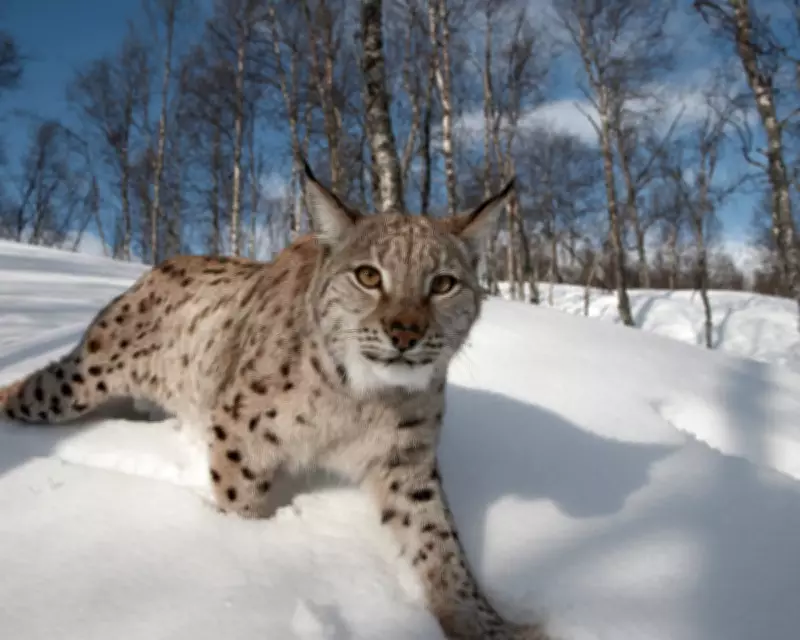
Could the elusive lynx, driven to extinction in Britain over a millennium ago, become a new symbol of Scottish wildlife akin to the Loch Ness monster? "Whether Nessie's there or not, she draws tourists," remarked Margaret Luckwell, a resident of Moray, Scotland. "It would be the same with lynx. I'd love to see a lynx in the wild." This sentiment reflects a growing majority among Scots, as a painstaking consultation gains momentum for the apex predator's return to Scottish forests.
Building Support Among Opponents
The Lynx to Scotland charity coalition, comprising Trees for Life, Scotland: The Big Picture, and The Lifescape Project, is not merely aiming to bolster existing support—61% of Scots favor reintroduction according to a 2025 poll—but to cultivate acceptance among those likely to remain opposed. This includes farmers, gamekeepers, and deer stalkers, whose livelihoods could be impacted. Over the past month, 42 information sessions have been held across the Highlands, with plans for numerous one-to-one conversations this spring to develop a robust licence application.
At a recent consultation event in Fochabers, which drew 70 attendees on a frigid day, the charities were strikingly candid about the challenges. "We're not saying they won't take sheep—they absolutely will," stated Steve Micklewright, chief executive of Trees for Life. "But their preferred prey is roe deer. My question is: can we get an animal like this back into the Scottish landscape and coexist with it, which we've forgotten how to do?"

Addressing Concerns and Compensation
The charities emphasize a fact-based approach, seeking to understand and overcome barriers to reintroduction. A 50-hour consultation last year with 50 stakeholders identified predation of sheep and game as primary concerns. Now, efforts are underway to devise compensation schemes for potential losses. However, a significant minority remains implacably opposed. Rob Green, a visitor to the Fochabers session, questioned the rationale, asking, "Are they going to reintroduce polar bears because polar bear teeth have been found in the north of Scotland?"
Others, like Jenny from Garmouth, countered this view, noting, "The landscape we have in Scotland is not our natural landscape. It's been created by the introduction of sheep." Trees for Life has dedicated six years to this initiative, with Micklewright admitting, "We've almost run out of money, if I'm honest." Fundraising efforts continue, with any reintroduction plan needing to be self-funding, including compensation, for at least five years to avoid burdening the government.
Political and Legal Hurdles
Despite criticism from some rewilders over the slow pace, Micklewright asserts that a clear pathway to reintroduction has been forged. "It's a matter of when, not if, but the 'when' could be quite a long time away," he says. The Scottish government requires the effort to be "well supported" and "broadly accepted," the latter meaning opponents must grudgingly accept lynx rather than persecute them. This follows an illegal release of four lynx into the Cairngorms last year, speculated to be the work of frustrated rewilders, which led First Minister John Swinney to rule out legal reintroduction.
Nevertheless, Micklewright remains optimistic, noting that "politically it's all to play for," with support from some MSPs across parties and Reform UK candidates ahead of Holyrood elections. Conservationists believe that even if a licence application is rejected on political grounds, a thorough application could be challenged in court. Lisa Chilton, chief executive of Scotland: The Big Picture, warned of the risk of endless consultation, stating, "We could use that uncertainty as an excuse never to do anything, but that's not what we want from this."
Grassroots Efforts and Future Prospects
Is this grassroots campaign softening lynx-skeptics? A deer stalker at the Fochabers session expressed confidence that his job would remain, as lynx, with a potential carrying capacity of 250 animals in Highland forests, would barely dent Scotland's million-plus deer population. A forest manager voiced concerns about future regulations creating exclusion zones that could hinder timber production, crucial for a country importing 85% of its timber.

Donald MacLellan, a former farmer, stressed the importance of swift compensation, noting, "Losses are not just a sheep or a calf—there can be human generations breeding these animals to get the best." Yet, he is ready to accept lynx, suggesting that, like 20mph speed limits and the smoking ban, implementation could lead to public acceptance. Whether most Scottish farmers will follow suit remains uncertain, but the charity coalition persists in its mission to restore this iconic species to Scotland's wilds.