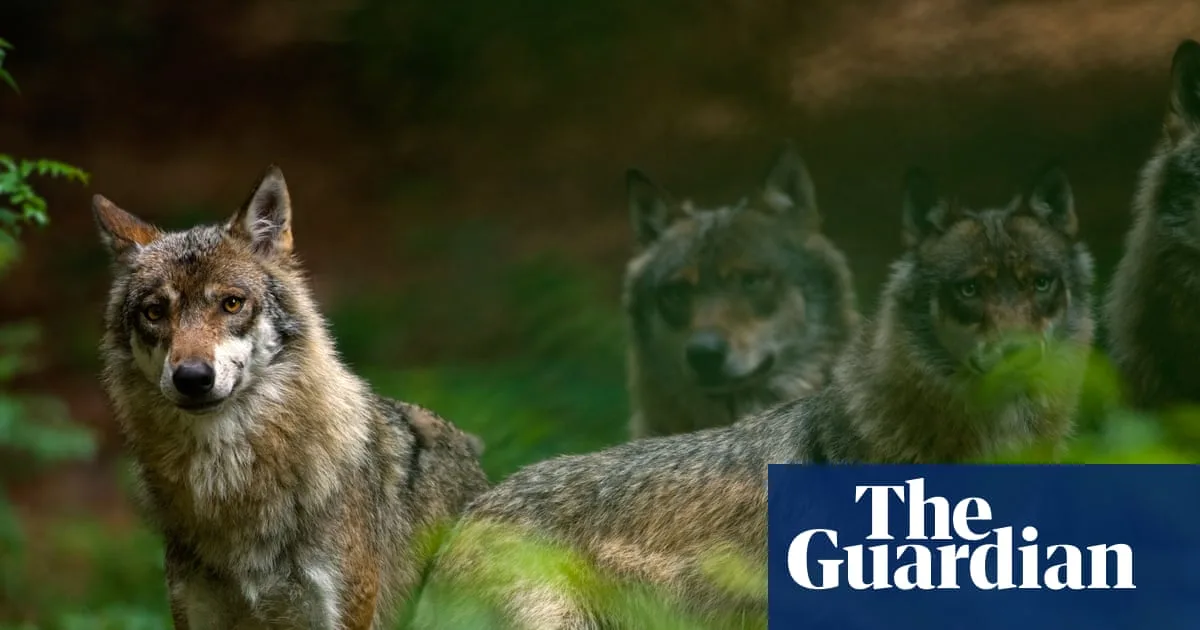
Germany's lower house of parliament has approved legislation to allow wolf hunting, responding to a rapidly growing wolf population and a sharp rise in attacks on grazing livestock. The draft law passed with votes from the centre-right governing coalition and the far-right Alternative für Deutschland (AfD), while the Greens and far-left Linke opposed it.
The legislation permits Germany's 16 states to allow wolf hunting from July to October in regions where wolves are particularly dense. Wolves previously found to have killed or attacked farm animals could be shot regardless of their conservation status or the season. The measure implements an EU amendment allowing exceptions to species protection, a change driven by the 2022 killing of a pony named Dolly belonging to European Commission President Ursula von der Leyen.
Hermann Färber of the Christian Democratic Union (CDU) told parliament that the suffering of grazing animals, which are often killed in the 'bloodlust' of wolves, no longer had anything to do with animal welfare. The German Hunting Association welcomed the legislation, and the Working Group on Rural Agriculture called it a small contribution to protecting sheep, goats and calves after a significant increase in attacks.
However, the Nature And Biodiversity Conservation Union (Nabu) urged the upper house, the Bundesrat, to block the law. Its wolf expert, Marie Neuwald, said species conservation in Germany must not be sacrificed for symbolic political action, and called instead for comprehensive herd protection with subsidies for fences and guard dogs. According to government statistics, about 4,300 farm animals were killed or injured by wolves in Germany in 2024.
Wolves were declared extinct in Germany in the 19th century but have made a comeback since 2000. An official study last year counted 219 packs, 36 couples and 14 individual animals. The vote came three days before Baden-Württemberg's election, where CDU candidate Manuel Hagel, an avid hunter, has taken a hard line on wolves. A 2022 study found a predictive link between wolf attacks and far-right voting behaviour in affected regions.