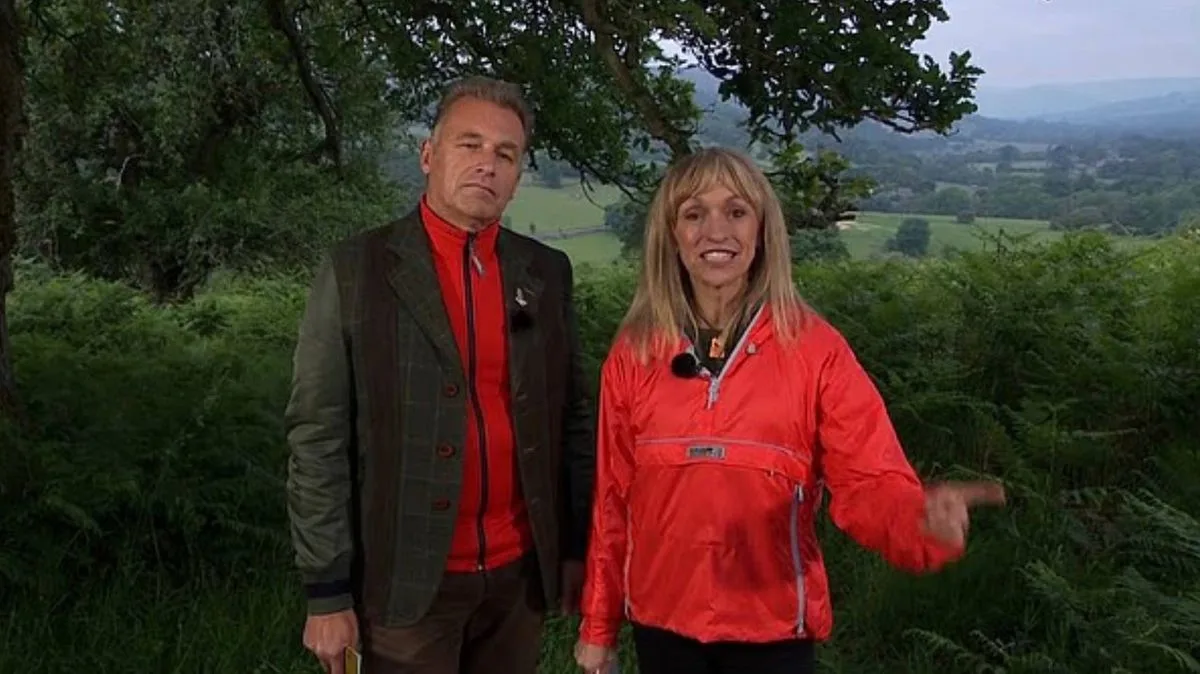
Chris Packham's Heartbreaking Discovery During Springwatch Filming in Peak District
Chris Packham's Tragic Discovery During Springwatch Filming

Chris Packham's Heartbreaking Discovery During Springwatch Filming

Esteemed BBC television host and naturalist Chris Packham has shared a deeply troubling observation from his time filming the popular series Springwatch in the Peak District National Park. The 64-year-old presenter, known for his passionate advocacy for wildlife, described a noticeable and concerning absence during his three-week stay in the picturesque region.

A Stark Absence in the Skies

Speaking candidly on the BatChat podcast in November, Packham expressed his enjoyment of the filming experience, praising the hospitality of local people and the beauty of the protected areas managed by the National Trust. However, he revealed a stark reality that cast a shadow over the production.

"At no point during the recording of Springwatch, and I was there for three weeks, did I see a single Buzzard or a single Kite flying over," Packham disclosed. He noted that while other fascinating wildlife, such as Dippers, were present, the skies were devoid of predatory birds outside the carefully managed zones.

The 'Raptor Death Zone'

Packham did not mince words when describing the surrounding areas, labeling them a "raptor death zone." This term typically refers to regions in the United Kingdom where birds of prey are illegally targeted and killed, often linked to land management practices. He drew a poignant comparison, stating it was "like peering over the fence and into the desert really, which is tragic."

The presenter directly connected this absence to the controversial practice of grouse shooting, particularly driven grouse shooting, where birds are flushed toward shooters. "You've got all these good people doing all this great stuff. And then, over the fence, you've got some reprobates, you know, with an industry that's completely underpinned by criminal activity," he asserted, highlighting a stark contrast between conservation efforts and alleged illegal activities.

The Grouse Shooting Controversy

Driven grouse shooting is a uniquely British practice that has long been a point of contention within environmental and conservation circles. The Royal Society for the Protection of Birds (RSPB) has voiced significant concerns, stating on their website that intensive management to boost grouse numbers can lead to illegal practices on an industrial scale.

The RSPB is actively campaigning for regulatory changes, calling on the UK Government to introduce a licensing system for grouse moor management in England and Wales, following recent legislative moves in Scotland. They argue that such measures are necessary to protect biodiversity and allow nature to thrive sustainably.

Glimmers of Hope Amidst the Gloom

Despite the distressing observations regarding birds of prey, the National Trust's Weather and Wildlife Review did report some positive news for avian populations in the Peak District. Species such as pied flycatchers at locations like Chirk Castle in Wales and Longshaw in the Peak District experienced successful fledging, attributed largely to favorable spring weather conditions that aided foraging and chick survival.

Packham's Personal Connection to Nature

This revelation is not the first time Chris Packham has opened up about his profound connection with the natural world. In a previous interview on the Homing podcast, filmed at his New Forest home, the naturalist, who was diagnosed with autism in his forties, shared insights into his routines with his pet dogs.

He explained that he consistently wears the same clothing during walks, a practice that stems from both his and his dogs' appreciation for established patterns. "I like the process of it being... part of my process of going to bed, is sharing the biscuit with them in that routine. So, those shared routines are very much an integral part of the relationship that I have with them," Packham reflected.

He also touched on the profound grief of losing a pet, recalling the devastating loss of his first dog, Max, and a bird earlier in his life, experiences that have deeply shaped his understanding of companionship and loss.

Chris Packham's heartfelt account from the Peak District serves as a powerful reminder of the ongoing challenges in wildlife conservation, juxtaposing the beauty of protected landscapes with the harsh realities of illegal practices that threaten iconic species like birds of prey.




