Tragic Plane Crash Claims Lives of British Wildlife Expert and WWII Hurricane Pilot in Namibia
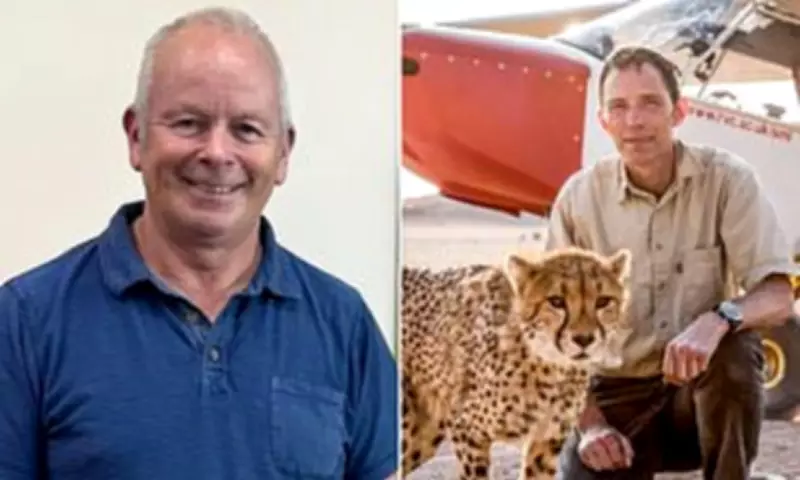
A British wildlife expert and a World War Two Hurricane display pilot have been killed in a devastating plane crash in Namibia while conducting vital wildlife research. Professor Alan Wilson, aged 62, and former airline pilot Neil Oakman, aged 63, died instantly when their light aircraft nose-dived into the remote Namib Desert shortly after take-off.
Fatal Flight During Wildlife Research Mission
The tragic incident occurred on Wednesday, March 4, 2026, at approximately 17:00 local time. The pair had taken off from the Gobabeb airstrip in a Groppo-Trail light aircraft belonging to Professor Wilson, embarking on what was believed to be the final flight of their research study. Their mission was to locate collared Oryx antelopes in the expansive dunes of the Namib Desert.
Senior air accident investigator Judith Shomongula confirmed that the aircraft either stalled or lost power while airborne, causing it to plunge nose-first into the desert terrain. The crash site was discovered at the end of the Gobabeb airstrip, located approximately 75 miles from the coastal town of Walvis Bay.

Concerned Colleague Discovers Wreckage
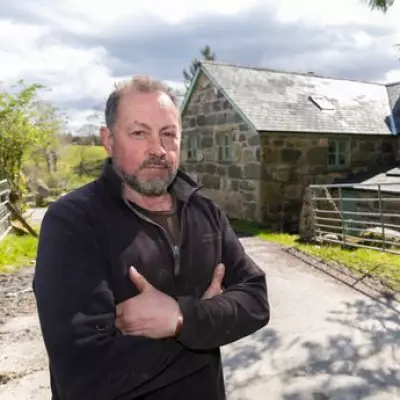
Fellow British researcher John Lowe, who had been working alongside the pair at the remote Gobabeb Research Station in the Namib-Naukluft National Park, became concerned when his colleagues failed to return after two hours. After initiating a search, he tragically discovered the wrecked aircraft. Police were immediately notified, and the bodies were transported to the Walvis Bay police mortuary.
Ms Shomongula stated: 'Three British nationals, John Lowe, Alan Martin Wilson, 62, and Neil Thomas Oakman, 63, came to Namibia on February 25 2026 for research. We all extend heartfelt condolences to the bereaved families.'
Distinguished Careers Cut Short
Professor Alan Wilson was a globally recognized expert in carnivores and their antelope prey, having featured in numerous BBC documentaries including Cat Watch: 2014 and The Secret Life of the Cat. As Professor of Locomotor Biomechanics at the University of Glasgow, he headed the Structure and Motion Laboratory and pioneered the LOCATE project in Africa, which focused on studying how predators and prey achieve their remarkable speed and maneuvering capabilities.
Professor Wilson and Mr Lowe had collaborated for over a decade, developing state-of-the-art GPS tracking collars and motion-sensitive cameras for studying wild animals. They were leading a significant project for the Royal Veterinary College, specifically tracking and studying Namibia's national animal, the Oryx antelope, in the harsh desert environment.
Neil Oakman was an exceptionally experienced pilot who had trained commercial pilots for Ryanair and served as a Hurricane display pilot operating from the former RAF Duxford in Cambridgeshire. He was the chief pilot of the historic Battle of Britain Hurricane VZ497. Friends described him as an 'extremely competent pilot' whose loss was 'tragic.' A close friend, Kathy Burnhill, noted he 'was really enjoying his work' in Namibia and would be 'missed by all who had the privilege of knowing him.'
Research Focus: The Oryx Antelope
The research team had been studying the Oryx, a large antelope species found throughout Africa and Arabia. These remarkable animals stand approximately 1.2 meters high, possess long straight horns, and display distinctive black markings on their faces and legs. Capable of surviving in arid desert conditions by extracting moisture from plants, Namibia is home to an estimated 373,000 Oryx, which rely on their speed and agility to evade predators such as lions, leopards, and cheetahs.
The innovative tracking technology developed by Professor Wilson and Mr Lowe included both GPS collars and specialized cameras fitted to the aircraft, enabling the capture of footage that would be impossible to obtain with handheld cameras.

Heartfelt Tributes and Condolences
A spokesman for Professor Wilson's alma mater, the University of Glasgow School of Biodiversity, One Health & Veterinary Medicine, paid tribute: '[Professor Wilson] pioneered novel GPS and motion tracking technologies for studying wild animals in their natural environment and he featured in a number of BBC wildlife documentaries. Our thoughts are with Anna and the rest of Alan's family as well as his colleagues and friends. He was truly a world expert in his field and will be dearly missed by so many.'
The Gobabeb Training & Research Centre expressed profound shock and sadness: 'We are deeply shocked and saddened by this tragic accident which has hit everyone at the facility extremely hard. We send our sincere condolences to the families, friends and colleagues of those who lost their lives and request privacy for the relatives during this traumatic time.'
The aviation community and scientific world mourn the loss of two distinguished British professionals whose groundbreaking work in wildlife research has been abruptly and tragically ended.