For many across the UK, houseplants offer a vital connection to nature, cleaner indoor air, and a simple touch of beauty. While blooms are fleeting, the unique foliage of certain succulents can provide year-round visual interest. Award-winning gardening columnist Jessica Damiano highlights five of the most striking varieties with unusual leaves that resemble everything from marine mammals to symbols of love.
Care Essentials for Thriving Succulents
Before diving into the peculiar shapes, it's crucial to understand their basic needs. All succulents demand well-draining potting mix, ideally a specialist cactus and succulent compost, and must be planted in a container with a drainage hole. The golden rule is to let the soil dry out completely before watering again. This prevents root rot, the most common killer of these drought-tolerant plants.
Krinkle Kurl: The Wavy Wonder
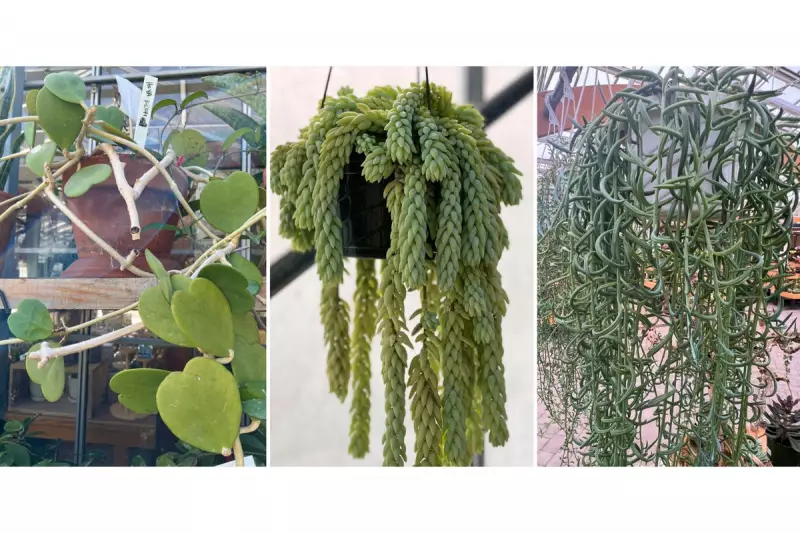
One standout is the Krinkle Kurl, scientifically known as Hoya carnosa. This vining plant captivates with its thick, waxy, and tightly packed leaves that are distinctly cupped. A slow-grower, it requires at least four hours of direct sunlight daily, making a south-facing window its ideal spot. During spring and summer, feed it with a half-strength all-purpose houseplant fertiliser every two months.

In a few years, small pink flowers may appear in warmer months, but the plant's main attraction remains its twisted, wavy foliage that provides constant texture and intrigue.
Burro's Tail & Sweetheart Hoya
Another eye-catcher is Burro's tail (Sedum morganianum). It earns its name from long, trailing stems densely covered in silvery-blue, teardrop-shaped leaves, reminiscent of an artichoke's scales. For maximum impact, hang it or place it high to let its pendulous stems, which can reach 4 feet, cascade freely. It thrives near a bright, south-facing window and needs fertilising only once each in spring and summer.
If cuteness were a contest, the Sweetheart plant (Hoya kerrii) would win. Often sold as a single, rooted heart-shaped leaf for Valentine's Day, it can also be grown as a full vining plant. It prefers bright, indirect light, suited to a north-facing window or the side of a brighter one. Fertilise every two to four weeks at half-strength during its growing season.
The Charming 'String' Cousins: Dolphins & Pearls
The aptly named String of Dolphins (Curio peregrinus) features curved leaves that uncannily resemble dolphins breaching the water, complete with fins. This easy-care plant performs best in a south-facing window. Water roughly once a month in autumn and winter, increasing to weekly or fortnightly in spring and summer. Feed just once a year with half-strength balanced fertiliser in spring.
Important note: String of dolphins is considered toxic to dogs and cats.
Its cousin, String of Pearls (Curio rowleyanus), sports spherical "pearls" along vines that can grow 3 feet long. Both plants were recently reclassified into the Curio genus. It requires bright, indirect light, infrequent watering, and monthly half-strength fertiliser in spring and summer. It is also toxic to pets.
Jessica Damiano writes weekly gardening columns for the Associated Press and publishes the award-winning Weekly Dirt Newsletter. Her advice, published on Tuesday 13 January 2026, helps gardeners of all levels cultivate their green spaces successfully.