Copenhagen's Cycle Success: How 40% Commute by Bike Boosts Urban Health
European Capitals Reveal Secrets to Livable, Healthy Cities

For many, the daily urban grind involves the angry roar of engines and the metallic tang of polluted air. But for environmental health scientists, these are not mere annoyances; they are quantifiable threats to public wellbeing. Across Europe, environmental factors are linked to 18% of deaths from cardiovascular disease and 10% of cancer deaths, with traffic accidents claiming five times more lives than homicides in the EU.

The Danish Model: Freedom on Two Wheels

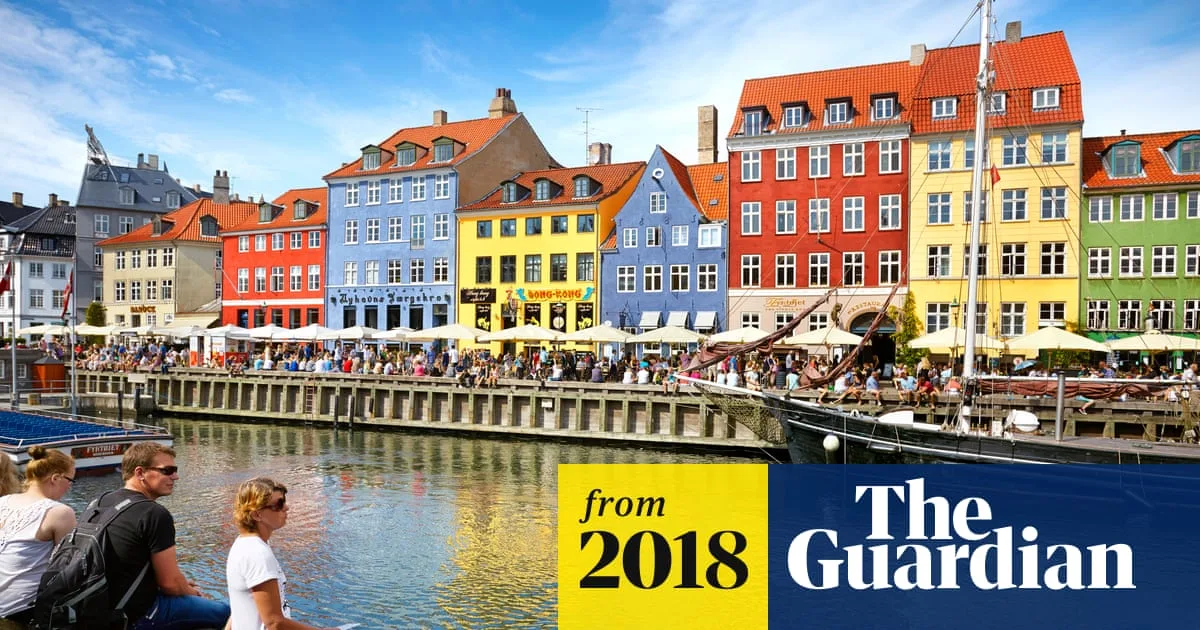
In Copenhagen, a remarkable 30-40% of residents cycle to work or school each day, a statistic that astonishes environmental epidemiologist Zorana Jovanovic Andersen. "Those are amazing statistics," says Andersen, a professor at the University of Copenhagen's public health department. She credits this success to a conscious, long-term investment in dedicated bike lanes and infrastructure, actively reclaiming road space from cars.

Andersen, who moved from the US Midwest in 2001, feels a profound sense of liberation from car dependence. "Freedom is having a choice of different things, not just having one really bad choice," she explains. "Freedom is living in a city like here, where you can breathe clean air and choose your lifestyle."

Despite Copenhagen's leading status, Andersen's research preys on her mind. The city's air, while better than most, remains dirty enough to cause illness. She notes that even Denmark's relatively low pollution levels can impact children's academic performance. Her prescription for improvement? Following London's lead with congestion pricing and ultra-low emission zones.

Vienna's Green Equality and Political Clouds

"The quality of life is out-of-this-world positive," declares Mathew White, an environmental psychologist at the University of Vienna. The Austrian capital's recipe includes widespread social housing, abundant green space, and a well-integrated public transport network costing just €1 per day.

White's research highlights a crucial advantage: in Vienna, access to parks is more equitably shared between wealthy and poorer neighbourhoods compared to countries like the UK. This access to nature builds resilience against daily stress and helps reduce health inequalities. However, White identifies a key shortfall: the city lacks Copenhagen's extensive cycle network.

A new political threat also looms. While centrist parties formed a coalition government, the far-right Freedom Party's strong performance in recent national elections raises concerns for White. He fears a political shift that could "disregard environmental issues" and undermine Vienna's progressive, livability-focused policies.

Barcelona's Superblock Vision and Scorching Reality

For Mark Nieuwenhuijsen, director of urban planning at ISGlobal, Barcelona's climate crisis is personal. Two decades ago, he found two weeks of summer heat unbearable. "Nowadays, there are two months," he states. This heat exacerbates air quality problems in a city scarred by urban motorways.

Barcelona's innovative response has been the creation of "superblocks" (superilles) – car-free, walkable neighbourhood hubs. Research by Nieuwenhuijsen shows these have improved health and liveability. His modelling suggests that implementing the city's original plan for 503 superblocks would save lives and money on a significant scale.

"We would see a quite different, much greener Barcelona: more livable, less air pollution, less noise," he says. "Unfortunately, it has not been implemented." With political enthusiasm waning, Nieuwenhuijsen urges the city to be braver, following Dutch examples and taking more space from cars to cool the city and clean its air.

London's Green Space Paradox and Missed Opportunities

"By far the best thing about London is the green space," says Audrey de Nazelle, a scientist at Imperial College London. "The amount of parks really makes it the green capital of Europe." The critical challenge, however, is accessing these oases safely.

De Nazelle describes reaching large parks near her home as "extremely dangerous," citing a lack of safe crossings and speeding vehicles. She highlights the "absolutely mind-boggling" trend of cars widening by 2cm per year due to the SUV boom, increasing risks for pedestrians and cyclists. "It should not be like this in a civilised country like the UK," she asserts, noting her husband's fear when she or their children cycle.

Having lived in Paris and Barcelona, cities she says have made "major efforts" to reduce car dependence, de Nazelle finds London "not sufficiently visionary." While the Ultra Low Emission Zone (ULEZ) has been relatively effective, she views it as a missed opportunity to get people out of cars entirely and create a healthier, more active city.

The expert consensus is clear: creating livable, healthy European capitals requires bold, equitable policies that prioritise people over vehicles and green space over concrete. The blueprint exists, but as London and Barcelona show, political will is the final, crucial ingredient.




