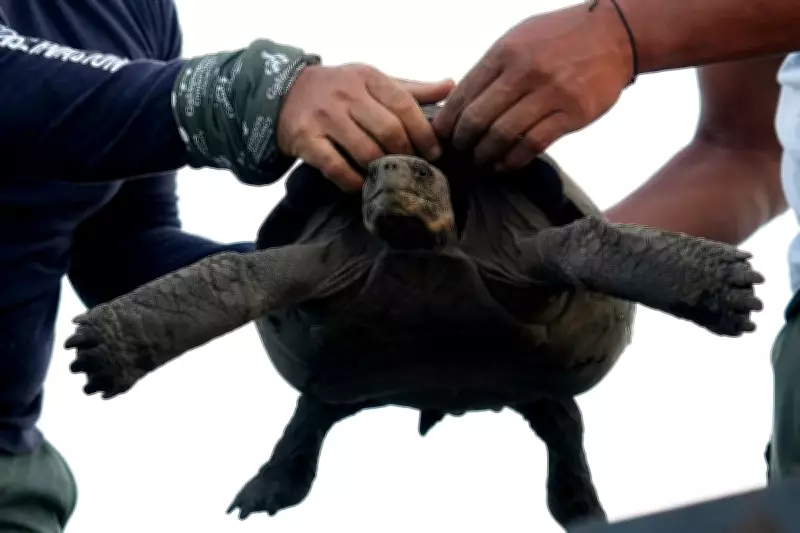
In a landmark conservation achievement, juvenile tortoises with Floreana ancestry have been successfully transported to their native island from the Galápagos National Park’s breeding centre on Santa Cruz Island. This initiative forms a critical part of an ambitious project to restore the species to its original habitat, reversing centuries of ecological damage.
The Historical Extinction of Floreana Giant Tortoises
The original Floreana giant tortoise population was driven to extinction during the 19th century, primarily due to human activities. Sailors and whalers extensively hunted these tortoises for food, decimating their numbers. Subsequently, the introduction of invasive species such as rats and feral cats further exacerbated the crisis, as these predators preyed on eggs and vulnerable hatchlings. Additional invasive species degraded the natural habitat and depleted essential food sources, creating an environment where survival became impossible for the native tortoises.
Scientific Breakthroughs and Selective Breeding
In a remarkable turn of events, scientists later discovered tortoises with Floreana ancestry residing on other islands within the Galapagos archipelago. This discovery provided a genetic foundation for a carefully managed selective breeding programme. Researchers have been meticulously breeding hybrid tortoises to enhance Floreana traits, ensuring that the juveniles reach a sufficient size and robustness to survive in their native environment before reintroduction.

The recent translocation of these young tortoises represents a significant step forward in ecological restoration efforts. By returning these bred individuals to their ancestral home, conservationists aim to re-establish a stable population that can thrive and contribute to the island’s biodiversity. This project underscores the importance of genetic research and dedicated breeding strategies in combating species extinction and promoting environmental recovery.