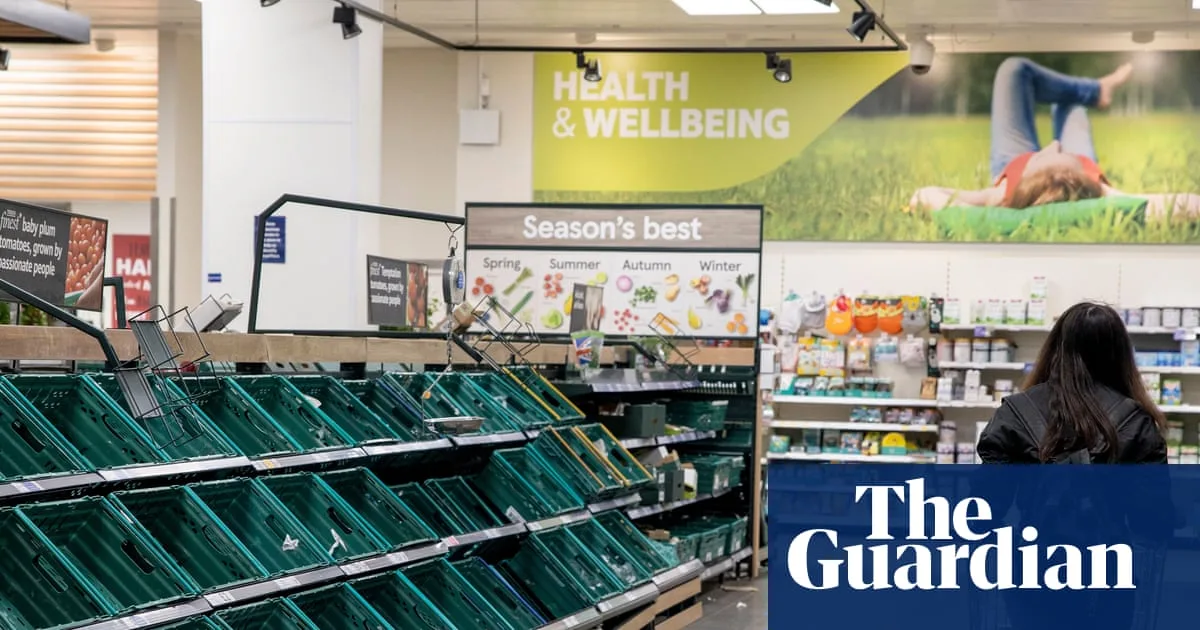
Dozens of the UK's leading food experts have warned that the nation's food system is a 'tinderbox', with a single shock—such as a cyber-attack, extreme weather event, or international conflict—potentially sparking social unrest and even food riots. The analysis, published in the journal Sustainability, highlights chronic issues including the climate crisis, low incomes, poor farming policy, and fragile just-in-time supply chains that have left the UK dangerously exposed.
The researchers consulted over 30 food system experts from academia, government, and industry. They identified extreme weather, cyber-attacks, and war as the three most dangerous shocks that could tip the vulnerable system into a full-blown food crisis. Such shocks would disrupt supply chains and push up food prices, leading to increased social tension, hidden market sales of unsafe food, and, in the worst-case scenario, civil unrest or riots.
A related analysis from 2023 found that 80% of experts believed large-scale violence caused by a food crisis was possible in the next 50 years, with 40% saying it could occur within a decade. The scenario considered involved more than 30,000 people suffering violent injury over a year due to food protests or riots. The researchers noted that some shocks have already occurred, such as cyber-attacks on Co-operative and Marks & Spencer supermarkets in 2025, and recent overseas droughts and Russia's invasion of Ukraine have increased food costs.

Currently, one in seven UK families experienced food insecurity in 2025, according to the Food Foundation. The UK imports about 35% of its food, and the experts called for urgent action to address systemic vulnerabilities, including more coordinated government and business efforts and a wider, more resilient range of domestically produced and consumed food. Prof Sarah Bridle of the University of York, who led the analysis, said: 'The stability of the UK’s food system is a critical aspect of national security. While we can’t always prevent future shocks, we can build resilience to withstand them.'
A UK government spokesperson responded: 'Food security is national security, and our high degree of food security is built on both strong domestic production and imports through stable trade routes. This government is investing billions in new technology to increase yields or create climate-resilient crops.' The analysis also emphasised global concerns, with Álvaro Lario, president of the International Fund for Agricultural Development, stating last week that 'fragile food systems pose an underestimated risk to global stability.'