UK Climate Aid Cuts Condemned as 'Reckless' Betrayal of World's Poorest
Charities and campaigners have strongly condemned the UK government's decision to slash funding aimed at protecting the natural world and assisting lower-income nations in tackling the climate crisis. They warn that these cuts will disproportionately impact the world's most vulnerable communities, labeling the move as strategically reckless and a betrayal of global commitments.
Investigation Reveals Substantial Reductions
An investigation by The Guardian has highlighted that several programmes, worth hundreds of millions of pounds, are being significantly reduced or effectively terminated. This comes despite the government's insistence that it remains on track to meet its £11.6 billion climate finance pledge for the period from 2021 to 2026. Reports indicate plans to reduce the next five-year round of international climate finance from £11.6 billion to £9 billion, a move that occurs as richer countries, including the UK, have pledged to help triple global climate finance to $300 billion annually by 2035.
Campaigners Voice Outrage
Felix Lane, a political campaigner at Greenpeace UK, stated, Our natural world is a source of joy and hope in an increasingly uncertain age, yet the UK government is taking an axe to the very programmes successfully restoring it. Andreas Sieber, head of political strategy at 350.org, added that the approach is wrong, unnecessary and strategically reckless. He suggested alternative funding sources, such as taxing windfall profits from fossil fuel companies benefiting from gas price spikes linked to conflicts like the war with Iran.

Tim Ingram, head of UK advocacy at WaterAid, emphasized the unacceptable nature of these cuts, noting that climate change is already straining access to clean water and sanitation in developing countries. If the UK continues to slash its climate and nature programmes, we can't tackle the shared challenges of global health and food security, and climate resilience, he warned.
Accounting Changes and Global Context
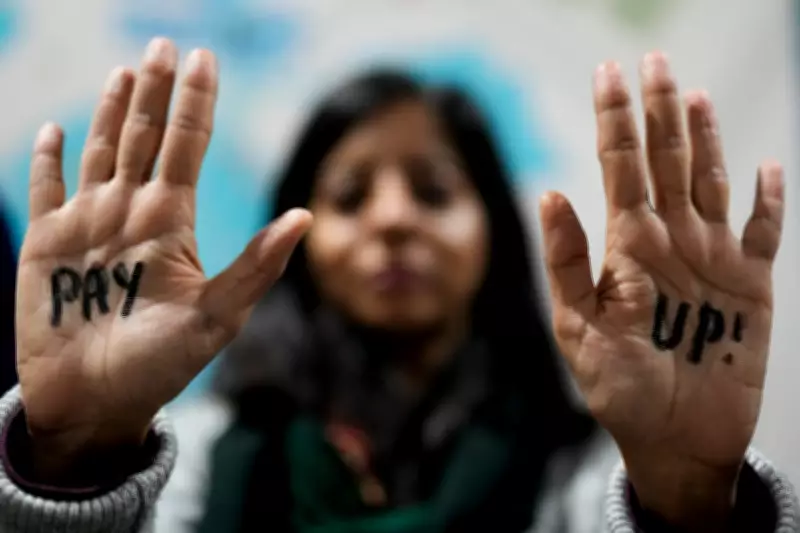
The Guardian's investigation also revealed that at least £2 billion of the £11.6 billion commitment is expected to be met through an accounting change introduced by the last Conservative government. This allows 30% of general aid to the world's least developed countries to be counted as climate finance, even without explicit climate or nature components. Climate activist Harjeet Singh criticized this, stating, Redirecting aid budgets and calling it climate finance is not leadership. The UK must not mistake accounting manoeuvres for climate action.
This retreat occurs as the United States, under Donald Trump, has backed away from its climate finance commitments, increasing pressure on other developed nations to fill the gap. Programmes affected include the £100 million Biodiverse Landscapes Fund, now reduced from six regions to two, and the £500 million Blue Planet Fund, whose future is uncertain.
Government Response and Public Backlash
The government has refused to provide details on individual programmes, with a spokesperson stating, The UK remains committed to providing international climate finance, playing our part alongside other developed countries. We are modernising our approach to ensure we focus on greater impact. However, Adrian Gahan of Campaign for Nature noted that the government's silence has eroded political and public support for such funding.
Felix Lane urged action, referencing Sir David Attenborough's warnings: If this government is serious about international ocean leadership, it must stop these short-sighted cuts and act on its commitment to protect 30% of the ocean by 2030. The overall sentiment is clear: history will judge harshly those who prioritize fiscal balancing over aiding the most vulnerable in a time of global crisis.