Spain's First Tsunami-Ready Town Leads Coastal Safety Drive
Spain's First Tsunami-Ready Town Leads Safety Drive

Spain's First Tsunami-Ready Town Sets Example Amid Seismic Risks

On a damp winter day in Málaga, the Mediterranean Sea appears calm and harmless. However, just 25 miles southwest of its bustling port, where half a million cruise ship tourists arrive annually on the Costa del Sol, lies a complex network of tectonic plates and seabed faults between Spain and North Africa. Earthquakes are a regular occurrence in this region, often too minor to feel but occasionally strong enough to shake glasses in seaside cafes. In December, a magnitude 4.9 tremor off Fuengirola prompted over 40 emergency calls in Andalucía, serving as a stark reminder of the area's "continuous seismicity." The Alborán Sea fault system marks the boundary between the African and Eurasian plates, where slow displacement builds energy over centuries, eventually releasing it in seismic events.

Tsunami Awareness in Chipiona

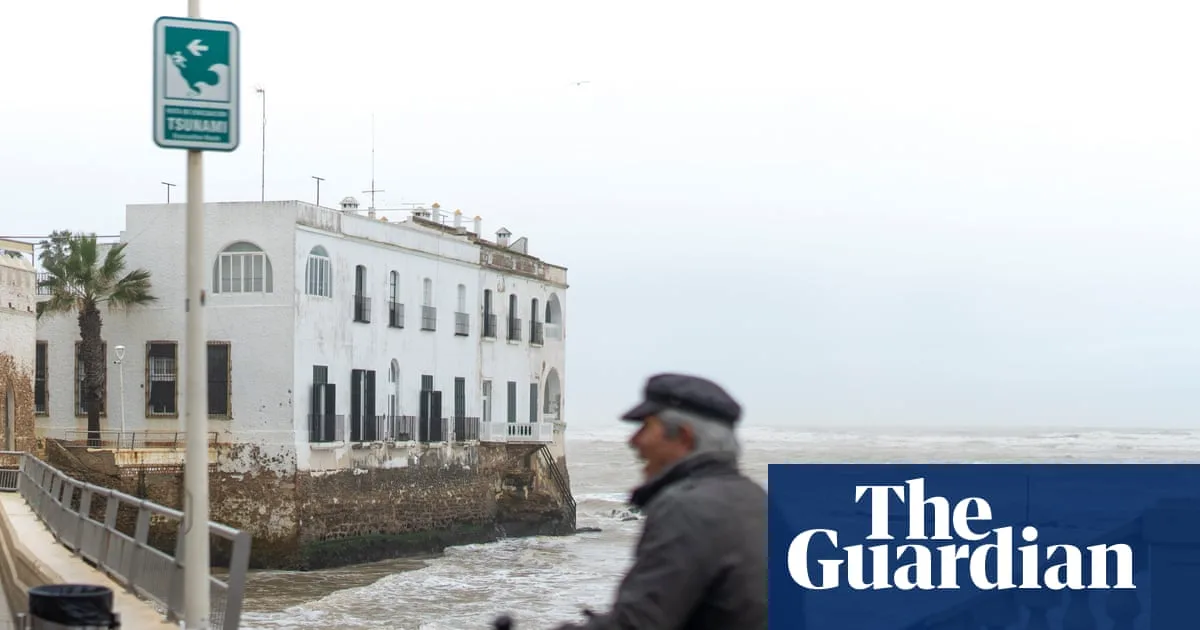
While tsunami risks are seldom discussed among residents and tourists on the Costa del Sol, the Atlantic-facing town of Chipiona near Cádiz takes a proactive approach. Here, the possibility of a tsunami is not hidden but prominently displayed on information boards. Chipiona, a modest seaside resort favoured by holidaymakers from Seville, has embraced safety as a tourist attraction. Mayor Luis Mario Aparcero Fernández explains that initial reluctance from other tourist municipalities has given way to consensus, with evacuation routes marked, sirens installed, and annual drills conducted each November to commemorate the 1755 Lisbon earthquake.

As a result, Chipiona earned Spain's first "tsunami ready" certification in 2024, recognised by the Intergovernmental Oceanographic Commission of Unesco. This places it among a select few communities in the north-east Atlantic and Mediterranean, including Cannes, Alexandria, and Minturno. The initiative is part of a regional goal to establish 25 tsunami-ready communities by year-end and prepare all at-risk areas by 2030. Francisco Castro, Chipiona's tsunami-ready coordinator, emphasises that certification acknowledges preparation and awareness, not the absence of risk, comparing it to hotel fire drills.

Wide Pickt banner — collaborative shopping lists app for Telegram, phone mockup with grocery list

Historical Context and Modern Preparedness

A plaque at the Cruz del Mar monument commemorates the devastating 1755 Lisbon earthquake, which generated waves up to 10 metres high along Cádiz and Huelva, claiming tens of thousands of lives across Iberia and North Africa. Recent seismic activity in the Gulf of Cádiz, including five quakes in one day last March, has raised concerns about a potential major event. Geologists note that while small quakes do not necessarily precede larger ones, the return period for a significant rupture is estimated between 450 and 1,500 years.

Chipiona's emergency plan assumes citizens will have about an hour between an earthquake and tsunami arrival, with meeting points within a 20-minute walk. The mayor advocates against driving to prevent gridlock and has mapped relocations for police and municipal buildings beyond flood zones. In 2023, Cádiz conducted Spain's largest tsunami drill, involving over 20,000 participants and testing evacuation protocols, building vulnerability maps, and coastal inundation models.

Contrasting Approaches on the Costa del Sol

In contrast, Málaga harbour shows little visible urgency, with no siren towers or evacuation maps along its promenade. Jorge Macías, a tsunami modeller at the University of Málaga, describes the Mediterranean risk as "low probability but high impact," noting that a tsunami could reach Málaga within 20 minutes of an Alborán Sea earthquake. Spain's national warning system can issue alerts within three to five minutes, but in the Mediterranean, this may leave only minutes for evacuation. Macías advises that if a strong quake is felt near the coast, people should move inland or to higher ground immediately, as even a first floor can provide safety.

Pickt after-article banner — collaborative shopping lists app with family illustration

The Andalusian regional government approved an emergency plan in 2023, mapping flood zones across 500 miles of coastline and modelling worst-case scenarios for the Costa del Sol. The IOC warns with "100% certainty" that the Mediterranean will experience a tsunami of at least one metre in height within the next 30 to 50 years. Juan Vicente Cantavella of Spain's National Tsunami Warning System cautions that tsunami waves, even at half a metre, carry more energy than wind-generated waves and can cause significant flooding and damage.

Challenges and Future Outlook

Begoña Pérez Gómez of Puertos del Estado highlights that real-time sea level data feeds into the warning system, promoting a culture of risk prevention. However, while Chipiona conducts annual drills, much of the Costa del Sol remains in early planning stages, with sparse public signage and unclear evacuation routes. Miriam García, a geomorphologist, points out that decades of coastal development, prioritising "houses on the beach," have urbanised natural buffers like dunes and wetlands, reducing resilience to tsunamis and sea level rise.

Spain's building codes include seismic standards but lack specific tsunami load requirements, and Málaga's hotels are not designed for vertical evacuation as in Japan. Macías observes a shift in attitudes, with drills in Cádiz now televised and ES-Alert messages broadcast across provinces, moving from political discomfort to proactive rehearsal. Scientists stress that preparedness is about anticipating nature's inevitable repetitions, not predicting exact timings, to avoid being caught off guard by geological history.