Sewage Crisis Across America: Aging Infrastructure Threatens Cities
A catastrophic sewer pipe collapse has unleashed hundreds of millions of gallons of raw sewage into the Potomac River, creating an environmental disaster that has drawn attention to a nationwide crisis of failing infrastructure. The January incident, involving a pipe as wide as an automobile, resulted in an unprecedented 244 million gallons (924 million liters) of waste contaminating the waterway, with officials tracking dangerous bacteria levels drifting past Washington for weeks.
An Out-of-Sight Problem Becoming a National Crisis
While this particular spill represents a disaster of historic proportions, smaller sewer overflows occur with alarming frequency across the United States. Tens of thousands of such incidents happen annually, contaminating rivers, flooding streets, and sometimes causing hazardous backups into residential properties that threaten public health.
"It's really one of those out of sight, out of mind problems that doesn't rise to the top until it becomes a crisis," explained Alice Volpitta, the Baltimore Harbor waterkeeper with the nonprofit Blue Water Baltimore.

According to an Associated Press analysis of federal data, at least 18.7 million Americans are served by approximately 1,000 utilities that are in serious violation of pollution limits. Furthermore, at least 2.7 million residents live with sewer systems that have continually violated federal clean water regulations over the past three years.
Baltimore's Century-Old System Illustrates the Challenge
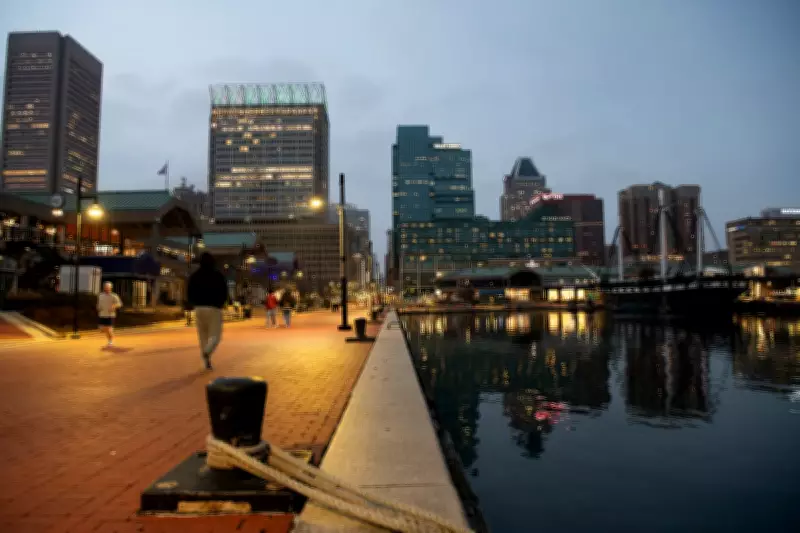
In Maryland, Baltimore has experienced hundreds of sewer overflows in recent years, often caused by broken pipes, invasive tree roots, or severe weather events. The city's sewer network, parts of which are more than a century old, represents a tangled web of decaying infrastructure that has only been fully mapped in recent decades.
Resident Teddy Bloomquist experienced this problem firsthand when cloudy brown water containing human waste began backing up through his shower drain during the winter months. "We're taking buckets and it turns out every time someone's flushing their toilet, it's coming up," Bloomquist recounted. "It's just coming so fast."
Since the beginning of last year, approximately 15 million gallons (57 million liters) of sewage have spilled across Baltimore, with spill sites appearing like measles across city maps. One neighbor discovered bits of toilet paper frozen into the snow in his backyard, while another used a wet vacuum to remove roughly 120 gallons (454 liters) of sewage from their property.
National Infrastructure Funding Challenges
The Environmental Protection Agency estimates that addressing flooding and water quality needs over the next two decades will require at least $630 billion, with local residents expected to bear most of this financial burden. While the 2021 infrastructure law provided billions for water projects, this represents the final year that money will be distributed to states for loans to local initiatives.
Former President Donald Trump criticized state and local leaders as "incompetent" regarding the Potomac spill, though some experts argue that funding cuts during his administration have exacerbated the national infrastructure problem. The Trump administration proposed significant reductions to programs supporting environmental oversight and water protection, though Congress ultimately rejected these cuts.
"We're going to see probably more incidents like we saw with the Potomac sewage spill," predicted Becky Hammer, a senior attorney with the Natural Resources Defense Council.
Progress and Persistent Challenges
Baltimore has invested nearly $2 billion over more than two decades under a consent decree with federal and state regulators. The city has installed new water mains, closed overflow outlets, and addressed sewage bottlenecks. While these efforts have reduced sewer overflows significantly since a particularly rainy 2018, the city has proposed extending its deadline to complete necessary work to 2046.

The city offers up to $5,000 to residents cleaning up sewage backups after specific storms, though activists argue more comprehensive support is needed. Meanwhile, only about half of U.S. states publicly report sewer overflows, according to an Associated Press review of state reporting practices.
The EPA recently extended the federal electronic reporting deadline for overflow incidents from 2025 to 2028 for most states, citing the need for a smoother transition period. In November, the agency announced $6.5 billion for wastewater and drinking water projects through a loan program, plus an additional $550 million to be distributed to states.
For residents like Teddy Bloomquist, who had to miss work and replace his basement floor after sewage backups, the personal costs remain substantial. "It's been a saga and now everyone's on edge," he said. "You know, we're on our group texts, people are like, 'Oh no, it is raining.'"
The sewage infrastructure crisis extends beyond the Potomac region, affecting cities nationwide including Houston, Memphis, and Cahokia Heights, Illinois, all of which have reached court agreements to address their systemic problems. In areas where sewage and rainwater flow through combined pipes, heavy rains exacerbated by climate change make overflows to waterways increasingly frequent and severe.