Organised Waste Crime: The UK's Unchecked Growth Industry
Thanks to a sustained ideological assault on regulation, the United Kingdom has been transformed into a literal dump. From the perspective of criminal waste gangs, the nation represents one vast potential landfill, where the risks of detection are minimal to nonexistent and penalties are largely laughable. Successive governments have effectively handed criminals a licence to print money, fostering what may be the country's most successful growth industry: organised waste crime.
Out of Control: The Scale of the Crisis
Last week, the Commons public accounts committee declared that illegal waste dumping is "out of control." The UK is now plagued by between 8,000 and 13,000 illegal waste sites. While many consist of just a few lorry loads, others contain tens of thousands of tonnes of waste, including household products, asbestos, heavy metals, and highly toxic, flammable, or explosive organic chemicals. This rubbish blows through local neighbourhoods, flows into rivers, and seeps into soil and groundwater, yet in most cases, no action is taken.
This situation is not a glitch but the inevitable outcome of a prolonged ideological attack on regulation. Governments have treated essential public protections as "red tape" to be slashed and regulators as "checkers and blockers" to be vanquished. Unable to delete protections from statute books outright for fear of public backlash, ministers have instead cut funding for monitoring and enforcement, achieving deregulation by stealth. Over the past 15 years, this approach has built an entire new industrial sector almost from scratch.
Profitable and Pervasive Criminal Enterprise
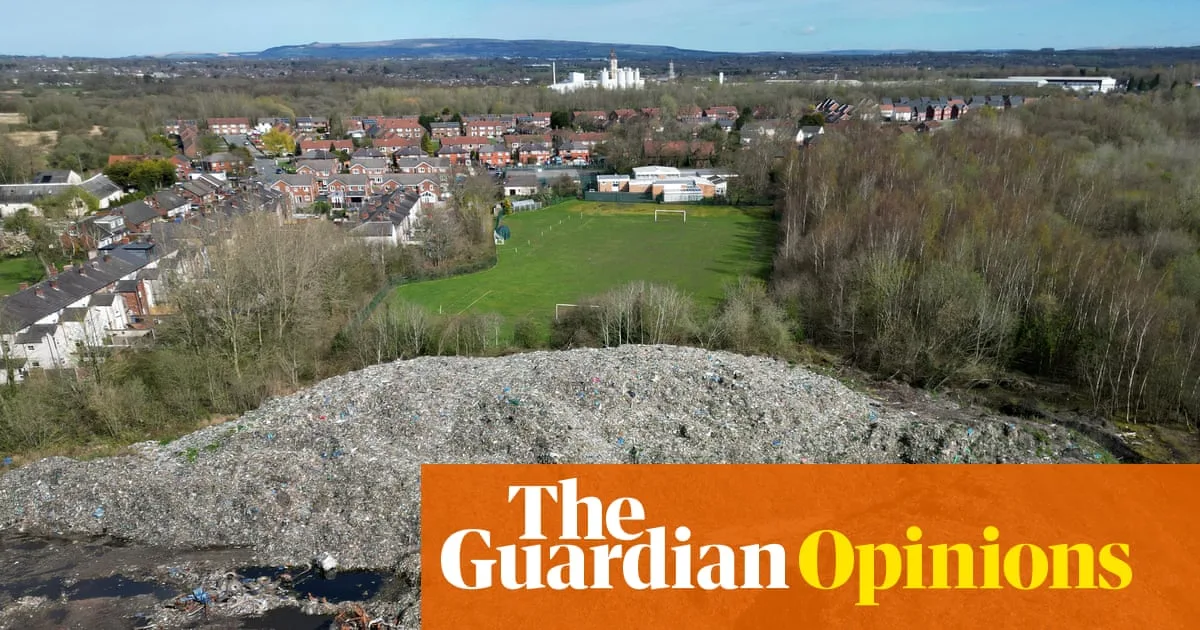
Waste crime is a lucrative business. Criminals charge fees for waste removal, ostensibly covering transit, landfill tax, and gate charges at official disposal sites, but instead dump it on farmland, nature reserves, ancient woodlands, country lanes, or even green spaces next to primary schools, as seen in Bickershaw near Wigan. They pocket the difference, approximately £2,500 per articulated lorry load. The low risk of being caught and high profits have made waste dumping a "gateway" to organised crime, as reported by the House of Lords environment and climate change committee, fostering networks that branch into drugs, guns, money laundering, fraud, and modern slavery.
Regulators have become so underfunded, demoralised, and ineffective that even in rare cases where investigations and prosecutions begin, dumping often continues. In Bickershaw, a 25,000-tonne illegal tip has forced a primary school to close, filled the area with rats and flies, damaged local businesses, and ruined lives. Despite locals reporting the dumping in late 2024 and the Environment Agency launching a "major criminal investigation," drone footage in mid-February this year showed ongoing activity, as authorities failed to secure the site.
Systemic Failures and Costly Consequences
Similar failures are widespread. On the banks of the River Cherwell north of Oxford, lorries began arriving in summer 2025, with reports from anglers, neighbours, and landowners met only by a "cease-and-desist order" from the Environment Agency. No entrance blockades or trail cameras were installed, allowing dumping to continue until months later when a 20,000-tonne waste mountain slipping into the river became a "critical incident." At Hoad's Wood in Kent, a "strictly protected" ancient woodland, locals reported illegal tree clearing in 2020, but authorities failed to act as gangsters deposited over 30,000 tonnes of waste by 2023. Despite evidence and company names provided, arrests only occurred in February 2025, with cleanup costs estimated at £15 million for taxpayers.
This deregulation reflects a lopsided version of "fiscal discipline" that counts the costs of action but ignores the costs of inaction. Conservative estimates place the annual economic cost of illegal dumping in England at £1 billion, with cleanup for accumulated sites over 15 years potentially reaching tens of billions, not accounting for aquifer contamination from toxic seepage. These staggering costs stem from cuts to regulators in the name of "efficiency," saving only a tiny fraction of the damages.
Inadequate Government Response
A fortnight ago, the government published its "waste crime action plan," allocating an extra £15 million annually for enforcement. While some measures are welcome, they fall far short of addressing the crisis scale, akin to wielding a wooden sword against vast organised crime networks grown in a regulatory vacuum. Notably, £15 million matches the cleanup cost for just one site, Hoad's Wood. The plan is further undermined by the prime minister's ongoing deregulation agenda, which also appears "out of control."
Underfunding and deregulation, now in their fifth decade, are destroying the country, preventing problem-solving and spreading hopelessness. They open doors to economic mafias and political profiteers exploiting misery, with waste piling up as a potent symbol of dysfunction and neglect. The literal dump becomes a metaphorical one, highlighting a systemic failure in governance and public protection.