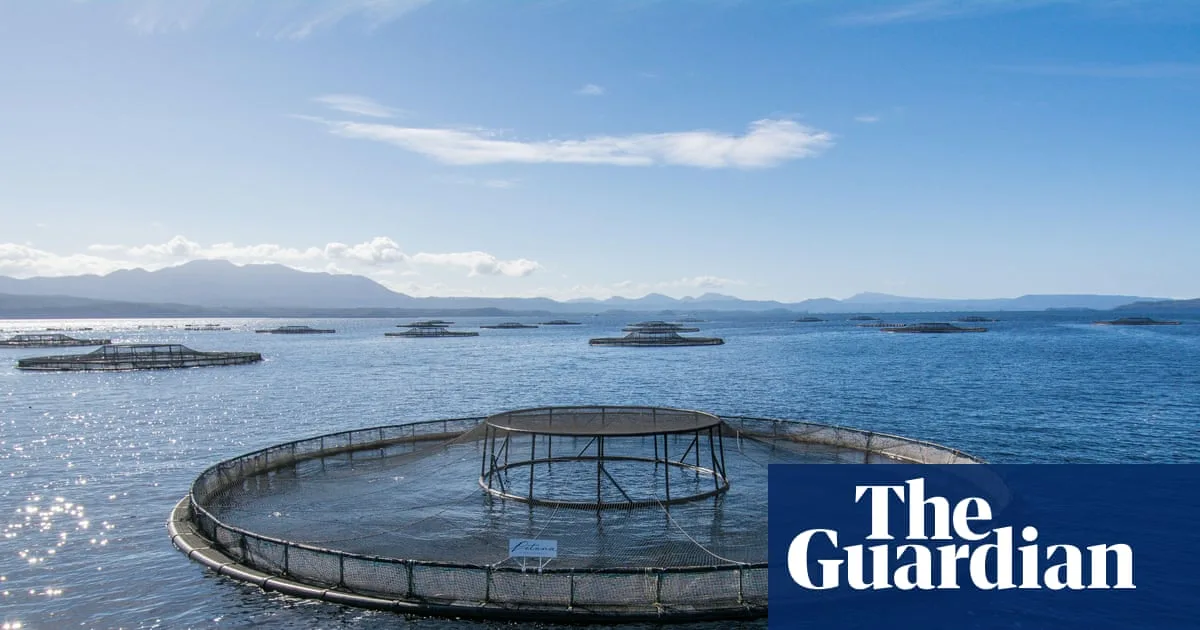
Albanese Government Rejected Environmental Advice on Tasmanian Salmon Farming
The Albanese government has come under fire after freedom of information documents revealed it ignored critical departmental advice on the environmental impact of salmon farming in Tasmania's Macquarie Harbour. The government proceeded to pass legislation favouring the industry, despite warnings about harm to endangered species and a World Heritage Area.
Departmental Warnings Ignored
In late 2024, the environment department advised the government to revoke a 2012 decision that allowed salmon farming to expand in Macquarie Harbour on Tasmania's west coast. Officials recommended that then environment minister Tanya Plibersek overturn the Gillard government's ruling, which had exempted the expansion from a full assessment under national environment law.
The department urged a fresh inquiry that could have scaled back or paused farming operations. This advice highlighted "substantial new information" showing salmon farming was reducing dissolved oxygen levels, adversely affecting the habitat, behaviour, physiology, and population of the endangered Maugean skate. Additionally, the reduced oxygen levels were likely impacting the natural heritage values of the Tasmanian Wilderness World Heritage Area, which includes parts of the harbour.
Legislation Rushed Through
Despite these warnings, the Labor government rejected the recommendation. Instead, it introduced and passed legislation in March 2025 to limit when third parties, not directly involved in development applications, could request reconsideration of environmental decisions. Prime Minister Anthony Albanese assured salmon companies that the changes would ensure "appropriate environmental laws" to "continue sustainable salmon farming." The bill received support from the opposition, facilitating its swift passage.
Following this, Murray Watt, Plibersek's successor, announced the rejection of a reconsideration request lodged by environmental groups including the Australia Institute, the Bob Brown Foundation, and the Environmental Defenders Office. This move has sparked accusations of prioritising industry over environmental protection.
Criticism from Environmental Advocates
Tasmanian Greens senator Peter Whish-Wilson condemned the government's actions, stating that the documents, released after a tribunal fight, demonstrate a "blatant disregard of expert scientific advice." He accused the Albanese government of ignoring urgent calls to regulate "toxic salmon farms" and instead enacting laws to protect the industry.
Eloise Carr, a campaigner against Tasmanian salmon farming, argued that the industry has never undergone a proper environmental impact assessment under national law and emphasised it is time for such an evaluation. Alistair Allan of the Bob Brown Foundation added that Prime Minister Albanese chose to "undermine and rewrite Australia's environmental law" rather than fulfil his duty to protect endangered wildlife.
Government Response and Ongoing Challenges
A government spokesperson defended the decision, noting that the departmental advice was "from a single point in time under a legislative framework that is no longer in place." They reiterated the government's commitment to a sustainable salmon industry that supports workers while protecting the environment.
However, the issue remains contentious, with a federal court challenge by the organisation NWTAS for Clean Oceans, which opposes salmon farms. The government spokesperson declined further comment due to the ongoing legal proceedings.
Background on the Maugean Skate
The Maugean skate, an ancient ray-like species found exclusively in Macquarie Harbour, has been listed as endangered since 2004. Concerns escalated in 2024 when a government scientific committee reported "extremely low" numbers and recommended scaling back or removing fish farming to save the species. A later report by the Institute for Marine and Antarctic Studies suggested a potential recovery to 2014 levels but stressed the skate remains endangered and requires continuous monitoring.
This controversy underscores the tension between economic interests and environmental conservation, raising questions about the government's adherence to scientific advice in policymaking.