Fly-Tipping Incidents Surge 10% as Criminal Gangs Target Countryside
The Labour Party is facing mounting pressure to implement a robust crackdown on the organised criminal gangs responsible for a significant surge in fly-tipping across England. Official government statistics released today reveal a troubling 10 per cent increase in recorded incidents over the past year, highlighting a growing environmental and financial crisis for local authorities.
Record High Figures and Regional Disparities
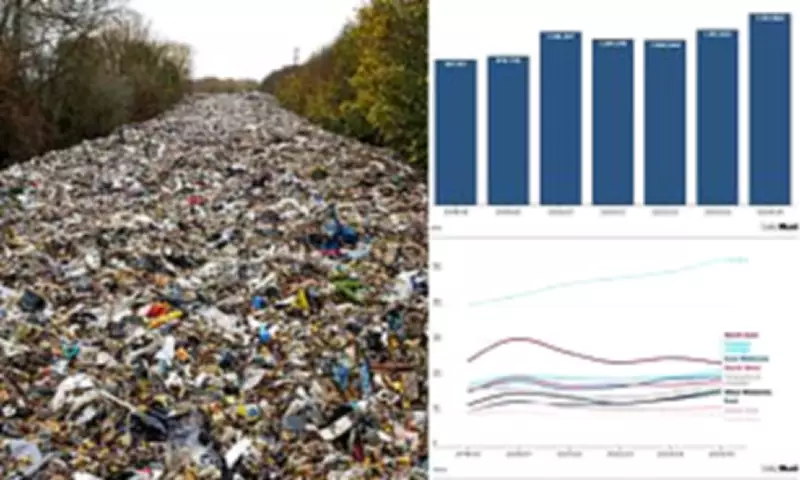
The latest data from the Department for Environment, Food and Rural Affairs (Defra) shows that councils were forced to deal with a staggering 1.26 million fly-tipping cases during the 2024/25 financial year. This marks a sharp rise from the 1.15 million incidents recorded in the previous year, representing the highest level since new recording methodologies were introduced back in 2018/19.
London emerged as the worst-affected region by a considerable margin, though the problem is nationwide. The scale of the issue is likely far greater than these figures suggest, as the Defra statistics only account for waste illegally dumped on public land. Private landowners across the country, particularly farmers, are also bearing the brunt of clear-up costs for waste dumped on their property without their consent.

The Cost of Large-Scale Dumping
A particularly concerning trend is the rise in large-scale dumping operations. Some 52,000 incidents across England involved an amount of rubbish equivalent to a full tipper lorry load or more. This represents an 11 per cent increase on the previous year. Clearing these substantial illegal dumps cost local councils an estimated £19.3 million.
Countryside groups have issued stark warnings that farmland is being systematically targeted by organised crime networks. These gangs dump waste that not only blights the landscape but also poses serious dangers to wildlife, livestock, crops, and the broader environment. Farmers, who are victims of this illegal activity, are often left to foot the substantial clean-up bill themselves.
Calls for Tougher Enforcement and Political Action
In response to the escalating crisis, the Liberal Democrats have called for serious waste crime to be made a priority for the National Crime Agency. The party proposes that the NCA should take over investigations from the Environment Agency in the most severe cases.
Tim Farron, the Liberal Democrat environment spokesman, stated: 'For far too long, waste gangs have pocketed millions in illegal earnings, poisoning our environment and our health without facing any meaningful consequences. This must end.'
As the figures were published, Defra released new guidance aimed at helping local authorities. This includes advice on seizing and crushing vehicles used for fly-tipping, or repurposing them for clean-up operations, alongside improved protocols for taking cases to court. Councils are also being encouraged to publicly 'name and shame' convicted fly-tippers on social media platforms.
Nature of the Incidents and Enforcement Challenges
The data provides a detailed breakdown of the fly-tipping epidemic. Pavements and roads were the most common locations, accounting for over a third (37 per cent) of all cases. In terms of volume, almost a third of incidents (31 per cent) involved a small van load of waste, while 27 per cent were equivalent to a car boot or less.
Nearly two-thirds of all cases (62 per cent) involved household waste, with 777,000 such incidents recorded in 2024/25—a rise from 688,000 the previous year. This category ranges from everyday black bag rubbish to larger items like old furniture, carpets, and assorted clutter from loft and shed clearances.
Enforcement actions by councils increased by 8 per cent to 572,000, and the number of fixed penalty notices issued rose by 9 per cent to 69,000. However, the total number of court fines actually decreased by 9 per cent to just 1,250. The combined value of these fines also fell, from £730,000 the previous year to £673,000 in 2024/25, although the average fine amount saw a slight increase.

Voices from the Frontline
Gavin Lane, President of the Countryside, Land and Business Association (CLA), issued a grave warning: 'The countryside is increasingly being targeted by organised crime gangs – often violent – who know that rural areas are under-policed and under-resourced. It's not just litter blotting the landscape, but tonnes of household and commercial waste which can often be hazardous – even including asbestos and chemicals – endangering wildlife, livestock, crops and the environment. Farmers are victims yet have to pay clean-up costs themselves.'
Lane added a call for stricter penalties: 'We need to see penalties being enforced that better reflect the severity of the crime, and the seizure of vehicles must be the default penalty to send a clear signal that criminals will face real consequences if they are caught fly-tipping.'
Government Response and Future Measures
Defra Minister Mary Creagh addressed the public's frustration, stating: 'We are empowering local authorities to clamp down on waste cowboys and restore pride in our local areas. I share the public's fury at seeing our streets, parks and fields used as dumping grounds. Fly-tippers should know – if you use your van to trash our countryside, don't be surprised when it ends up on the scrapheap.'
Creagh outlined the government's strategy, noting increased investment in cutting-edge technology and boosted funding for the Environment Agency to put more waste crime officers on the ground. The government is also introducing tougher checks and penalties for those who break environmental law.
In addition to council data, the Environment Agency dealt with 98 incidents of large-scale, illegal dumping in 2024/25. The persistence of this crime, despite increased enforcement actions, underscores the complex challenge facing authorities and the urgent need for a coordinated, national response to protect both urban and rural environments from this costly scourge.