EU Recovery Funds Spark Rapid Restoration of Rome's Historic Basilica
Lesser-known treasures within Rome's San Pietro in Vincoli basilica, renowned for housing Michelangelo's monumental marble statue of Moses, are undergoing significant restoration thanks to a substantial injection of European Union pandemic recovery funding. This initiative is part of a frenzied series of restorations popping up at religious, historic, and cultural sites throughout the Eternal City, driven by the urgent deadline to utilise these funds by the end of 2026.
On-Site Restoration Efforts
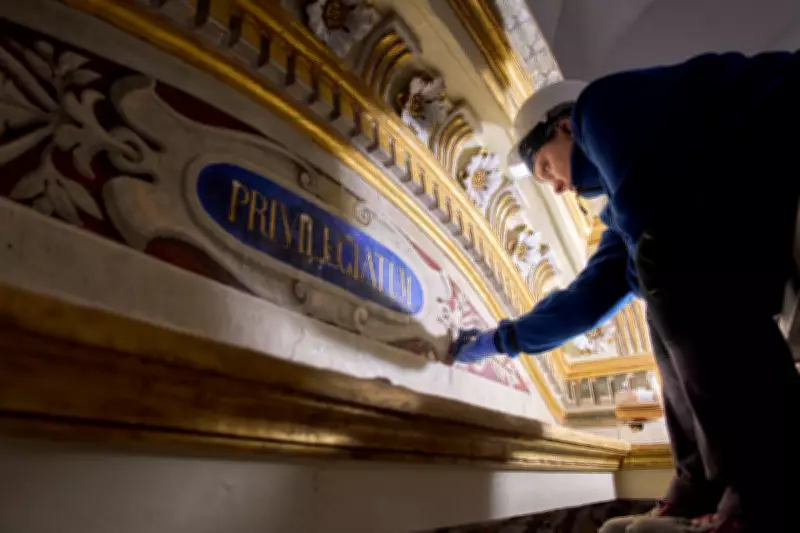
On a recent Monday, restorer Melanie Khanthajan ascended a series of ladders with her toolbox to a precarious perch on scaffolding near the basilica's ceiling, approximately 20 meters (65 feet) above the floor. Employing a scalpel, she meticulously scraped away layers of plaster from serpentine decorations surrounding a coat of arms on the vaulted ceiling, a technique known as "descialbo." "Every removal of a layer surprises us because it allows us to understand what it is like, what emerges," Khanthajan explained. "So for us it's wonderful, it's a discovery every day."
Funding and Project Scope
The ceilings, altar, tombs, marble columns, and various decorations of the basilica are being cleaned and restored with a €2 million (approximately $2.3 million) EU recovery grant. This funding is keeping Khanthajan and ten other restorers actively employed on the project. The city of Rome has received a total of €500 million (about $579 million) in European funds designated for the "Caput Mundi" projects, a term used by ancient Romans meaning "the head of the world." This substantial budget is allocated for over 100 cultural renovations across the city.

Historical Significance of the Basilica
Located just a few steps from Rome's iconic Colosseum, San Pietro in Vincoli derives its name, "vincoli," from the Latin "vincula," meaning chains. A glass box at the centre of the altar contains ancient chains, relics traditionally believed to have been used to imprison St. Peter in Jerusalem. According to legend, these chains miraculously fused with those used on Peter during his imprisonment in Rome's Mamertine prison.
The basilica was originally constructed in the 5th century under the Eastern Roman Empire. In the 16th century, Pope Julius II commissioned a partial rebuilding of the church, incorporating his noble Della Rovere family's coat of arms, featuring a central oak tree, onto the ceilings, arches, and chapels. This coat of arms and other intricate decorations are now the primary focus of the ongoing restoration efforts.
Project Timeline and Michelangelo's Moses
While the basilica's main attraction, Michelangelo's sculpture of Moses created in 1513 for Pope Julius II's funeral monument, is not part of the current restoration, it will receive a thorough dusting upon the project's completion. Ilaria Sgarbozza, the scientific director of the restoration project, stated, "The works started about eight months ago and will end by May 2026. Let's say it's a very fast pace," highlighting the accelerated timeline mandated by the EU funding agreement.