Seismic Swarm Strikes Near Classified US Military Testing Grounds
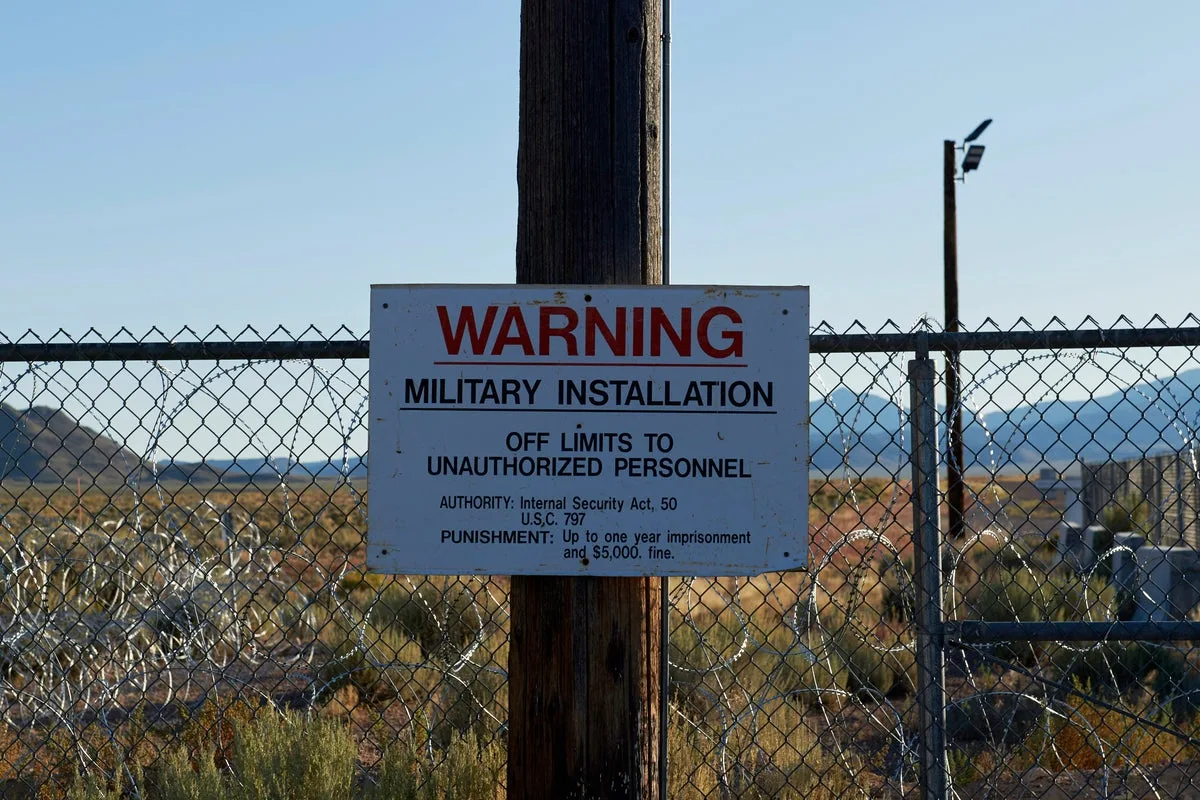
A concentrated series of mysterious earthquakes has been recorded in close proximity to one of America's most secretive military installations, the Tonopah Test Range in Nevada, colloquially known as 'Area 52.' Over the past week, scientists have monitored more than 100 seismic events within a 50-mile radius of this highly classified facility, which has a long history of nuclear weapons research and experimental aircraft testing.
Unusual Seismic Activity Detected
The United States Geological Survey (USGS) has reported a significant uptick in seismic activity, with 16 moderate tremors exceeding magnitude 2.5 detected in just the last day alone. These earthquakes range from minor shockwaves between 1.0 and 1.9 in magnitude to more noticeable quakes stronger than 3.0, which could be felt by individuals on the ground nearby. The most powerful event occurred on Sunday morning Eastern Time, registering a magnitude 4.3 and rattling a remote area of the Nevada desert approximately 48 miles northeast of Tonopah.
Residents across Nevada reported feeling the tremors as far away as Carson City, over 180 miles to the west, and Las Vegas, situated 175 miles south of the epicenter. While quakes in the magnitude 2.5 to 4.9 range typically cause considerable shaking that can be felt for several miles, no severe damage to buildings or property has been reported, and there have been no injuries.
Geological Context and Historical Significance
The earthquake swarms are occurring within the Central Nevada Seismic Zone, a narrow strip of land stretching roughly 200 to 300 miles north-to-south through the state. This region is characterized by the Earth's crust slowly stretching and pulling apart due to tectonic plate movements, creating numerous small faults and cracks rather than one major fault line. Stress accumulation along these minor faults is often released in clusters of earthquakes, known as swarms, which usually remain below magnitude 5.0.
However, the location of this seismic activity is particularly noteworthy. Both Area 52 and its more infamous neighbor, Area 51, are situated within the vast Nevada Test and Training Range (NTTR) north of Las Vegas. For decades, this remote area has been associated with experimental aircraft testing and nuclear weapons research. Area 52, operated by the Department of Energy and the Department of Defense, has primarily been used for nuclear weapons stockpile maintenance, delivery system testing, fusing and firing research, and other classified activities.
There is extensive evidence that underground nuclear tests generate seismic waves that instruments record as earthquake-like events. While these signals are initially cataloged similarly to natural earthquakes by the USGS National Earthquake Information Center, they can later be distinguished based on characteristics such as energy release near the surface, as opposed to deeper fault slippage in natural quakes. Nonetheless, the seismic signals from nuclear tests can appear very similar and may even trigger small aftershocks or fault movements.
Geopolitical Tensions and Testing Moratoriums
The outbreak of earthquake swarms near the nuclear testing site coincides with heightened geopolitical tensions. The United States has recently launched a significant bombing campaign against Iran, with President Donald Trump warning that the 'biggest wave' of action may still be forthcoming. Prior to these strikes, President Trump identified Iran's alleged pursuit of nuclear weapons as 'a red line' that must not be crossed.
Simultaneously, the final remaining nuclear weapons treaty between the US and Russia expired in early February, just weeks before the USGS began detecting this concentrated swarm of earthquakes. The Trump Administration allowed restrictions on nuclear testing to lapse during the president's first year back in office, officially ending the New START treaty on February 5, 2026. A directive from President Trump in October 2025 to resume nuclear testing 'on an equal basis' with Russia and China sparked preparations and rhetoric about potentially ending the long-standing voluntary moratorium on explosive tests.
Last year, officials with the US National Nuclear Security Administration (NNSA) warned that America might soon have no choice but to restart its weapons testing programs amid reports that both Russia and China were expanding their nuclear initiatives. During a recent tour of a secret underground nuclear lab in Nevada, officials revealed that new, top-secret devices are being installed by late 2025 to contain microscopic explosions that simulate atomic bomb blasts.
Controversy and Health Concerns
The experiments conducted at Area 52 have sparked controversy in recent years, with former military personnel claiming that their work exposed them to toxic radioactive materials, leading to cancer and other illnesses. Despite these allegations and the recent seismic activity, the US government has not announced any resumption of full-scale nuclear explosive testing. This leaves open the possibility that the earthquakes represent a prolonged period of normal geological activity in the region.
As of early March 2026, no full-scale nuclear explosive detonations have occurred. The situation remains under close observation by both scientific communities and geopolitical analysts, who are monitoring the interplay between natural seismic phenomena and the shadow of human activity in one of America's most secretive landscapes.