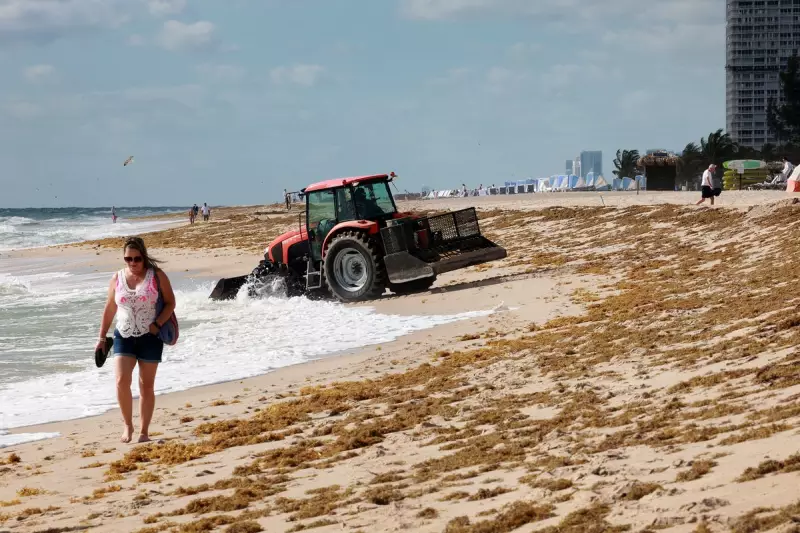
A relentless invasion of foul-smelling seaweed is inflicting economic damage running into hundreds of millions – and potentially up to a billion dollars – on coastal communities in the United States and its territories every year. The phenomenon, centred on the Atlantic's massive sargassum blooms, is also raising significant public health and environmental concerns.
The Staggering Economic Toll Quantified
Researchers from the Woods Hole Oceanographic Institution in Massachusetts and the University of Rhode Island have, for the first time, put a concrete figure on the financial impact of these recurring seaweed inundations. Their new study, released this week, found that regions like Southeast Florida, Puerto Rico, and the U.S. Virgin Islands face the highest risk.
The team used a combination of economic modelling, satellite data, reports from the National Oceanic and Atmospheric Administration (NOAA), and figures on hotel cancellations and visitor spending to reach their conclusions. "While the ecological and public health impacts of sargassum inundation events have been widely documented, their direct and indirect economic costs to governments, coastal communities and private industries had not previously been quantified," explained Tracey Dalton, a professor of marine affairs at the University of Rhode Island.

The economic harm stems largely from devastated tourism, with beaches forced to close for months, and from declines in both commercial and recreational fishing. The study underscores an urgent need for sustained investment in monitoring, forecasting, and cleanup infrastructure to prevent escalating costs.
Health Hazards and Environmental Damage
The problem extends far beyond lost revenue. When the vast mats of sargassum – often called brown tides – wash ashore and rot, they present a serious public health threat. The notorious rotten egg smell is caused by the release of hydrogen sulfide gas, which can irritate the eyes, nose, and throat and cause breathing difficulties, particularly for those with respiratory conditions.
The U.S. Environmental Protection Agency warns that exposure to hydrogen sulfide and ammonia from decaying seaweed may lead to mild or serious health effects, including respiratory, cardiovascular, and neurological impacts. Furthermore, the blooms accumulate and leach pesticides and heavy metals like arsenic and cadmium, exposure to high levels of which can be fatal to humans and animals.
Ecologically, the seaweed smothers vital coral reefs and disrupts nesting grounds for endangered sea turtles, compounding the environmental crisis.
A Growing Season Linked to Atlantic Shifts
The research also confirmed that the sargassum season, which traditionally runs from March to October, is now starting earlier and lasting longer in the western Atlantic and Caribbean. The seaweed originates in the Atlantic, forming part of a 5,000-mile-long mass known as the "Great Atlantic Sargassum Belt," from which huge quantities drift into the Gulf of Mexico and South Atlantic.
While scientists are divided on the direct role of climate change in sargassum growth, the study's authors see these unprecedented events as symptoms of broader oceanic shifts. "As the Atlantic continues to change, we're seeing cascading effects that directly connect offshore ocean processes to coastal economic vulnerability," said Di Jin, a senior scientist at Woods Hole's Marine Policy Center.
The researchers noted that existing forecasting tools are performing well, offering a crucial window for proactive management. Without it, the financial and health consequences for vulnerable coastal communities are set to worsen significantly.