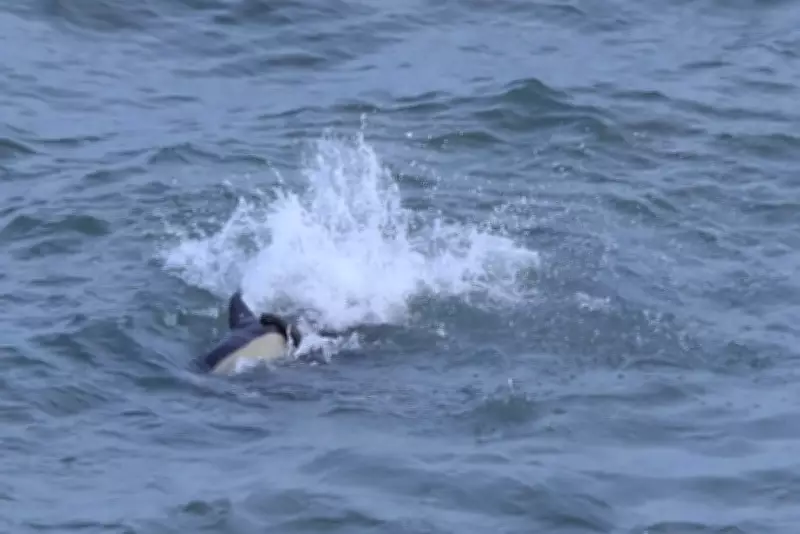
Seals Killing Dolphins: Experts Baffled by Unprecedented Marine Attacks
Marine experts across the United Kingdom are expressing profound confusion and concern over a series of violent seal attacks on common dolphins along the British coastline. This shocking phenomenon, described as "bloodthirsty" by observers, represents a dramatic escalation in predatory behaviour that has left specialists searching for answers.
Unprecedented Predatory Behaviour
While grey seals have occasionally been documented hunting smaller harbour porpoises, their attacks on the significantly larger and heavier common dolphins mark a troubling new development in marine ecology. Common dolphins typically measure over six feet in length and possess greater speed and strength than harbour porpoises, making them unlikely targets for seal predation.
The geographical spread of these incidents is particularly alarming to researchers. Multiple attacks have now been confirmed off the coast of Devon, in west Wales, and throughout the Irish Sea region. This suggests a pattern rather than isolated incidents, though experts believe the behaviour might be limited to a specific family or population of grey seals.

Recent Incident in Wales
The latest confirmed victim was discovered at Newgale beach in Pembrokeshire, where marine investigators found a female common dolphin measuring 1.84 metres with horrific injuries consistent with seal attacks. Marine Environmental Monitoring experts collected the dolphin for examination and confirmed bite marks on the pectoral fins and torn blubber that matched grey seal dental patterns.
A spokesperson for the investigation team stated: "This week has seen the first reported case of a grey seal killing a short-beaked common dolphin in Wales. Grey seals are known on occasions to hunt harbour porpoises around the Welsh coastline, but we have never had a report of them killing common dolphins, which are considerably larger and faster."
Growing Pattern of Attacks
The Welsh incident follows similar attacks documented in other regions:
- Last year, observers witnessed a grey seal killing a common dolphin around the Irish coastline
- In recent months, two separate confirmed reports emerged from the north Devon coastline
- The Cetacean Strandings Investigation Programme has been examining these Devon cases
Experts now suspect that a small population of grey seals has developed the capability to capture and kill common dolphins, operating primarily between north Devon and the Welsh coastline. This specialised hunting behaviour appears concentrated rather than widespread among grey seal populations.
Potential Ecological Factors
While the precise motivation remains unknown, marine biologists have identified several possible contributing factors:
- Population dynamics: Common dolphin numbers have increased dramatically over the past decade, making them the most common cetacean around the Welsh coastline
- Prey availability: Changes in fish populations or other traditional food sources might be driving seals to seek alternative prey
- Behavioural adaptation: Individual seals or family groups may have developed new hunting techniques through observation or experimentation
- Environmental pressures: Climate change impacts on marine ecosystems could be altering predator-prey relationships
The investigation continues as marine experts work to understand why grey seals now perceive common dolphins as viable prey. This unprecedented behaviour challenges existing understanding of marine predator dynamics and raises important questions about ecosystem stability along British coastlines.