Scientists are raising the alarm over a profound and potentially permanent transformation in the world's oceans, as vast blooms of floating seaweed expand at an unprecedented rate. A new global study points to a worrying 'regime shift' from a macroalgae-poor ocean to a macroalgae-rich one, a change driven by human activity.
A Global Surge in Seaweed
Researchers from the University of South Florida have published a landmark study in Nature Communications, providing the first comprehensive global picture of floating algae. Analysing a staggering 1.2 million satellite images taken between 2003 and 2022, they employed artificial intelligence to detect signals of floating macroalgae.
The findings are stark. The area covered by these massive seaweed blooms has been increasing by 13.4% every year in tropical regions like the Atlantic and western Pacific. The most dramatic acceleration in growth began after 2008, with researchers identifying specific tipping points in 2008, 2011, and 2012 for different seaweed types across various oceans.

"Before 2008, there were no major blooms of macroalgae reported except for sargassum in the Sargasso Sea," explained Professor Chuanmin Hu, the study's senior author. "On a global scale, we appear to be witnessing a regime shift."
Drivers: Heating Seas and Nutrient Pollution
The study directly links this explosive growth to two key factors: global ocean heating and nutrient pollution. The accelerated warming of the oceans since 2010 correlates strongly with the increase in blooms. Simultaneously, excessive enrichment of waters from sources like agricultural runoff provides a potent fertiliser for the seaweed.
While microalgae like phytoplankton also increased, their growth was a more modest 1% per year. This discrepancy suggests macroalgae like sargassum are thriving under the new conditions in a way other species are not, potentially altering the fundamental balance of marine ecosystems.
The most visible example is the Great Atlantic Sargassum Belt, a colossal mat of seaweed visible from space that stretches from the Gulf of Mexico to West Africa. Other significant blooms include a ring around New Zealand's Chatham Islands and the frequent 'red tides' off the coast of Florida.
Profound Consequences for Ocean and Climate
This regime shift carries severe implications. The researchers warn that these immense floating mats can darken the waters below, drastically reducing light availability for other marine life and changing ocean geochemistry. This can destabilise entire food webs.
Furthermore, the shift may ironically accelerate climate breakdown. By altering the ocean's albedo (reflectivity) and affecting processes of carbon sequestration and upper ocean stability, the blooms could create a feedback loop that exacerbates warming.
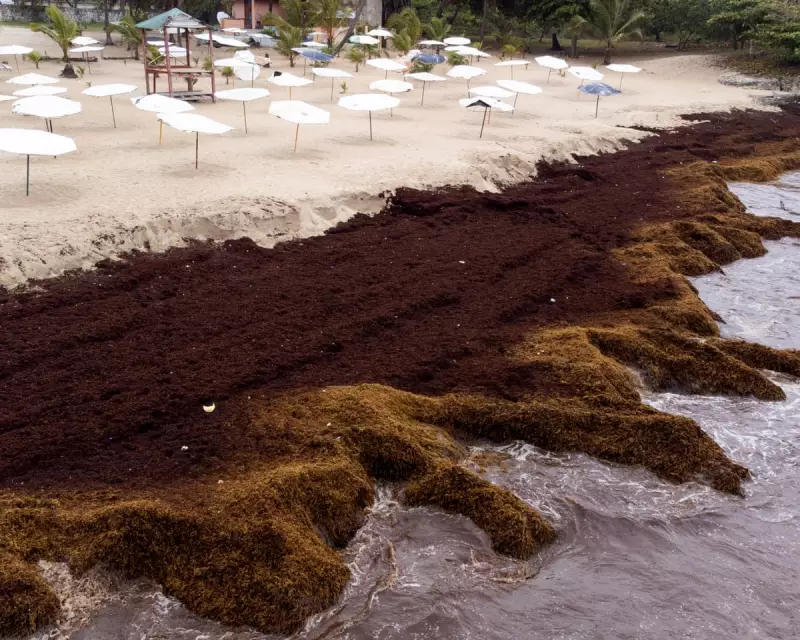
"We believe that a regime shift in oceanographic conditions has already occurred to favour macroalgae," the authors wrote. This new reality will have "profound impacts" on the atmosphere's radiative forcing, ocean biogeochemistry, and the overall health of marine environments worldwide. The image of a Dominican Republic beach smothered in sargassum is becoming a potent symbol of this rapidly changing seascape.