
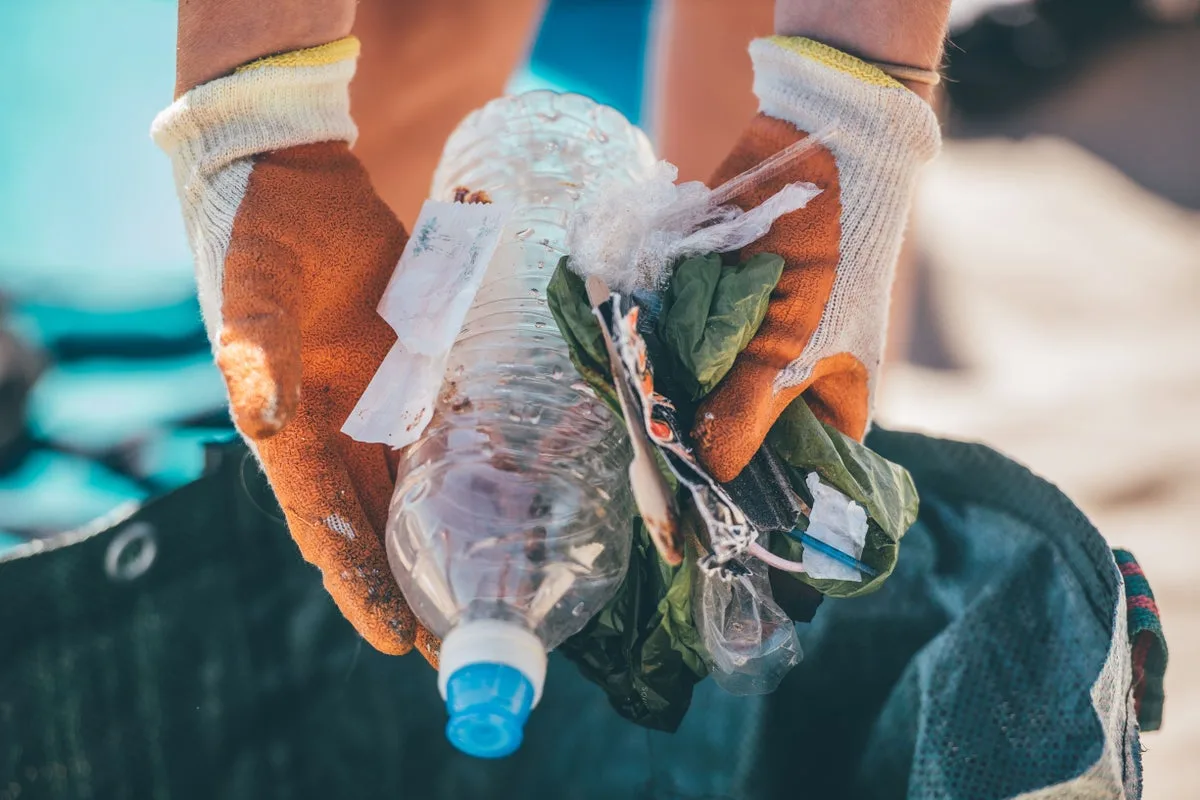
Almost 50,000 drinks-related litter items such as cans and bottles were collected during volunteer beach cleans in the UK last year, according to an annual report by the Marine Conservation Society (MCS). The charity said drinks-related litter was found on 95% of beaches surveyed across the country.
Across the UK and the Channel Islands, volunteers removed more than 600,000 items of litter in total, weighing more than 11,400kg. Plastic bottles were among the top 10 litter items and found on 69% of beaches surveyed, while metal drinks cans were found on 59% of beaches.
However, the MCS's latest State Of Our Beaches report, using data collected by almost 15,000 volunteers who surveyed 141,656 metres of coastline, reveals “encouraging progress”, with average litter levels dropping 15% between 2024 and 2025, including an 18% fall in single-use plastics. The charity suggested the decrease could be the result of bans on single-use plastic items over the past few years.
Around the UK, English beaches had an average of 151 items of litter per 100 metres surveyed in 2024, down 3% on the previous year, while Wales had 73.5 items per 100 metres, a 39% decrease. In Scotland, volunteers picked up 156.5 items per 100 metres, a 23% decrease, while in Northern Ireland, an average of 380 pieces of litter were collected per 100 metres – a 20% increase. In the Channel Islands, 27 pieces of rubbish were picked up per 100 metres, a 77% decrease.
The charity is calling on governments across the UK to deliver deposit return schemes, recently named Exchange for Change, in October next year. The scheme will see consumers pay a small deposit on drinks containers which is refunded when the empty bottle or can is taken to a designated collection point. The MCS said it remains concerned that glass has been excluded from the scheme, except in Wales, as glass bottles were found on half of beaches across the UK last year.
Catherine Gemmell, policy and advocacy manager at the MCS, said: “We’re looking forward to deposit return schemes starting across all four UK nations to tackle drinks-related litter and protect our seas from pollution. Well-designed schemes will cut waste at its source by keeping materials in use for longer and reduce the number of containers that end up along our coastlines.”




