Brazil's Caminhos da Ibiapaba Trail: A Path to Conservation and Economic Growth
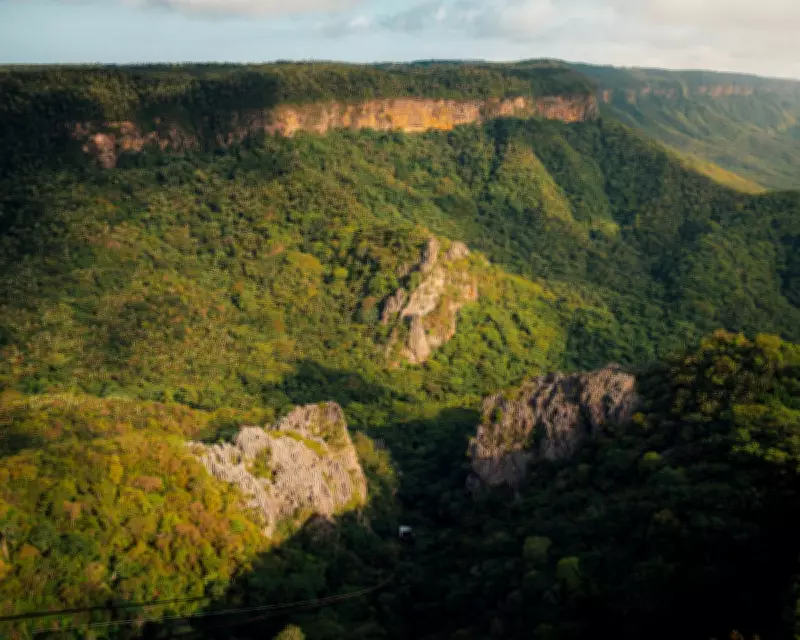
Follow the distinctive yellow footprints along Brazil's newest long-distance trail, and you will journey through lush green forests, sandy shrublands, and past sweeping vistas with bizarre rock formations. The Caminhos da Ibiapaba, spanning 186 kilometers (115 miles) of historic paths once used by 19th-century merchants, is the first waymarked long-distance footpath in Brazil's northeast region. This trail adds to a growing national network of hiking paths, designed with standardized black and yellow footprint markings to increase access to national parks, develop local economies, and better preserve the environment.
A Tool for Environmental Protection
Unlike the United States or European countries, which have established hiking networks for over 50 years, Brazil only recently launched a formal system of trails. Pedro Cunha e Menezes, director of protected areas at the environment ministry and the main architect of the government's 2018 policy for long-distance trails, emphasizes that hiking trails are a crucial tool for conservation. "People protect what they know," says Menezes. "The trail is this tool that gives people the means to know and appreciate nature. Hikers and campers often become defenders of the environment." Trails also help control wildfires, deter illegal activities like poaching, and serve as wildlife corridors, especially when connecting protected areas as the Caminhos da Ibiapaba does.
Connecting Diverse Landscapes and Communities
The trail begins in Ubajara National Park in Ceará and ends in Sete Cidades National Park in Piauí, crossing three contrasting biomes: the tropical Atlantic forest, the dry Caatinga, and the biodiverse Cerrado savannah. Forests are being restored along sections of the path, with the long-term goal of connecting all conservation units within vegetation corridors to aid species migration and prevent extinction. So far, Brazil has 22 officially recognized long-distance trails covering 7,000 kilometers (4,350 miles), plus hundreds of shorter paths adopting the same signage.

New trails are emerging daily, driven by civil society, local communities, and hiking groups, making the process slower but more robust by fostering a sense of belonging. In São João da Fronteira, locals created a secondary trail with signs guiding visitors past carnauba wax palms and ancient rock art engravings. Darlene Glória Fausto, 27, who led this effort, notes, "Besides enhancing our local history and culture, the trail brings an economic dimension to our community."
Economic Opportunities and Sustainable Alternatives
There is hope that the Caminhos da Ibiapaba will bring opportunities to an overlooked region, boosting income for small businesses offering food, lodging, and cultural experiences to hikers and cyclists. Teresinha Moura, 60, who opened a bed and breakfast near Ubajara park after sugarcane farming became unprofitable, says, "I believe the trail will bring more people to our property. I love hosting and sharing our experience." This offers an alternative to small-scale farming, which often involves land clearing and fire use. Diego Rodrigues, director of Ubajara park, explains, "The trail will show farmers they can make an income by protecting the forest."
Local guide Francisco Welio Gomes recalls past tensions between conservation authorities and farmers but notes positive changes, with park authorities now encouraging communities to use their areas for tourism. While overtourism is not yet a concern, Menezes cautions that trails require management and are not a panacea for conservation, but inaction poses a bigger risk.

Global Inspiration and Future Plans
Brazil is not alone in seeing trails as positive tools. Fivos Tsaravopoulos, manager of Paths of Greece, highlights a global movement using trails for conservation and rural development, citing examples like Romania's Via Transilvanica and trails in Lebanon and Jordan. In Brazil, plans for new trails are underway, with 9,000 kilometers (5,600 miles) in development. The inaugural hike of the Caminhos da Ibiapaba in February inspired park managers from other regions, such as Tathiana Chaves Souza, to replicate the experience back home, demonstrating that such initiatives are feasible and impactful.