
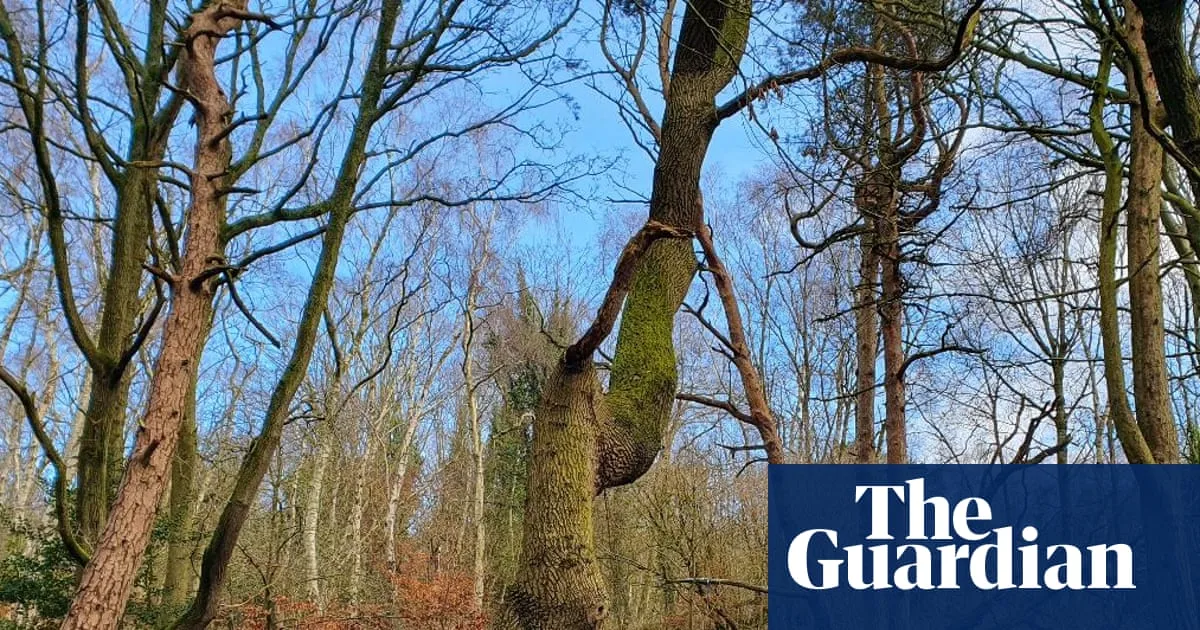
At last, the sun shone after weeks of rain, revealing the hidden wonders of Storeton Wood on the Wirral. This secondary woodland, once a quarry, now shelters a remarkable relic from the Triassic period: footprints of a crocodile-like creature known as Chirotherium storetonense, meaning 'hand beast'. The footprints, dating back 240 million years, were first discovered in 1838 by workmen extracting sandstone for Liverpool's construction.
Initially mistaken for the signs of people perished in Noah's flood, Victorian scientists later confirmed their prehistoric origin. The creature likely roamed a lake in a hot, Europe-wide desert, its impressions preserved in muddy edges. Slabs featuring the footprints were dispatched to museums, and the Liverpool Natural History Society offered 20 shillings to the workmen for their find.
The quarry, long infilled by spoil from the construction of the first Mersey tunnel, is now invisible. However, deep time caught up with the millennium when a replica Chirotherium was engraved on the wall surrounding the wood to celebrate the discovery. After a search through hummocky ground and fallen tree trunks, the replica was found, bright on the wall, scaled down from a 2.5-metre-long beast with a long tail counterbalancing its movement.
This archive of fossilised footprints, sequestered since the Triassic, alongside childhood memories of Stephenson's Sankey viaduct faced with Storeton sandstone, turned a sunny trip into a journey through time itself.




