The Secret Night Life of Tawny Frogmouths
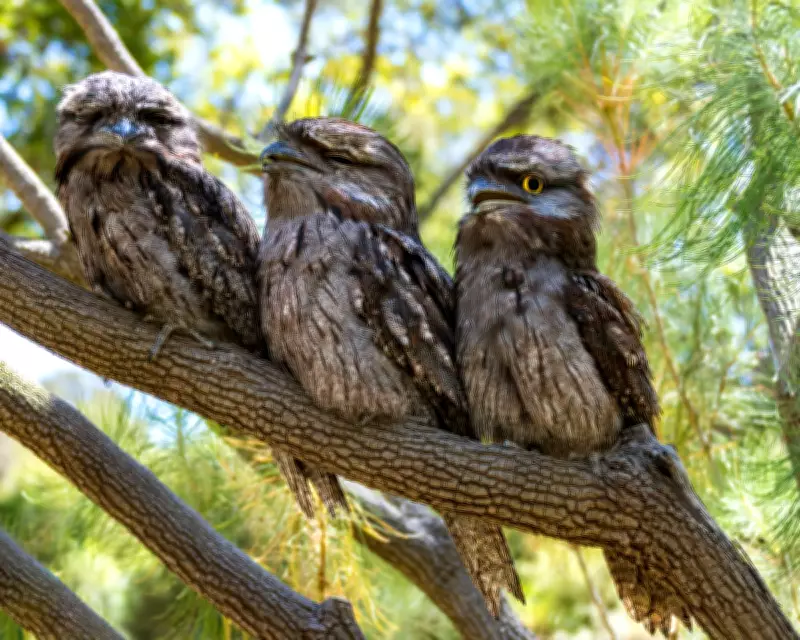
With their Muppet-like appearance and spooky, forward-facing eyes reminiscent of a Scooby-Doo cartoon character, tawny frogmouths often pose as tree stumps on branches, almost parodying themselves. However, these fascinating birds lead another life that few people witness, awakening at sunset like vampires to hunt through the night until dawn.
From Stolid Creatures to Silent Zephyrs
During the day, tawny frogmouths appear stolid and unmoving, but as darkness falls, they transform into zephyrs that silently swoop through the air, catching prey both on the ground and mid-flight. This nocturnal prowess was recently highlighted when the tawny frogmouth was named the 2025 Australian Bird of the Year winner, drawing more attention to their unique behaviors.
Last spring, I embarked on a project to follow a breeding pair in Hopetoun Gardens, Elsternwick, located in Melbourne's south-east. From early August, I made over 40 visits to this Federation-era park, which features locally significant trees such as Illawarra flame trees, a bunya-bunya pine, and several Cedrus deodara specimens that the tawnies favor for nesting.

Discovering the Nest and Chicks
Initially, I searched for telltale signs like white splodges on the ground, known as "whitewash" or poop, as frogmouths are prodigious creators, leaving copious amounts beneath their nests. In early September, I finally spotted a tawny during the daytime, brooding eggs on a nest made of sticks straddling a fork in a huge Himalayan cedar.
By one October evening, as darkness gathered, I witnessed the chicks and parents in action. One parent suddenly dived off the nest into the trees, returning a minute later with food. There was just enough light to see two small shapes in the nest reaching up eagerly. Contrary to expectations of slow flight like a pelican or a long takeoff like a black swan, the tawny frogmouths flew with panache, deftly threading through lamp-posts, bushes, and trees.
The Growth and Challenges of the Chicks
In late October, the nestlings developed a thick, downy plumage resembling fur more than feathers, giving them a universally adored "Cousin It" look. They nestled into their parents' chests and, even at this young age, had learned to stare at humans with a mini-me threat display mimicking their parents.
The chicks left the nest at the end of October, becoming "branchlings" that jostled each other up and down branches while rapidly flapping their wings to build muscle for flight. On 22 October, Melbourne experienced a destructive wind storm with speeds up to 130 km/h, causing concern for their survival. Fortunately, they persevered and properly fledged, taking their first flights in early November.
Heroic Parental Efforts
During this period, the parents demonstrated heroic dedication to feeding their offspring. One night, I observed an adult smoothly plunging to the ground in front of me, catching prey from the grass and returning to feed the chicks. The other parent flew off and quickly returned with more food.
In a remarkable display of effort, I timed them for 10 minutes and witnessed each parent hunting and feeding their offspring five times in that short span. With only enough light to see silhouettes, I glimpsed their substantial forms flying silently across the park, showing fleeting suggestions of their striped wings.
Learning Their Calls and Behaviors
Watching this night-time bird theatre was exhilarating entertainment, a wildlife drama in the dark for an audience of one. I learned the frogmouths' calls, including a repetitive "oom, oom," a soft "huff" from the young birds waiting for food, and a screechy hiss. Once the chicks fledged and moved around the park, I could always find them by listening for those "huffs."
On one occasion, an adult flew at me, likely disturbed by my presence, and to my surprise, it buzzed like a loud bee. This experience, along with their winning the Guardian's 2025 Bird of the Year contest, has surely helped the tawny frogmouth win over more fans.

Why These Birds Captivate
It's hard to pinpoint why I became so focused on these nocturnal birds, having known about them for years. I've always loved their front-facing eyes, which mark them as the pugs of the bird world, and I'd often watch them in the daytime and collect their marbled feathers as souvenirs.
Now, I'm even fonder of them because, as Australia's most common night-hunting bird, they're easy to find. When you do spot them, you're rewarded with some of the most exhilarating birding experiences available, witnessing the transformation from a daytime "stump" into an aerial athlete. Debbie Lustig, a Melbourne writer, birdwatcher, and occasional wildlife rescuer, shares this insight into the captivating world of tawny frogmouths.