Death Valley's Rare Superbloom Transforms Desert into Floral Wonderland
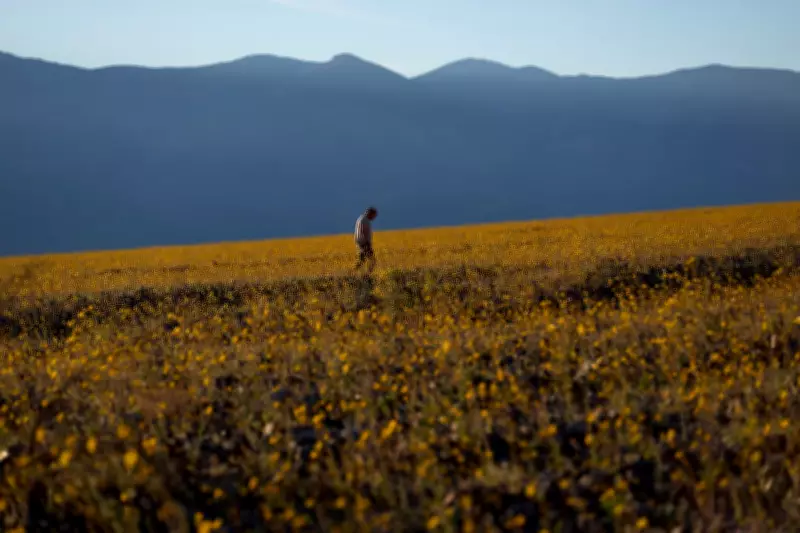
A breathtaking natural spectacle is unfolding in one of the planet's most extreme environments. Death Valley National Park, straddling California and Nevada and renowned as the driest and hottest place in North America, is currently experiencing a rare superbloom of wildflowers. This extraordinary event has transformed the typically barren, brown desert landscape into vast carpets of gold, purple, and pink, drawing visitors from far and wide to witness a phenomenon that occurs only once every decade or so.
A Fleeting Display of Colour and Life
While wildflowers bloom annually to varying degrees across parts of southern California and Nevada, a superbloom of this intensity is exceptionally rare in Death Valley. The vibrant display is so vivid that it can reportedly be seen from space, challenging perceptions of the desert as a lifeless wasteland. Park ranger Matthew Lamar emphasised the transformation, noting, "This landscape that sometimes people think of as desolate or devoid of life is coming alive right now with this really beautiful palette of colours."
The current bloom is the most impressive the park has seen since 2016, thanks to a combination of steady rainfall and warm temperatures over the past six months. According to the National Park Service, Death Valley received nearly a year's worth of rain since October, with November 2025 being the wettest on record at 1.76 inches. This moisture has triggered long-dormant seeds buried in the arid soil to germinate and burst through the surface, creating a stunning floral tapestry.

Resilient Flora Defying Extreme Conditions
The superbloom features a diverse array of hardy desert species. The desert gold flower, often called the "desert sunflower," blankets large areas of the valley in yellow, while purple phacelia, brown-eyed primrose, and the pink desert five-spot add splashes of contrasting colour. Visitors like Jackie Gilbert from Las Vegas have marvelled at the scene, appreciating the striking contrast between the golden fields, rugged mountains, and clear blue sky. Gilbert remarked on the flowers' resilience, stating, "It's a good reminder that even in the face of all this adversity, that they can still thrive."
Ecologists highlight that this event dispels common misconceptions about deserts being devoid of life. Loralee Larios, a plant ecologist at the University of California, Riverside, explained, "The plants and the animals have developed really amazing strategies to be able to persist, and especially in a system like Death Valley that's really sort of characterized by extremes." Tiffany Pereira, an ecologist and associate research scientist at the Desert Research Institute, added that desert plants have adapted to survive for decades without water, lying in wait for the perfect conditions to germinate and spring to life.
Act Quickly to Witness the Ephemeral Beauty
Time is of the essence for those hoping to experience this short-lived wonder. The fields of flowers at lower elevations in the park are expected to remain vibrant until mid-to-late March, depending on weather conditions. Higher elevations will likely see blooms from April through June, according to the National Park Service. Prime viewing spots in early March include areas just north of the Furnace Creek Visitor Center, south along Badwater Road, and Ashford Mill, which is about an hour's drive from the visitor centre.
Park officials and ecologists urge visitors to respect the fragile ecosystem by staying on designated trails and avoiding trampling the flowers. Picking wildflowers is strictly prohibited, and touching purple phacelia can cause skin irritation. Pereira warned, "Any flower plucked from the ground means fewer seeds planted for future generations to enjoy." Visitors should also watch their step for sphinx moth caterpillars, which are scattered across the desert floor feeding on brown-eyed primrose before burrowing into the soil to transform into moths.

As Ranger Lamar aptly summarised, "I think it's a great time to come to Death Valley and have that unique experience because who knows when the next one will happen?" This superbloom serves as a powerful testament to nature's resilience and offers a rare, fleeting opportunity to see one of Earth's harshest environments burst into vibrant, colourful life.