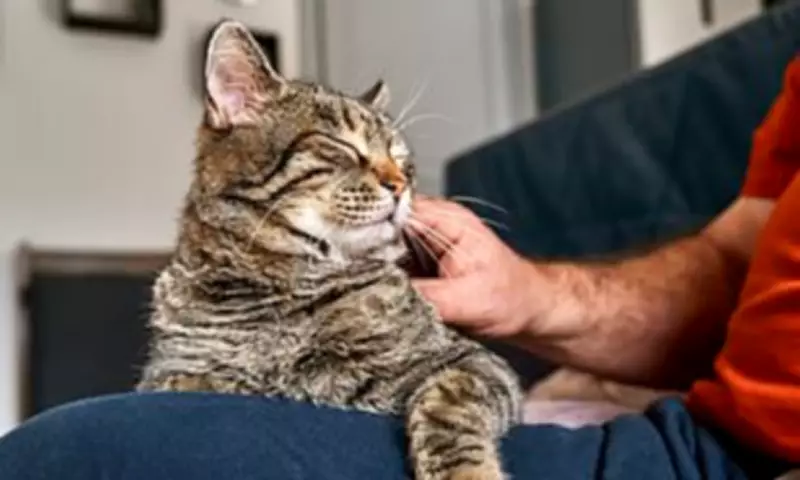
New scientific research has uncovered a fascinating distinction in how different household companions respond to human needs. While the old adage suggests curiosity killed the cat, experts have discovered felines are actually quite content to observe human struggles from a distance, unless they perceive a direct personal advantage.
Comparative Study of Helping Behaviours
Researchers from Eotvos Lorand University in Hungary conducted an illuminating study examining the reactions of untrained pet dogs, domestic cats, and children aged between 16 and 24 months. The experiment focused on scenarios where a familiar person was actively searching for a concealed object within their environment.
Dogs and Children Show Similar Cooperative Tendencies
The investigation revealed striking parallels between canine and toddler behaviour. More than three-quarters of both dogs and young children actively participated in the search by either indicating the object's location or physically retrieving it for the caregiver. This spontaneous assistance occurred even when no direct reward was offered or requested.

'This suggests that domestication, sharing our home, and forming close bonds are not sufficient to produce spontaneous, human-like helping behaviour,' explained study author Marta Gacsi, highlighting the complexity of interspecies relationships.
Feline Independence Takes Priority
Domestic cats presented a markedly different response pattern. While they paid attention to the searching activity, they rarely offered any form of assistance. The research team concluded that 'cats were significantly less likely to show spontaneous object-related behaviours when it did not directly benefit them.'
However, when the hidden item happened to be a cat's personal toy or food treat, their engagement levels increased dramatically, approaching similar rates to those observed in dogs and children. 'Cats only engaged when it benefited themselves,' the researchers noted, while clarifying this behaviour shouldn't be interpreted as mean-spirited.
Evolutionary Explanations for Behavioural Differences
The findings, published in the respected journal Animal Behaviour, point toward evolutionary history as a key explanatory factor. Unlike dogs, which underwent thousands of years of selective breeding for cooperative tasks like herding and hunting, cats essentially 'domesticated themselves' without human-directed selection for helpful traits.
This historical context helps explain why cats demonstrate greater independence and lower reliance on human caregivers. When no clear personal incentive exists, felines may simply choose to observe rather than act, reflecting their evolutionary path as more solitary hunters than pack animals.
Experimental Methodology and Results
In the carefully designed test scenario, objects were hidden in plain view of the child, dog, or cat without the caregiver explicitly asking for assistance. Detailed analysis showed that while approximately 60 percent of dogs and nearly half of children approached the objects to signal their location, none of the cats exhibited this helping behaviour when human interests alone were at stake.
The research team emphasized that 'in certain contexts, dogs tend to spontaneously help their human caregivers to a similar degree as 16-24-month-old children, even in the absence of a direct reward.' This contrasts sharply with feline behaviour patterns observed throughout the study.
These insights contribute significantly to our understanding of animal cognition and the varied nature of human-pet relationships across different species commonly sharing our homes and lives.