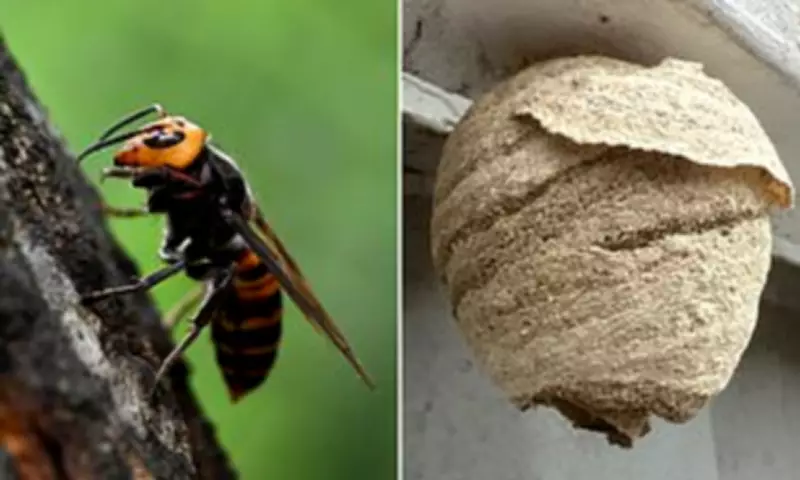
Asian Hornets Storm Basingstoke via M3, Endangering Bees and Residents
The picturesque Kent town of Basingstoke is facing a dire invasion from lethal Asian hornets, which experts reveal are hitching lifts in vehicles to infiltrate the area. Beekeepers are bracing for all hell to break loose following a dramatic surge of these honeybee-hunting insects traveling north on the M3 from southern cities like Portsmouth and Southampton.
Rapid Spread and Overwintering Success
First detected in the UK in 2016, the yellow-legged hornets have alarmingly successfully overwintered in the country for the first time, as warned by specialists last year. Many of these invasive pests have established bases in The Channel Islands before migrating to southern England, often unwittingly transported on cars via major roadways.
Known for preying on essential insects, particularly native bees, a single Asian hornet can devour up to 50 honeybees daily. Their sting is not only incredibly painful but has also caused fatalities across Europe, heightening public health concerns.

Expert Warnings and Public Health Alert
Steve Delo, secretary of the Basingstoke and District Beekeepers Association, stated: There's a huge spike of these nasty, nasty creatures arriving in south Hampshire, and we are expecting all hell to break loose. He emphasized that this is a public health issue, urging vigilance among residents.
Mr. Delo advised: Whatever you do, don't approach a nest—if you see one, report it but don't go poking around. Though definitely don't ignore it either because these creatures are eating our biodiversity!
Threats to Biodiversity and Agriculture
Insect specialists fear the species could devastate Basingstoke's wildlife and pose serious risks to the public. Steve highlighted: It's not just honey that will be on the line, but our farming too. A third of the food we eat is pollinated by honeybees—they pollinate our fruit trees, apple trees, cherry trees, all stone fruit.
He explained that while these hornets consume 11 kilograms of insect flesh, 30% is honeybees, with the remaining 70% comprising other crucial pollinators like moths, flies, butterflies, and various bee species. Describing them as apex predators, Steve noted that a honeybee colony serves as a larder or supermarket for these voracious insects.
Historical Spread and Current Crisis
Originally from Asia, the hornets have hitched rides on cargo ships and now risk nesting in Basingstoke if transported inside vehicles up the M3. The species arrived in France, Spain, and Italy about two decades ago, gradually moving northward.
Steve detailed: When they moved to the north of France, the hornets found themselves moving on the wing or effectively getting moved by transit. Then they ended up on the island of Jersey—there is a real problem there—and until 2023, we didn't really have much of a problem in the UK.
Now, numbers in Kent are significant, with hundreds of sightings, and recent reports indicate their presence in South Hampshire, signaling an escalating threat.
Defenseless Bees and Human Dangers
European honeybees in western England have no natural defence against Asian hornets, making them highly vulnerable. Beyond biodiversity, these hornets pose grave risks to humans. Steve described their sting as incredibly more painful than a bee's, with multiple stinging capabilities, though typically only provoked near nests.
He warned: Their venom is a toxin and it will hurt! It produces an immediate pain and shock. There have been fatalities on the continent.
Climate Change and Awareness Campaigns
Rising temperatures due to climate change are aiding the hornets' spread, as they fly on warmer winds and survive milder winters. In response, the Basingstoke and District Beekeepers Association has launched local and national campaigns to raise awareness.

Steve recommended downloading the Asian hornet app to report sightings to the National Bee Unit, which acts swiftly on validated reports. Locally, the association is recruiting citizen scientists and volunteers trained to monitor hornets using traps.
Identification and Distinction
It's crucial not to confuse Asian hornets with European hornets. Steve clarified: The European hornet is big and orange, while the Asian hornet is smaller, black with yellow legs, and has an orange band on the fourth segment of its thorax.