Prince William Takes Action Against Microplastic Pollution with Innovative Home Installation
The Prince of Wales has taken a significant personal step in the fight against environmental pollution by having specialised microplastic filtration devices installed on washing machines at his family residences. This move follows his recent visit to the pioneering Bristol-based company Matter, which developed the technology.
Royal Endorsement for Sustainable Technology
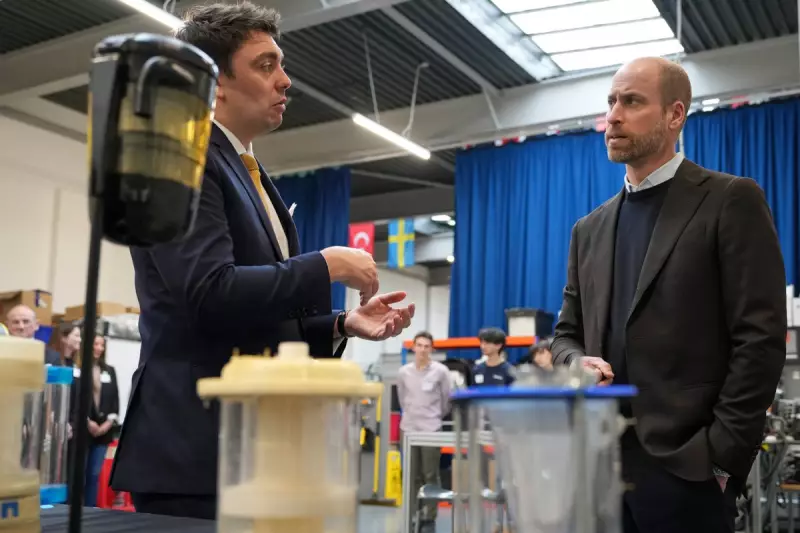
During his visit to Matter's Bristol headquarters, Prince William engaged with founder and chief executive Adam Root, learning about the company's journey from a £250 grant from The King's Trust to employing approximately 50 people. The technology specifically targets microplastic pollution, preventing these harmful particles from entering waterways through laundry wastewater.
"You should be really proud," William told the Matter team. "You must be excited where it is headed. This is really going places, it is incredible, well done."

Horrifying Reality of Microplastic Waste
The prince was shown tangible evidence of the scale of the problem during his visit. He examined a ball of red microfibres captured from just ten washes of red towels, alongside plastic containers filled with microfibres collected from industrial textile manufacturing processes.
"I'm genuinely horrified," William responded. "I can't get over the size. It is absolutely atrocious. Companies must have known how much stuff they are washing away."
When presented with a bottle containing microfibres captured from ten domestic washing machine cycles, the prince remarked: "I'm very glad we had our filters on our washing machines."
Royal Residences Embrace the Technology
The filtration devices have been installed at Forest Lodge, the Grade II listed eight-bedroom property in Windsor Great Park where the Prince and Princess of Wales moved with their children in autumn 2025. The technology is also operational at their other properties:
- Anmer Hall, their ten-bedroom mansion on the Sandringham Estate in Norfolk
- Apartment 1A in Kensington Palace, London
It is understood that Prince William is keen for King Charles III to install similar devices at Buckingham Palace and other royal residences, potentially creating a wider royal endorsement for the technology.
From Dining Table Innovation to Royal Adoption
Adam Root developed Matter's filtration system at his mother-in-law's dining table with initial support from The King's Trust. The company became an Earthshot Prize finalist in 2025, recognising its innovative approach to tackling one of the world's growing environmental challenges.
During William's visit, Root explained how the company has scaled its operations while maintaining focus on addressing microplastic pollution from textile washing. The prince showed particular interest in how the business was expanding and forming partnerships with brands.
Broader Commitment to Innovation
Following his visit to Matter, Prince William continued his tour of Bristol's innovation sector by visiting Isambard-AI, the UK's most powerful supercomputer operated by the University of Bristol and innovation organisation NCC.
Professor Evelyn Welch, vice-chancellor and president of the University of Bristol, said after the visit: "We were delighted to share with Prince William how this work is already making a real difference to people's lives, and how our teams are striving every day to create positive change for communities here in the UK and around the world."
The prince's actions demonstrate a practical commitment to environmental sustainability, moving beyond rhetoric to implement solutions within his own household while supporting British innovation in the green technology sector.