
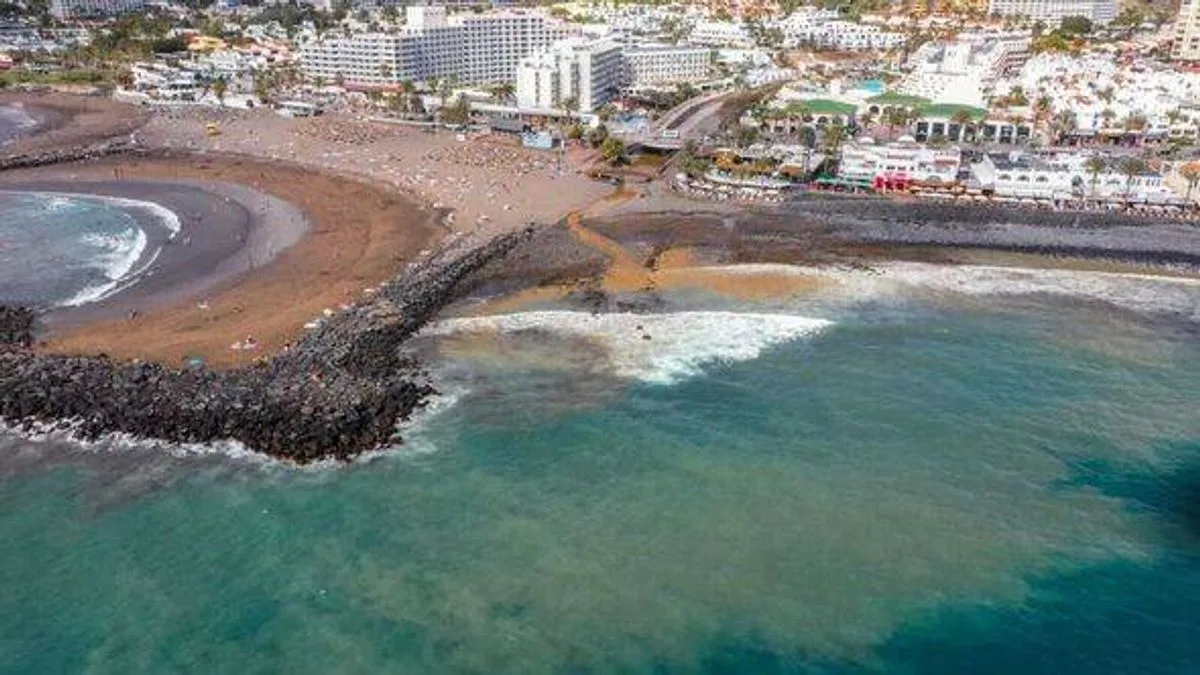
An alert has been issued for the Canary Islands after experts warned of 'unacceptable' health risks at popular beaches in Tenerife. The Court of Justice of the European Union (CJEU) has condemned Spain for failing to properly control urban wastewater discharges, with Tenerife identified as a major area of concern.
Beaches have been shut due to pollution, and thousands of holidaymakers may continue putting their health at risk in 2026. The CJEU found that several parts of Tenerife, including Adeje, Arona, Candelaria, San Isidro, Puerto de Santiago, Playa la Arena, the Orotava Valley and other areas, lacked proper sewage collection systems.
The Tenerife Association of Friends of Nature (ATAN) is sounding the alarm over a health scandal, alleging that locals and tourists have been subjected to an unacceptable health threat for years. Throughout 2025, renowned beaches such as Playa Jardín in Puerto de la Cruz were closed for nearly a year due to E. coli levels significantly exceeding limits, caused by fractures in discharge pipes and shortcomings in municipal sanitation.
At the start of 2026, storms and torrential downpours have thrust the issue back into the spotlight, with overflowing drainage systems making sewage visible across multiple sections of the Tenerife coastline. The Canary Islands Government's 2025 register records 403 discharge locations, 216 of which are unlicensed, with Tenerife representing the majority.
The Canary Islands face water scarcity, extreme pressure on infrastructure, and heavy reliance on imported food, contributing to their inclusion in the Fodor’s No List 2026, which highlights destinations suffering from unsustainable tourism pressures. ATAN and other groups are demanding a temporary halt to further tourism expansion, urgent investment in sewage treatment infrastructure, independent audits of discharge points, and new residency rules to limit population growth.
Island officials have stressed that the court decision looks at the situation as it was in 2020, based on data collected up to April of that year. However, the European Commission may impose sanctions if the situation is not urgently rectified.




