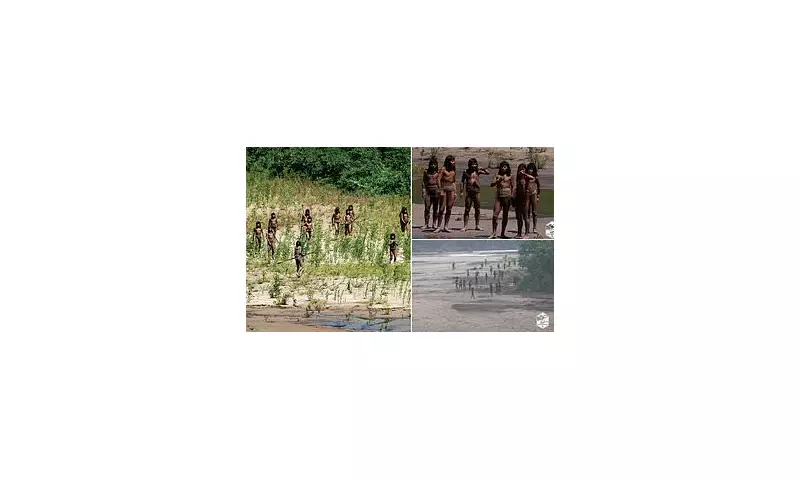
Stunning, high-definition footage of the world's largest uncontacted indigenous tribe has been released for the first time, showing a remarkable and cautious encounter between spear-wielding Amazonian hunters and Western explorers.
A Historic and Cautious Encounter
The incredible scenes were captured by American conservationist Paul Rosalie, who claims to be the first person to obtain high-definition images of the remote community. The video, filmed over a year ago but only now coming to light, shows tribesmen warily descending onto a beach, armed with bows and arrows as they move through a cloud of butterflies.
As they edge closer along the shoreline, a mix of vigilance and curiosity is palpable. The hunters scan the group of strangers, pointing and appearing, at moments, ready to attack. In a surprising development, their initial defensiveness fades. The tribesmen are seen laying down their weapons and approaching the explorers, with some even breaking into smiles.

A Deliberate Decision to Protect
Despite the historic nature of the footage, Rosalie has made a critical decision: he is withholding the exact location of the tribe to shield them from further outside contact. Speaking on the Lex Friedman Podcast, Rosalie emphasised the grave risks, stating, "This has not been shown ever before. This is a world first."
He explained that the tribe possesses no immunity to common diseases, meaning any contact could prove fatal. This revelation comes as a stark warning amidst a growing trend of dangerous intrusions.
The Growing Threat from Influencers and Industry
The emergence of this footage coincides with a alarming new report from London-based indigenous rights organisation Survival International. The report warns that influencers, adventure tourists, and aggressive missionaries deliberately seeking interaction with uncontacted tribes are becoming a major threat to their survival.
"These efforts are far from benign. All contact kills. All countries must have no-contact policies in place," the charity stated. It highlighted the case of American influencer Mykhailo Viktorovych Polyakov, who was arrested by Indian authorities after breaching laws protecting the Sentinelese tribe on North Sentinel Island.
Survival International's research paints a dire picture for the 196 remaining uncontacted Indigenous groups globally. Their report identifies multiple threats:
- Nearly 65% face threats from logging.
- Around 40% are endangered by mining operations.
- Approximately 20% are at risk from agribusiness expansion.
The organisation also criticised certain anthropologists and filmmakers, citing Sir David Attenborough's 1971 attempt to contact a tribe in Papua New Guinea as a "reckless encounter" that could have introduced deadly pathogens.
With governments often prioritising resource extraction over protection, and public perception swayed by romanticised "lost tribe" stereotypes, the future is precarious. Survival International concludes that half of these uncontacted groups could be wiped out within the next decade if urgent action is not taken by governments and corporations to protect their territories and enforce strict no-contact policies.