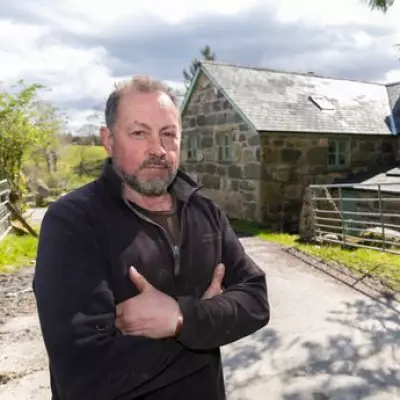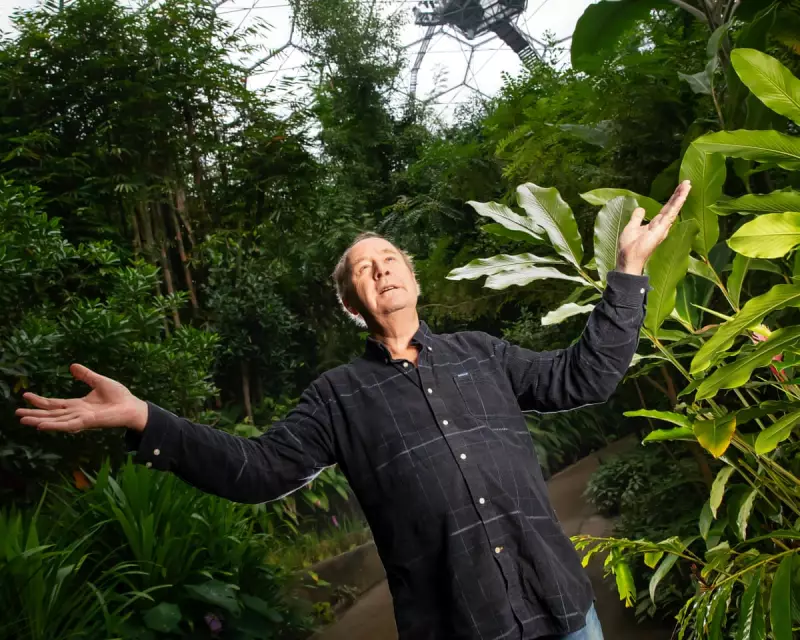
Sir Tim Smit, the co-founder of the groundbreaking Eden Project in Cornwall, has declared that the world is in a better position now than it was when the environmental attraction was conceived 25 years ago. Speaking as the iconic site celebrates its silver anniversary, Smit expressed a profound optimism for the future, arguing that people are becoming more attuned to their place within the natural world.
A Vision for Reconnection and Hope
Smit explained that the core inspiration behind the Eden Project, which opened its doors to the public in 2001, was to address a fundamental lack of awareness. "The main inspiration was that most people didn’t realise that without plants there’s no life on earth," he stated. He described the entire venture as a "monument to the importance of plants." The ultimate goal, or "holy grail," was to craft a narrative that makes visitors understand they are an integral part of the natural world, implying that harming the environment is an act of self-harm.
Despite acknowledging grave perils—including wetter winters, more arid summers, a damaging consumer culture, and his strong criticism of water privatisation as a "complete mistake"—Smit finds significant hope. He pointed to scientific advances, such as the understanding of mycelium networks, which can be used to create sustainable building materials and clean up pollution, as reasons for positivity.

On Politics, Morality, and Human Nature
The outspoken founder did not shy away from commenting on the current political climate. He characterised the rise of extreme political views, such as support for Reform UK, as a fearful "roar" from people anxious about an uncontrollable future. In a colourful analogy, he compared it to a regrettable stag night. "It’s like people going out for a stag night and feeling stupid the following day," Smit said. "You wake up full of contrition. And then you think, actually, we should do things in a more moral way. I think it’s going to become a more moral period."
He firmly believes this trend will fade as people begin to see the positive possibilities ahead. "When people see that some of that future is going to be amazing, they’ll cease to want to control it in quite the same way," he predicted. Smit championed a fundamental faith in human goodness, describing our core instincts as those of "tribal primates" who like to look after each other, be gentle, and share laughter.
Legacy, Expansion, and a Call for Energy Independence
The Eden Project's impact has been substantial. To date, approximately 25 million visitors have explored its vast rainforest biome and attended events ranging from concerts by acts like the Pixies to community gatherings. Smit believes strongly in the power of bringing people together, calling it a "spiritual experience with a small 's'." The project has also injected an estimated £2.2 billion into the Cornish economy, with an updated figure expected soon.
Looking forward, Smit voiced a critical national priority: energy independence for Britain. He expressed bafflement at the lack of a concerted national vision to achieve it, arguing that control over energy and food are the foundational planks for security and regeneration, regardless of economic challenges.
The Eden Project's model is set to expand, with new sites planned for Morecambe in Lancashire and Dundee in Scotland, alongside an existing "Oriental Eden" in Qingdao, China. Reflecting on the journey, Smit admitted to initially resenting the public intrusion when Eden first opened, seeing it as "our baby." Now, he feels pure happiness. "The absolute joy of the Eden Project," he concluded, "is that young people who come here feel it gives them permission to dream."