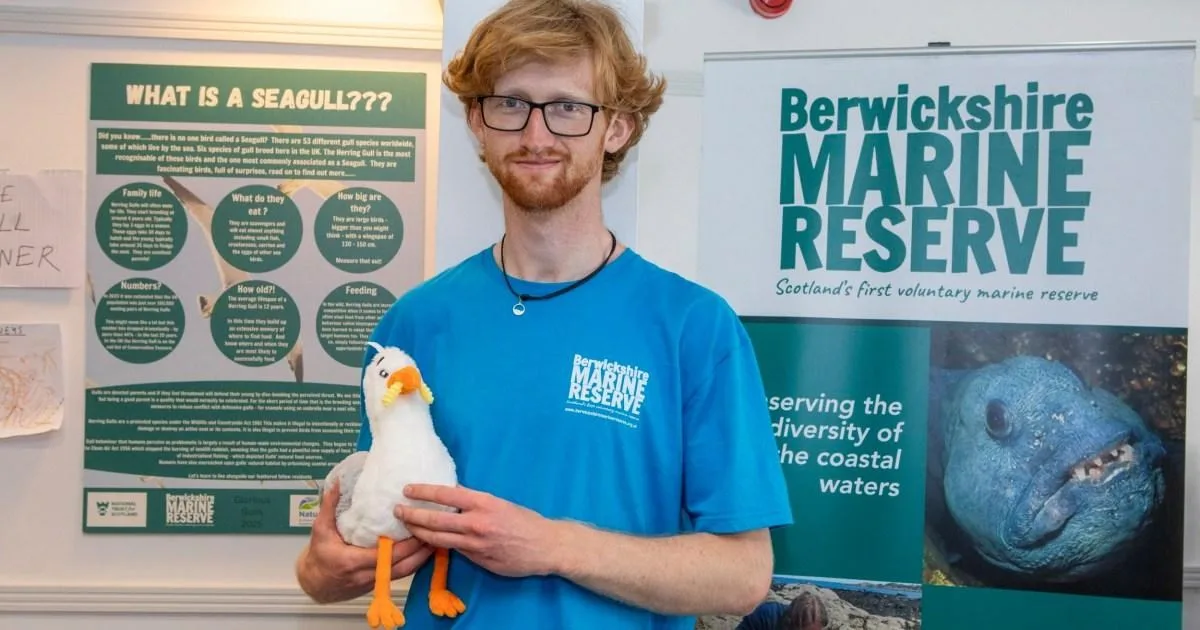
Patrick Safford, 24, has become Britain's first 'gull ranger', taking to the streets of Eyemouth in the Scottish Borders this June to improve relations between humans and seagulls. The role, created by the charity Berwickshire Marine Reserve, aims to 're-establish a balanced relationship between humans and gulls through education and engagement'.
A former ecological consultant and keen birdwatcher, Safford's responsibilities include educating the public on how to avoid gull attacks, tracking the seagull population, and discouraging feeding. He criticises common deterrents such as fake predators, netting, and spikes, arguing that gulls quickly adapt to them. 'Deterrents are often ineffective. Gulls adapt to them,' he said. 'You'll often see around Eyemouth a deterrent, with gull chicks nesting next to it anyway.'
Safford believes gulls have an unfairly negative reputation, stressing that only a minority cause trouble. 'I think only around 25% of gulls are bold enough to steal food,' he explained. 'The same with adults swooping to protect chicks... it seems to be a minority, and they're the ones that make the headlines. Then people who haven't lived with them think they're all like that.'
To minimise conflict, Safford advises locals to sit next to walls or awnings to break gulls' flight paths, avoid littering, and not overfill bins. For protection during nesting season, he urges giving chicks space as they mature in just six weeks. The position, funded by Flora and Fauna International, runs until August.