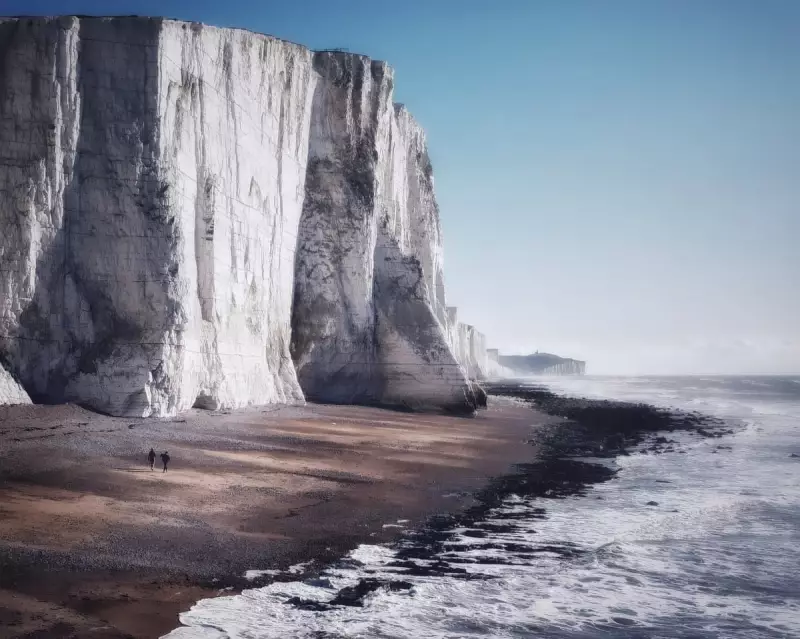
A rediscovered entry from the Guardian's Country Diary, penned on a crisp December day in 1975, offers a captivating snapshot of a Sussex landscape that has since been reshaped by time and tide. The author, J. E. J., ventured to Cuckmere Haven, the iconic river valley nestled beneath the towering chalk faces of the Seven Sisters.
A Winter's Walk Through a Silent Valley
The diarist describes a journey of profound stillness, broken only by the sound of their own footsteps on the frosted path. The air was windless and the scene one of hibernating quiet. Their walk took them from the village of Exceat, down into the flat, open expanse of the Cuckmere valley itself.
This was not a bustling spot but a secluded haven. The only visible human activity was a distant tractor spreading manure on a farm high on the western slope, a small reminder of the agricultural life surrounding this natural sanctuary. The river Cuckmere, a central character in the scene, meandered slowly through its water-meadows, its surface so still it perfectly mirrored the pale winter sky.

Wildlife and the Looming Presence of the Cliffs
Despite the deep quiet, the valley was far from lifeless. The observer's keen eye noted the local inhabitants. A heron stood sentinel in the shallows, while a pair of shelduck added a splash of colour. The real spectacle, however, was the avian activity on the iconic chalk cliffs themselves.
Hundreds of gulls, both herring and black-backed, wheeled and settled on the grassy ledges of the Seven Sisters. Their white forms stood out starkly against the dark green of the turf, creating a dynamic, living tapestry on the monumental cliffs. The diarist mused on the timelessness of this scene, one that would have been familiar to Romans, Saxons, and Normans who had also navigated this coast.
A Landscape Now Changed
The 1975 account freezes in time a specific moment in the ongoing life of this dynamic coastline. While the fundamental beauty of the Seven Sisters endures, the precise details captured that day—the state of the meanders, the management of the water-meadows, the quietude—belong to a different era. Coastal erosion, shifting shingle banks, and changes in land management have all played their part in subtly altering the haven J. E. J. described.
The diary serves as a powerful, ecological witness statement. It reminds contemporary readers of the slow but constant processes that shape our shores. The Cuckmere Valley remains a place of breathtaking beauty, but this historical glimpse underscores that its character is never static. It invites us to consider what has been preserved and what has been lost in the intervening half-century.
Ultimately, the entry is more than a simple nature note; it is a meditation on permanence and change. The white cliffs stand as a near-eternal backdrop, while the life at their feet—both human and wild—adapts and evolves. This lost haven under the white cliffs continues to captivate, its story layered with both natural history and poignant memory.