
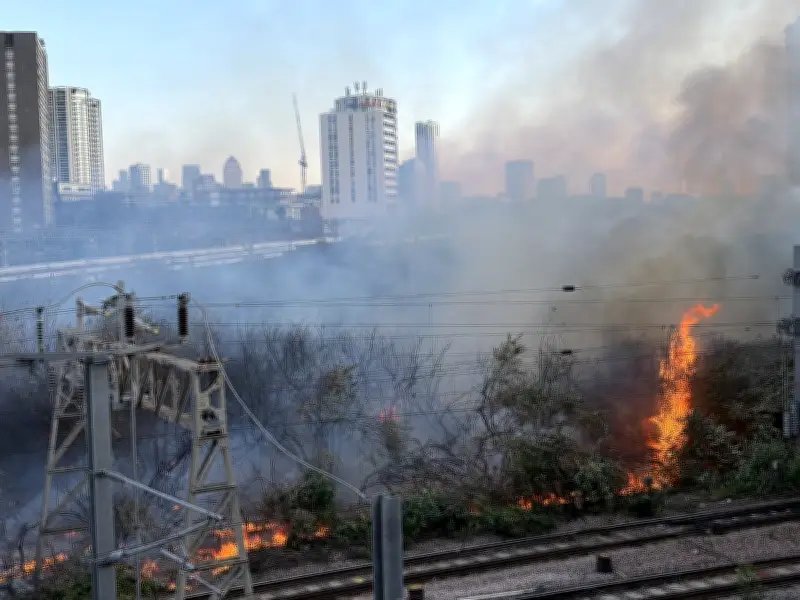
Sparks from trains could be behind some of the trackside fires that have caused major disruption during London's ongoing heatwave. Four fires along the railway have brought parts of the capital's transport network to a standstill over the past week, as London endures its third heatwave of the summer.
But Network Rail said sparks generated by braking trains can ignite dry vegetation along the railway, adding that Britain's rail network is becoming "increasingly exposed" to prolonged periods of hot and dry weather.
A spokesperson said: “The current prolonged spell of hot, dry weather has increased the risk of wildfires across the country. Most trackside fires involve line-side vegetation and can cause significant disruption, including damage to railway equipment, which can affect train services. Network Rail undertakes year-round vegetation management, regular inspections and targeted mitigation measures across the network to help minimise the likelihood of trackside fires and their impact on passengers and freight services.”
Stratford Station Evacuation
Stratford station was forced to close on Friday after a fire involving trees and shrubbery beside the tracks prompted the evacuation of around 1,400 passengers. Eight fire engines and around 60 firefighters were called to tackle the blaze which took four hours to bring under control. Footage online showed passengers running to safety, as clouds of smoke surrounded them and debris fell from the sky. The fire caused major disruption to c2c, Greater Anglia, London Overground and Elizabeth line services, as engineers carried out repair works.
Walthamstow Embankment Wildfire
Less than 48 hours later, a large embankment wildfire broke out in Walthamstow, with 125 firefighters called to tackle the blaze. Several homes backing onto the railway were affected, while the Weaver line on the London Overground remains partially suspended. At its height, the fire could be seen raging metres from railway lines as it spread to homes and around 30 gardens. Residents were advised to avoid the area around Vallentin Road entirely and keep their windows and doors closed, as crews from London Fire Brigade worked to tackle the blaze.
East Croydon Disruptions
Two further trackside fires disrupted Thameslink services at East Croydon on Monday and Tuesday. The first broke out next to the tracks at East Croydon Railway Station causing heavy delays and cancellations for commuters. The second broke out 24 hours later in the same area, blocking lines again and heavily disrupting Thameslink services. Fire chiefs continue to investigate the causes of the blazes, which were fuelled by the heatwave.
How Fires Start and Spread
When a train applies its brakes, metal brake shoes press firmly against the steel wheels. The friction can shear off tiny, molten metal particles. If these hot particles land on dry vegetation, they can ignite it, as the vegetation acts like tinder. Discarded cigarettes thrown from trains, barbecues and fires spreading from nearby grassland can also contribute to blazes along the railway, Network Rail has warned. Even the smallest line-side fires can have a major impact on services, with flames risking damage to signalling and telecommunications equipment and affecting power supplies.
Properties and gardens in Shernhall Street and Vallentin Road were badly damaged by the raging fire. The response from emergency services can take time, meaning delays for passengers can be lengthy and timetable disruption may last for several days.
Heatwave Conditions and Warnings
Daily temperatures over the last week have ranged between 29C and 35C, with the city officially hitting 11 consecutive days of heatwave conditions on Wednesday. With the capital facing up to a month without rain, fire chiefs are warning Londoners that it only takes a spark to start a fire. The London Fire Brigade has raised its wildfire risk level to “extreme” following a surge in emergency calls, prompting renewed warnings about the threat posed by hot and dry conditions. Residents have been urged to take precautions to help prevent grassland fires from spreading, including safely disposing of cigarettes, taking rubbish home, ensuring barbecues are not left unattended and creating firebreaks around gardens.




