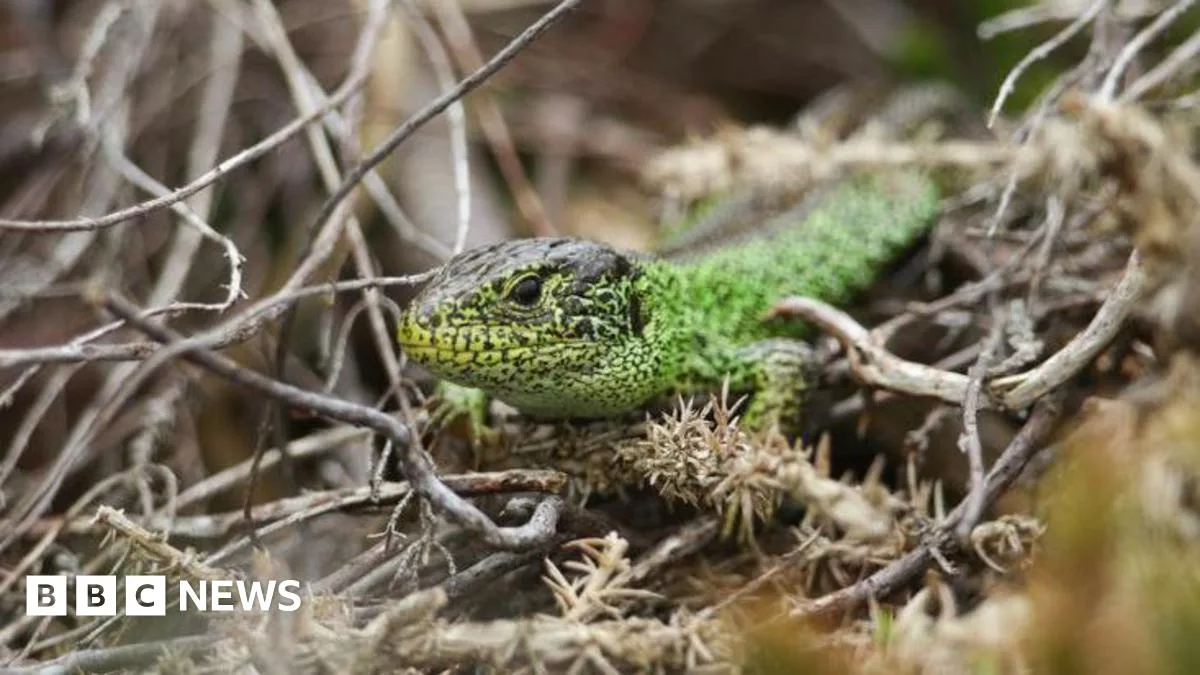
Sand lizards, deer and badgers have been spotted using a new heathland bridge over the A3 near Cobham, Surrey, which reconnects two protected wildlife sites for the first time in decades.
The £3.7m Cockrow Bridge, which opened over the bank holiday weekend, links Wisley Common and Ockham Common. National Highways confirmed that reptiles and mammals are already using the crossing.
Project manager Jonathan Wade said the 223ft (68m) structure is the UK's first heathland bridge. Turf from the commons was laid on the bridge in November and December, allowing it to settle over three to four months before wildlife began to appear.
In addition to providing a route for animals, the bridge includes a path for pedestrians, cyclists and horse riders, connecting areas such as Ripley and Painshill. It replaces a 1980s pedestrian bridge that did not link habitats after the A3 divided the commons in the 1970s.
Surplus sand from M25 widening work was used to build up land leading to the bridge, and cameras monitor its use. Three universities are studying the bridge's performance. The crossing is part of wider improvements at junction 10 of the M25, which are nearing completion.