
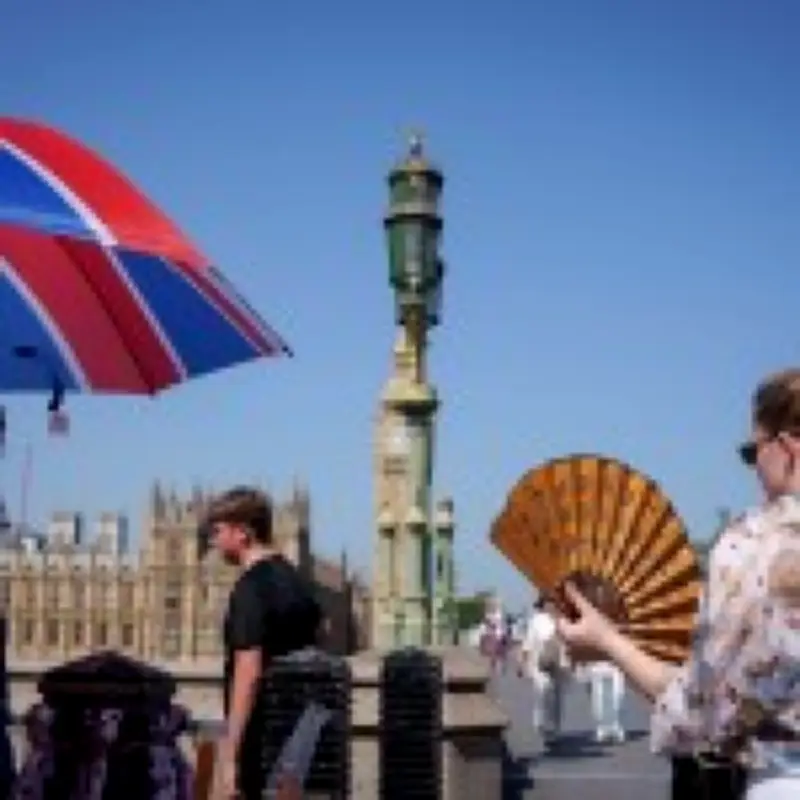
The UK is experiencing one of its longest heatwaves in nearly 50 years, with temperatures reaching 30.4°C at Heathrow on July 15, marking the 10th consecutive day above 30°C. Meteorologist Jim Dale of British Weather Services warns this third heatwave of the year may persist until July 26, potentially surpassing the duration of the infamous 1976 heatwave, which included 15 days above 32°C and peaked at 35.9°C.
Climate Change Driving Extreme Heat
Dale attributes the prolonged heat to climate change, stating, 'We live in extraordinarily self-inflicted and dangerous times, with much more to come.' He notes that while the current 30°C run may end this weekend, southern England will remain in official heatwave territory. Temperatures are expected to drop slightly over the weekend but will rise again next week, especially in southern counties.
The Met Office reports that Greater London is enduring one of its longest heatwaves in 23 years, with temperatures barely dropping below 28°C for 11 days. The last time London exceeded the heatwave threshold for this many consecutive days was in 2003, with 13 days. The record for the longest heatwave in Greater London remains 16 days in 1976, though the Met Office notes that heatwave criteria have since been updated.
Heatwave Definition and Thresholds
A heatwave is defined as three consecutive days above a specific temperature threshold, which varies by region. In London, the threshold is approximately 28°C, while in Cornwall it is 25°C. The Met Office has adjusted these thresholds over time to account for climate change, which is making heatwaves hotter, more frequent, and longer-lasting.
This year has already seen three hot spells—in May, June, and July—with temperatures rivaling or exceeding the 1976 peak. May recorded 34.8°C in Kew Gardens, while June saw 37.7°C in Lingwood, Norfolk. This year is the first to record six separate days above 35°C and a record nine days above 34°C.
Why This Year Is Hotter Than 1976
Dale emphasizes that climate change is the primary reason this year is hotter than 1976. 'That year was a thorn ahead of a bunch of burgeoning nettles, which are now stinging us and others regularly,' he says. The main driver of the current heat is a heat dome—a stubborn high-pressure system that traps hot air. When the jet stream slows, high pressure can become stuck, compressing and heating the air like a lid on a pot.
The past 11 years have been the hottest on record due to continued fossil fuel burning. Additionally, El Niño—a shift in Pacific Ocean winds and water temperatures—is exacerbating the heat. Aimee Mook, curator at the National Maritime Museum, explains, 'These warmer waters transfer heat to the atmosphere, increasing temperatures across the globe.' Scientists believe this year's 'super El Niño' could be one of the strongest on record, making the impacts of climate change more noticeable.
Impacts and Warnings
The heatwave has led to numerous fires and health concerns. The UK is struggling with sleep disruption, as temperatures remain high overnight. The Met Office advises staying hydrated and avoiding strenuous activities during peak heat. As the heatwave continues, experts urge preparedness for more extreme weather events linked to climate change.




