
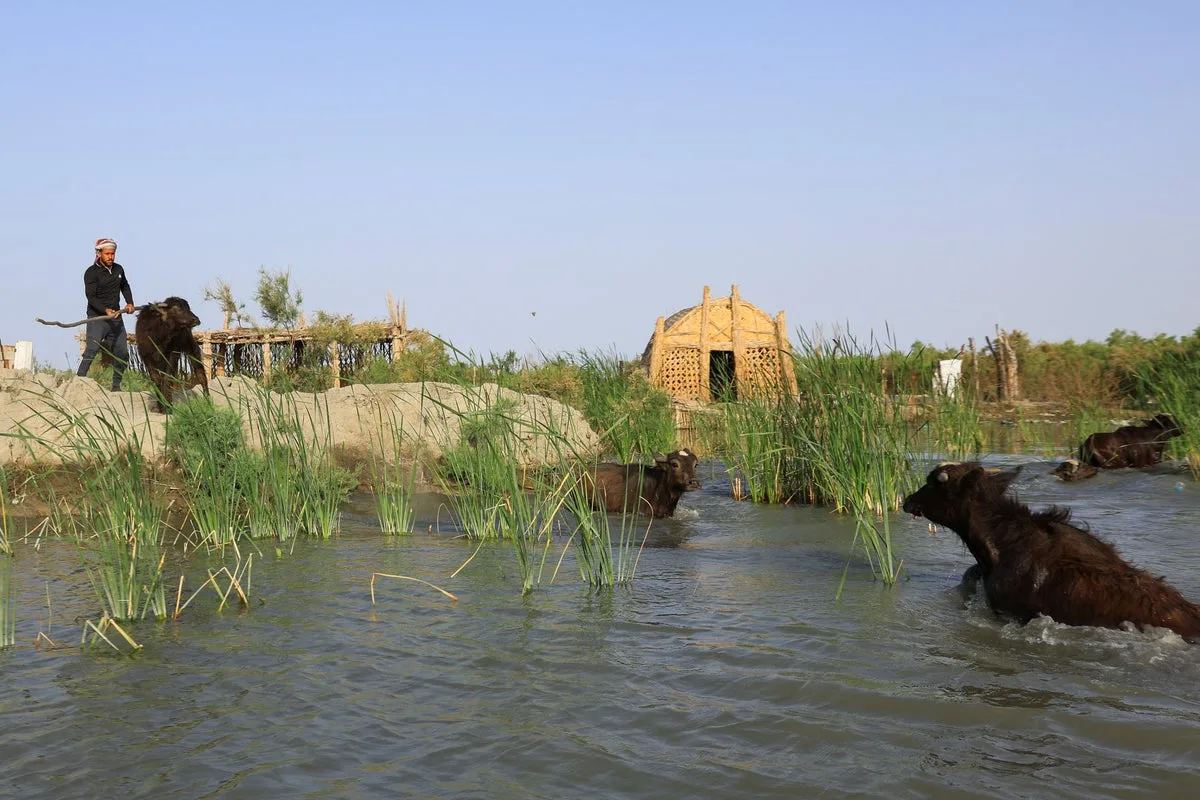
Iraq's historic marshes, once reduced to cracked earth by years of severe drought, are witnessing a remarkable revival as rising water levels draw buffalo herders and fishermen back to abandoned areas.
In the southern Chibayish marshes, canoes again glide through waterways that had recently dried up, while water buffalo wade through restored marshland and patches of green pasture have reappeared. Haidar Qassem, a farmer in the central marsh, recounted the devastation, saying that all their livestock had died and there was no water at all, forcing many people to migrate. He added that water had returned this year, livestock numbers were recovering, and some families had come back.
Jassim al-Assadi, an Iraqi marshland expert, said the Ishan Hallab area, part of the marshes and a UNESCO World Heritage site, had dried up completely between 2021 and 2025, forcing herders to abandon it. In recent months, wetter conditions have helped restore the area, reviving pastureland and allowing some residents to return. Al-Assadi noted that the proportion of submerged marshland had risen to between 32% and 36%, compared with no more than 8% over the past five years, a view confirmed by Iraqi water resources officials.
The higher water levels are also supporting a gradual recovery in biodiversity, including fish stocks, vegetation growth and reeds used by residents to build traditional homes. Mazin Wadai, a water resources official, said larger inflows, improved water management and stronger seasonal rainfall had boosted reserves in dams and increased flows in the Tigris and Euphrates, allowing more water to reach the marshes. The water resources ministry said Iraq's strategic reserves have increased by about 6 billion cubic metres this year, giving authorities greater flexibility to manage supplies during the summer months.
The marshes, once stretching across more than 3,600 square miles, were heavily drained in the 1990s by Saddam Hussein, who accused the Marsh Arabs of treachery. Many residents fled, but since Saddam's overthrow in 2003 parts of the wetlands have been reflooded by the government, with around 250,000 Marsh Arabs gradually returning. For residents like buffalo herder Raheem Abdul Zahra, the recent improvements have transformed daily life.




