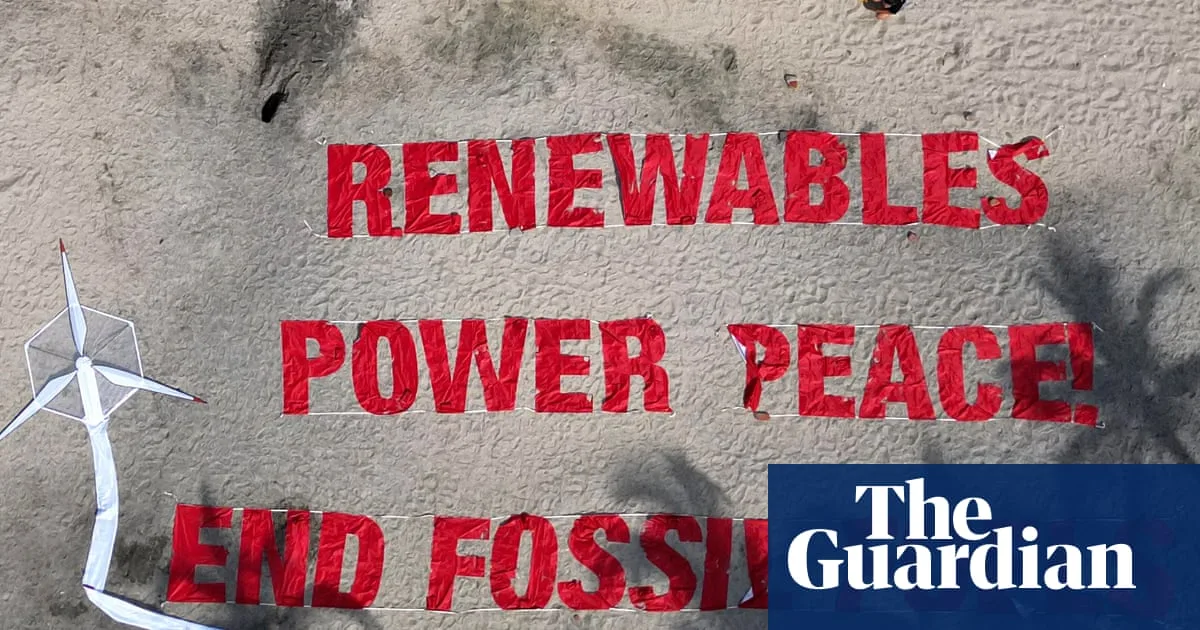
A landmark climate meeting in Santa Marta, Colombia, brought together nearly 60 countries to discuss ending the production and use of planet-heating fossil fuels. The conference, the first of its kind, focused on concrete solutions rather than endless debates. Here are the ten biggest lessons learned from the event.
1. Liberation lifts the spirits
The single most important outcome of the first Transitioning Away from Fossil Fuels conference has been a change in mood. Unlike the often frustrating UN climate summits, delegates in Santa Marta felt liberated. Tzeporah Berman, founder of the fossil fuel non-proliferation treaty initiative, described the atmosphere as euphoric. After years of debating whether to phase out fossil fuels, the focus shifted to how to achieve it. The hope was contagious, with experience and knowledge flowing into concrete plans.
2. Science has to come first
Santa Marta was a shining example of science-led decision making, with hundreds of experts informing the launch of three major energy transition initiatives. This reminded participants of earlier climate negotiations that began with the latest science. However, oil-producing countries like Saudi Arabia have previously vetoed or watered down UN science warnings, promoting controversial solutions such as offsets and carbon capture. At Santa Marta, these were called false solutions, and the focus remained on eliminating fossil fuels.
3. Producers must be in the spotlight
Climate activists have long argued that the COP process focused too much on demand, placing responsibility on consumers while fossil fuel companies expanded production. Santa Marta shifted the balance back to the supply side, noting that most emissions come from drilling, processing, and transporting fossil fuels. Rather than condemning petrostates, the conference treated this as an unhealthy dependency and explored ways to break the addiction.
4. Global south debt must be tackled
One of the clearest messages was the urgent need to address the debt crisis. Many global south countries cannot invest in renewables because they spend a large portion of foreign exchange earnings on high-interest repayments and fossil fuel imports. Banks provide low-interest loans to fossil fuel industries without accounting for climate risks. Participants called for changes to the global financial architecture and redirecting subsidies from petroleum to renewables and debt reduction.
5. Not everyone agrees on everything
While there were few open disagreements, differences exist on how to achieve a fossil-fuel-free society. One proposal is a fossil fuel non-proliferation treaty, but some countries argue existing agreements suffice. There are also many existing pacts, reflecting the complexity of the transition and the desire of some nations to stamp their identity on projects. The danger is that nations could splinter into smaller groups instead of working harmoniously.
6. Roadmaps need a destination and a deadline
The word roadmap came up repeatedly, meaning a clear plan for transitioning away from fossil fuels. Every country needs its own roadmap with two key requirements: a destination of full phase-out and a timetable, as time is running out with global temperatures breaking records.
7. Governments must be free to govern
Investor-state dispute settlement (ISDS) is a legal mechanism in many trade agreements that allows companies to sue governments for policies affecting profits. Fossil fuel companies have used it to sue governments reducing dependency on coal, oil, or gas, demanding billions in compensation. Climate activists and many developing countries want an end to ISDS, calling it a serious obstacle to a cleaner world.
8. Critical minerals will be critical
Transitioning to renewables requires billions of wind turbines, solar panels, electric vehicles, and batteries, all needing critical minerals like copper, cobalt, nickel, and rarer materials. Mining for these has caused human rights abuses and environmental damage. Activists raised concerns about workers and Indigenous people, calling for proper regulations and a fair transition for local communities.
9. Indigenous rights must be respected
Indigenous peoples protect most of the world's remaining carbon sinks and biodiversity but have struggled for a seat at UN climate negotiations. At Santa Marta, for the first time, Indigenous representatives drew up proposals in an autonomous space and participated in high-level segments. Leaders told ministers to heed Indigenous knowledge and protect Indigenous rights. Oswaldo Muca Castizo of the Organization of Indigenous Peoples of the Colombian Amazon stated that where their rights are respected, nature is protected.
10. Tuvalu is the next step
Translating the feel-good vibe of Santa Marta into concrete proposals will be the task of the next conference, expected in Tuvalu, co-hosted by Ireland, in early 2027.






