Volcanic Ash: From Hazard to Harvest Booster in Sicily
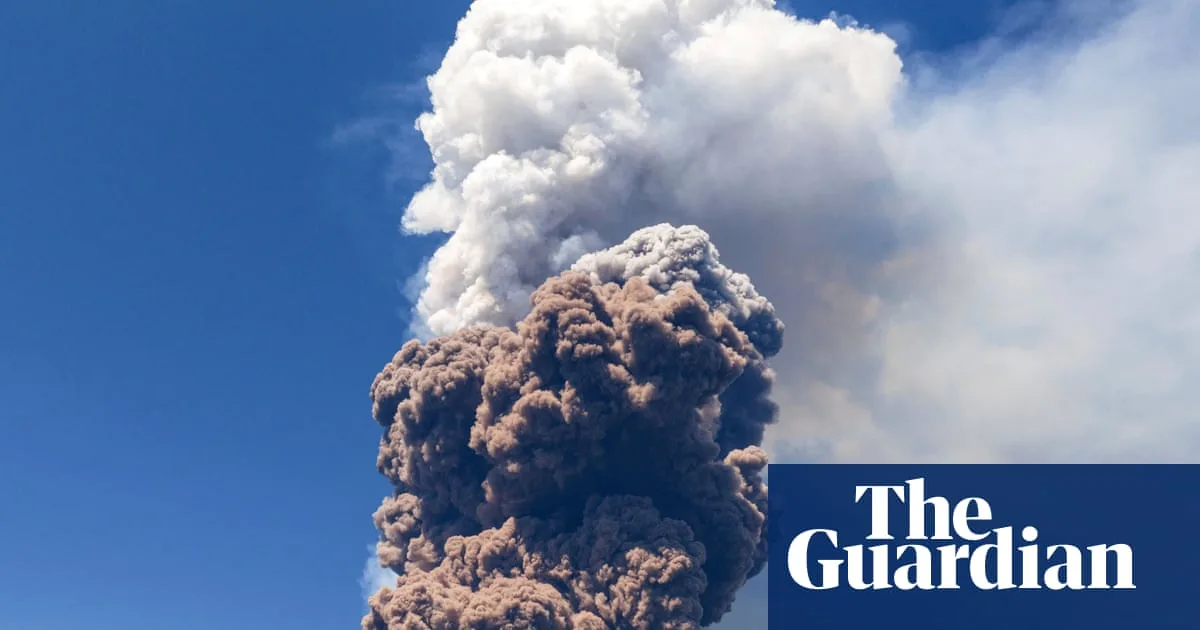
Smoke billows from the crater of Mount Etna, near Catania, a sight familiar to locals. For generations, falling volcanic ash has been viewed as a mere nuisance, but a groundbreaking Sicilian initiative is now uncovering its agricultural potential, aiming to spread this knowledge widely.
In the Sicilian town of Giarre, overlooking Mount Etna, Andrea Passanisi, a producer of tropical and citrus fruits, employs an unconventional fertiliser on his 100-hectare land: volcano ash. Like many farmers and residents in rural towns on the slopes of Europe's highest and most active volcano, Passanisi's family has long contended with the inconvenience of ashfall. However, in recent years, the volume of ash has surged, necessitating a new approach.
Ashfall Quantities and Urban Challenges
With each eruption, towns such as Giarre experience an average of 12,000 tonnes of ashfall daily, which winds can carry up to 800km. In July 2024, Catania, Sicily's second-largest city at the foot of Mount Etna, recorded 17,000 tonnes of ash daily, requiring nearly 10 weeks for collection. Historically, farmers believed ash endangered crops, polluted irrigation water, and demanded special equipment and work stoppages for cleanup.
A five-year project by the University of Catania has shifted this perspective, highlighting ash as a valuable resource in various sectors, including agriculture. "It allows us to use fewer chemicals, making fertilising cheaper and more sustainable, while respecting nature's balance," says Passanisi. "This is the future of agriculture."
Scientific Insights and Agricultural Applications
Paolo Roccaro, an environmental engineering professor and lead researcher on this interdisciplinary effort, explains: "After 2011, explosive phenomena with heavy ash release intensified, creating a need for systemic management solutions." The study analysed Etna's ash chemical properties, proposing uses in road construction, wall insulation, water purification, and even ink for 3D printers.
Informally, farmers are already benefiting. Emilio Sciacca, a vineyard owner in Linguaglossa, 38km from the volcano, notes: "Etna's ash adds value to volcanic soils, a gift from the sky." He leaves ashfall on his land, finding it improves soil drainage and provides fertilisation through its iron, aluminium, and silica content. "We must embrace our volcanic context and let it strengthen us," he adds.
Regulatory Hurdles and Economic Implications
Despite these successes, barriers exist to commercialising ash reuse. European environmental legislation classifies volcanic ash as municipal waste, requiring it to be managed with specific codes, such as EWC 20 03 03 for street-cleaning residues. This classification deems it unsorted waste, preventing recovery or recycling.
Roccaro points out: "Disposal costs €300 per tonne, but recycling could reduce this to €30." In 2021, many Sicilian towns faced bankruptcy due to cleaning expenses. The project led to 2024 regional guidelines for ash reuse, yet no companies are registered for collection and refinement. "Our goal is to promote this alternative approach for future systemic adoption," Roccaro states.
Icelandic Parallels and Creative Reuses
Across Europe, Icelandic farmers have discovered similar benefits. After the 2010 Eyjafjallajökull eruption, which caused global disruptions, farmers protected livestock from fluoride poisoning. Wheat farmer Thórarinn Ólafsson observed that ash improved crop quality over time. "Untouched fields resembled first-year crops, linked directly to volcanic ash," he says, now using it as a natural fertiliser.
Others find creative applications. Icelandic ceramist Guðbjörg Káradóttir incorporates ash into her porcelain works. "This upcycling effort celebrates our cultural heritage, transforming ash into art instead of letting it blow away," she explains.
Grassroots Efforts and Future Prospects
In Sicily, as commercial reuse awaits formalisation, individuals like Nilla Zaira D'Urso, a 42-year-old art curator, are taking initiative. Inspired by a Japanese artist in 2013, she turns ash into souvenirs. "We should view scrap materials as opportunities, not burdens," D'Urso remarks. "Coexistence with ash can turn it into an ally."
This story underscores a growing movement to repurpose volcanic ash, offering sustainable solutions for agriculture and beyond, despite regulatory challenges.