
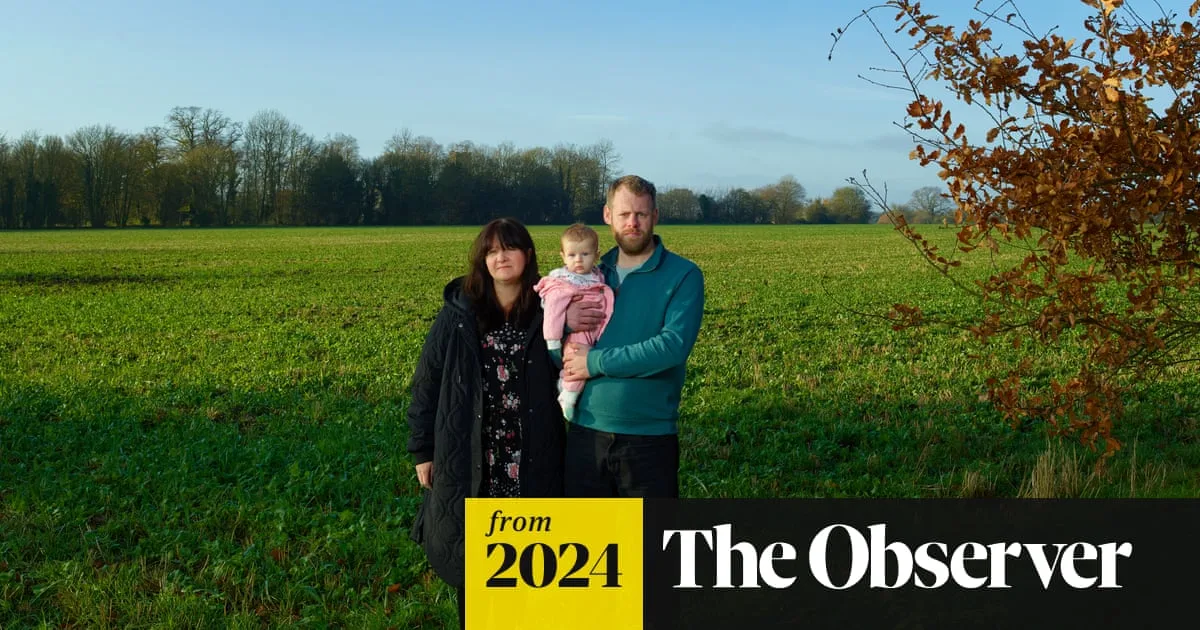
A family living in a rural Norfolk cottage say their idyllic views are under threat from a huge solar farm planned on three sides of their home. Chris and Jenna Humphrey moved from an urban house to the countryside two years ago, seeking a rural upbringing for their children. 'We fell in love with the house because every window has such a lovely view,' said Chris, a software developer. The couple have solar panels on their garage roof and support renewable energy, but they oppose the scale of the proposed development.
The East Pye Solar scheme is a 500MW project covering 2,700 acres across a nine-mile stretch of south Norfolk. It qualifies as a nationally significant infrastructure project (NSIP), meaning it bypasses local planning authorities and will be decided by national inspectors and the energy secretary. Locals say the process sidelines community opinion and threatens the character of the area, which features small fields, ancient hedges, and historic yeoman farmhouses.
Annetta Berry, an art historian who moved from Hackney to a Tudor farmhouse near an ancient wood, said she initially dismissed a leaflet about the plans. 'If you peeled it open, it showed a map of our bit of Norfolk with this massive solar farm on it,' she said. Berry is concerned about potential contamination of her well water from ground disturbance during panel installation.
Opponents argue that the government's 2030 target for decarbonising electricity supply is overriding local concerns. There are few regulations governing solar farms; they can be built on the best farmland with no minimum distance from homes. 'It seems criminal that hundreds of new houses are being built down the road and none have solar panels, when they would benefit households,' said Chris. 'These solar farms seem like corporate thinking to generate profits.'
Solar energy currently provides 4.89% of Britain's electricity, compared with 12.05% in Germany. Labour's ambition to decarbonise the grid by 2030 has led to a surge in large-scale solar projects, with dozens of 500MW schemes under development. Industry analysts note that Chinese-made panels now cost just 10 US cents per watt, making solar the cheapest and easiest renewable to build.




