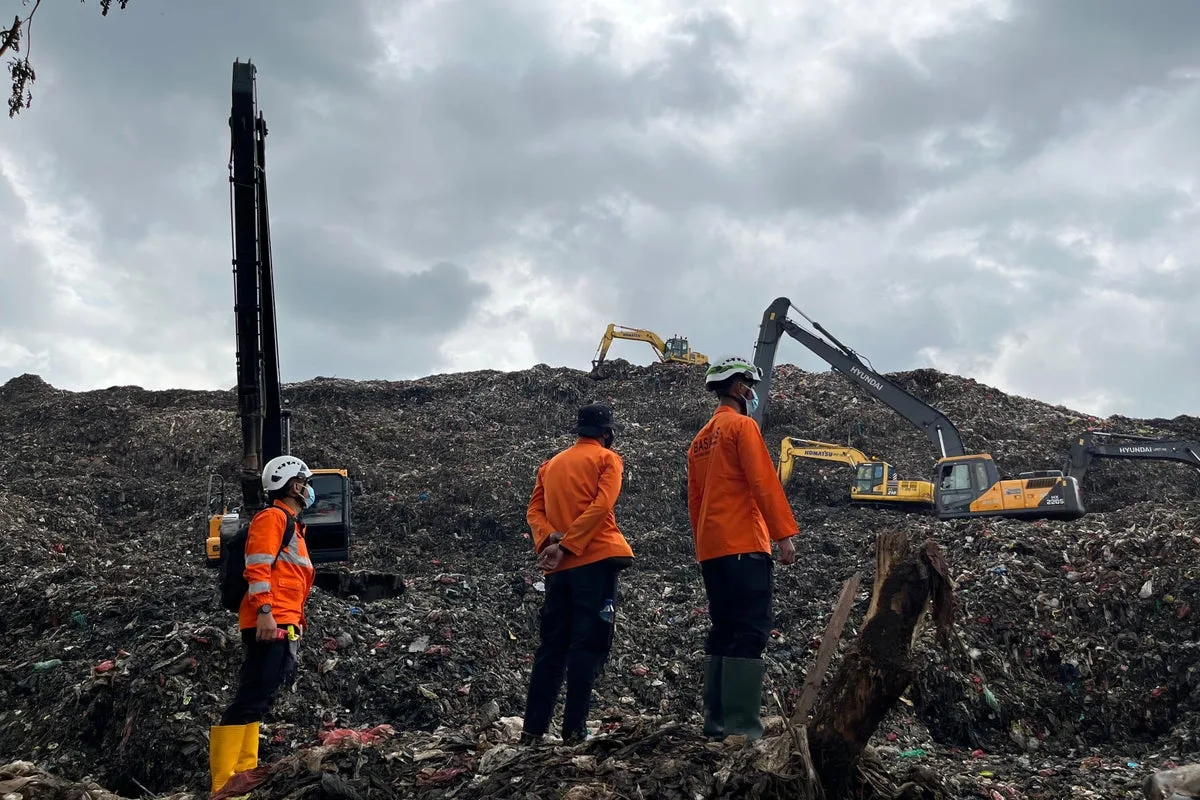
At least five people have been killed and several others are missing after a massive garbage avalanche at Indonesia's largest landfill, officials said Monday. The collapse occurred late Sunday at the Bantargebang Integrated Waste Treatment Facility in Bekasi, a city on the outskirts of Jakarta, following heavy overnight rain.
More than 300 search-and-rescue personnel, including police, soldiers and volunteers, were deployed to the site, using heavy machinery and sniffer dogs. Rescuers worked cautiously amid unstable heaps of waste, said Desiana Kartika Bahari, head of Jakarta's Search and Rescue Office. Victims included two garbage truck drivers and two food stall sellers, while four people managed to escape. At least three people remain missing.
“We had not ruled out the possibility of more victims,” Bahari said, adding that authorities were still gathering data to confirm how many vehicles and workers were buried. Photos and videos released by the National Search and Rescue Agency showed excavators digging through the collapsed mound, where several garbage trucks and small food stalls were buried.

Abdul Muhari, spokesperson for the National Disaster Management Agency, urged strict safety protocols during the ongoing search, noting that weather forecasts for the next two days indicate potential rain across Jakarta and its satellite cities. He warned that the unstable collapsed material could trigger additional ground movement, putting rescue teams at further risk.
Sunday's collapse renewed scrutiny of Bantargebang, a critical but overwhelmed landfill that receives most of Greater Jakarta's daily household waste. The site has faced repeated warnings about capacity, prompting national efforts to overhaul Indonesia's waste management system. In January, a similar collapse in the Philippines killed at least four people, and in 2005, 31 people died in a rubbish dump collapse in West Java.
Late last year, the government announced a two-year deadline to clear Bantargebang through an accelerated waste-to-energy project aimed at reducing reliance on open dumping. The initiative, backed by a new presidential regulation, calls for converting refuse into electrical or thermal energy.