Massachusetts Sewage Crisis: Grassroots Fight Against Waterway Pollution
Massachusetts Sewage Crisis: Grassroots Fight Water Pollution

Massachusetts Faces Growing Sewage Crisis in Waterways

Environmental organizations across Massachusetts are intensifying their campaign to compel water authorities to eliminate sewage discharges into local waterways. Their demand centers on implementing a fully modernized sewer system with separate pipelines for waste and stormwater runoff. This push comes as the Massachusetts Water Resources Authority (MWRA) recently approved a more conservative upgrade strategy for existing sewer infrastructure in several Boston-area communities, citing prohibitive costs.

A Personal Encounter with Contaminated Waters

Ann McDonald's experience highlights the urgent public health concerns. Several weeks after a 2024 rainstorm, McDonald went kayaking in Alewife Brook, just outside Boston. Despite public health advisories recommending a 48-hour wait after rainfall for bacterial levels to diminish, she assumed the water was safe. When her kayak became entangled in debris, she didn't hesitate to immerse her arms to free it.

"I got stuck in some really stinky water," McDonald recounted. "I'm naive, and I thought I was above all this." Later that same day, she fell violently ill with diarrhea, which she directly attributes to exposure to sewage in the brook. Her case underscores why activists are demanding comprehensive infrastructure changes.

Wide Pickt banner — collaborative shopping lists app for Telegram, phone mockup with grocery list

The Problem of Combined Sewer Systems

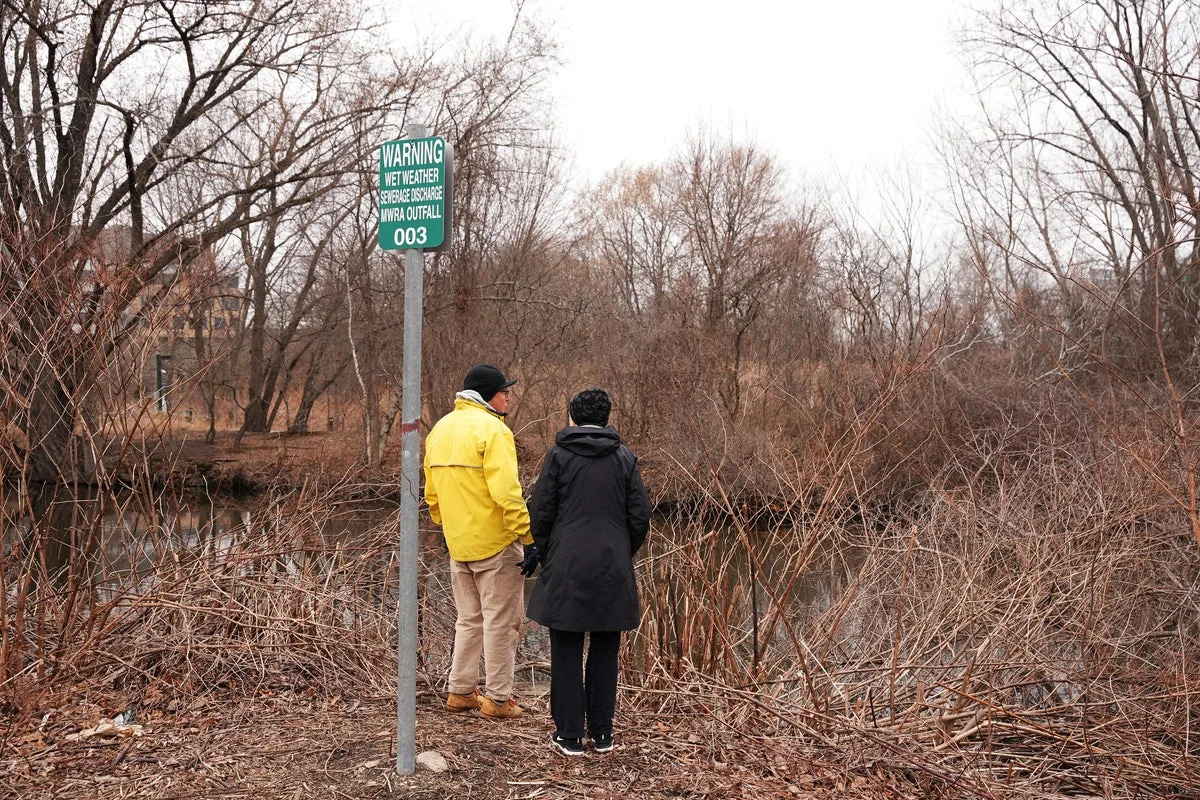
The Alewife Brook, flowing through Cambridge, Arlington, and Somerville, is a popular recreational spot. However, it annually receives millions of gallons of untreated sewage due to an outdated combined sewer system. In such systems, storm runoff and sewage share the same pipes. During heavy rainfall, when the system's capacity is exceeded, untreated sewage is intentionally discharged into nearby water bodies—a process known as a combined sewer overflow (CSO).

In contrast, separate sewer systems use distinct pipelines: one for wastewater directed to treatment plants and another for rainwater channeled directly to waterways. While many U.S. communities have adopted this modern approach, parts of the Boston area still rely on combined systems. Local advocates are campaigning for full sewer separation to completely eliminate sewage releases.

MWRA's Controversial Plan and Community Backlash

In February, the MWRA board voted for a plan involving storage tanks, partial sewer separation, and infrastructure upgrades to reduce discharges from 16 outfall pipes. The authority, established in 1984 to manage water services in eastern and central Massachusetts, based its proposal on precipitation projections for 2050. It opted to aim for eliminating CSOs during a typical rainfall year, but not during more intense storms.

"This plan represents a responsible investment of ratepayer dollars that balances real environmental benefits with actual water quality improvements," the agency stated. The total cost is estimated at $1.28 billion, to be shared by the MWRA, Cambridge, and Somerville, with expenses ultimately passed to consumers.

David Stoff, a steering committee member for the volunteer group Save the Alewife Brook, lives adjacent to the waterway. He has repeatedly had to prevent his children from playing in their yard due to sewage flooding. He expressed profound disappointment with the MWRA's approach.

"The plan is to keep the waters as open sewers instead of saying, 'We're going to rebuild the combined sewer so that sewage goes to the wastewater treatment plant and rainwater goes to the river,'" Stoff argued. "It's not rocket science."

The board rejected full separation, citing higher costs and potential disruptions from road and parking lot excavations. They estimated that eliminating CSOs during intense storms would cost households an additional $82 annually by 2050.

Grassroots Mobilization and Legal Challenges

Emily Norton, executive director of the Charles River Watershed Association, condemned the vote as "abominable and embarrassing." She emphasized that Boston residents routinely endure construction disruptions for essential infrastructure improvements.

Save the Alewife Brook, founded in 2020 by Arlington resident Kristin Anderson after her home was repeatedly flooded with raw sewage, lobbies for full separation. Another group, the Mystic River Watershed Association, organizes volunteers to collect water samples for testing.

Pickt after-article banner — collaborative shopping lists app with family illustration

Despite an 88% reduction in CSOs since the late 1980s, there were 23 discharges into Alewife Brook alone in 2025. The MWRA is also a defendant in two longstanding court cases regarding sewage pollution in Boston Harbor, the Charles River, and Alewife Brook, requiring biannual compliance reports to federal courts.

Expert Warnings and National Context

Gregory Pierce, director of the Water Resources Group at UCLA, warned that the current plan may quickly become inadequate. He advocates planning for more extreme storms, noting that climate projections often underestimate future weather intensity.

"Any projection now of extreme weather events tends to be underestimated, so from how we keep breaking weather extreme records, it makes sense to build out the more expensive and comprehensive solution," Pierce advised.

Similar debates are occurring nationwide as cities transition from combined systems. For instance, Portland, Oregon, completed a 20-year, $1.4 billion project in the 1990s, constructing massive underground tunnels that reduced annual CSOs from over 50 to fewer than 10.

A Call to Action

Ann McDonald, now active with Save the Alewife Brook, remains hopeful despite the challenges. The group is raising awareness through newsletters, tours of outflow pipes, and cleanup events.

"People see this as their living room. You got sewage in my living room? Get it out of here," McDonald asserted. "Don't tell us any more excuses. Just fix the problem."

The MWRA will submit an updated plan to state and federal regulators by the end of April, followed by a five-month public comment period. A final decision is expected in January 2027, setting the stage for continued advocacy and potential conflict over Massachusetts's water quality future.