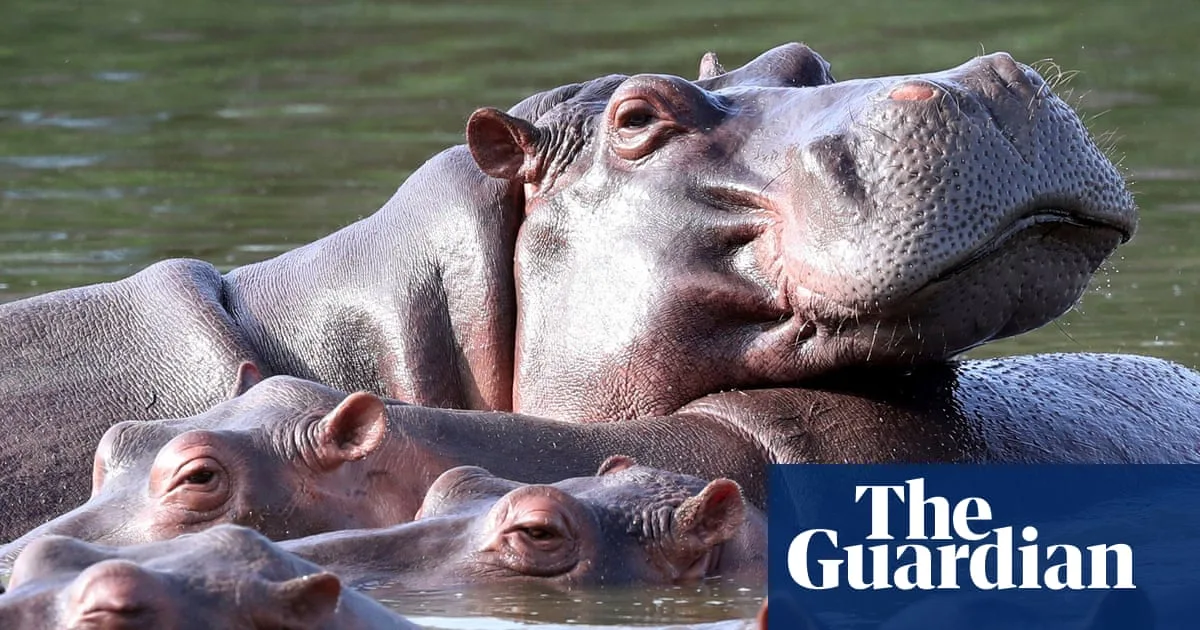
Anant Ambani, the son of Indian billionaire Mukesh Ambani, has offered to provide a new home for 80 hippos descended from those introduced to Colombia by the late drug kingpin Pablo Escobar, rather than see them killed. The proposal comes after Colombian authorities announced plans to cull the animals, which have become an invasive species and caused significant ecological damage along the Magdalena River.
Ambani's Proposal to Colombian Government
Ambani, whose family controls the multinational conglomerate Reliance Industries, said he has formally requested that the Colombian government reconsider its decision to kill the hippos. Instead, he has asked for permission to carry out a "safe, scientifically-led translocation" that would bring the animals to a permanent home at his Vantara animal centre in Gujarat, western India. Vantara describes itself as "one of the world's largest wildlife rescue, care and conservation centres" and is already home to hundreds of elephants, 50 bears, 160 tigers, 200 lions, 250 leopards, and 900 crocodiles, among other species, according to India's Central Zoo Authority. However, experts have repeatedly raised concerns about Vantara's massive intake of animals, including critically endangered and rare species.
Background of Escobar's Hippos
Pablo Escobar imported hippos—native only to Africa and capable of weighing several tonnes—to Colombia in the 1980s for his private zoo at Hacienda Nápoles. After Escobar's death in 1993, the hippos escaped and established a feral population in the lush riverbanks of the Magdalena River. They have since multiplied rapidly, with estimates now placing the population at around 170 individuals. The hippos have attacked fishermen and caused environmental damage, prompting the Colombian government to take action. Earlier this month, Environment Minister Irene Vélez announced that up to 80 hippos would be culled, as other population control methods—including sterilization and relocation to zoos—have proven expensive and largely unsuccessful. "If we don't do this we will not be able to control the population," Vélez said. "We have to take this action to preserve our ecosystems."
Details of the Relocation Plan
Ambani's proposal includes a veterinary-led capture and transport operation, as well as the creation of a "purpose-designed naturalistic setting" for the hippos at Vantara. The centre is located alongside the Reliance Jamnagar Refinery Complex, which is described as the world's largest crude oil refinery. Summers in the region can be extremely hot, with temperatures exceeding 40°C. In a statement, Ambani said: "Vantara has the expertise, infrastructure and resolve to support this effort, entirely on Colombia's terms." He added: "These 80 hippos did not choose where they were born, nor did they create the circumstances they now face. They are living, sentient beings, and if we have the ability to save them through a safe and humane solution, we have a responsibility to try."
Reactions and Challenges
Animal welfare activists in Colombia have long opposed the culling of hippos, arguing that they deserve to live and that killing them sets a poor example for a country recovering from decades of internal conflict. The hippos have also become a tourist attraction, with local communities offering hippo-spotting tours and selling themed souvenirs. However, relocating the animals is not straightforward. Due to their limited gene pool and potential diseases, returning them to Africa is considered unfeasible. Colombia has attempted sterilization over the past 12 years, but the high costs and dangers of capturing and operating on the animals have limited the program's scope. The Colombian government has not yet responded to Ambani's proposal.