The Ghost Town of Centralia: A Subterranean Inferno That Defies Extinction
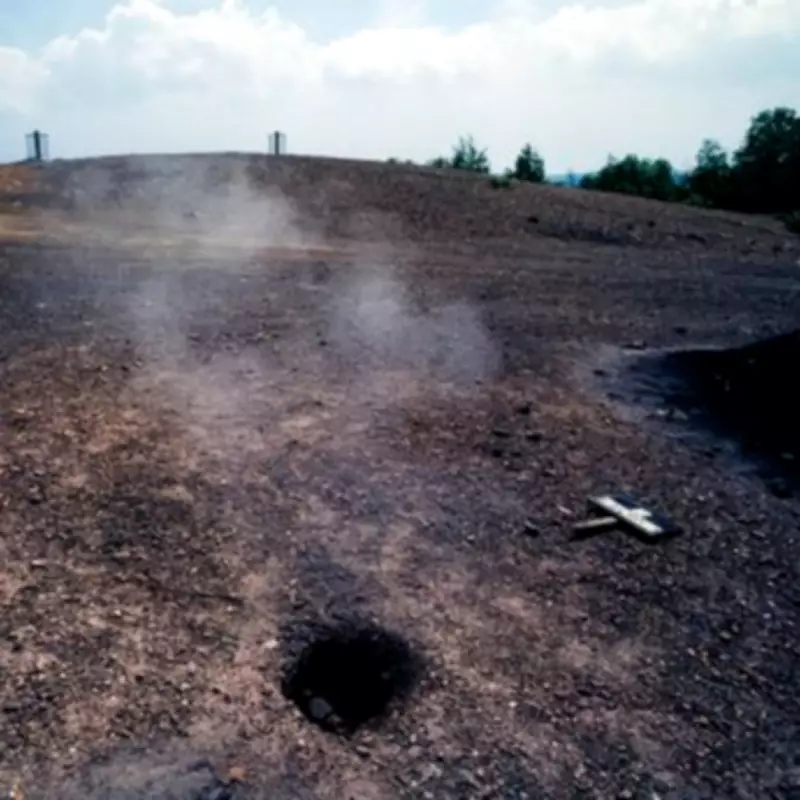
Nestled in Pennsylvania, Centralia presents an eerie and unsettling spectacle where wilderness steadily encroaches upon the remnants of human habitation. Were it not for the wisps of steam billowing like spectral mist from fissures in the ground, motorists might pass through this former settlement unaware of its tragic history and the relentless blaze burning beneath their feet.
A Thriving Community Reduced to Ashes
Centralia was once a prosperous mining town, its coal seams first tapped in 1856, providing livelihoods for generations of local families. At its peak in 1890, the population soared to 2,761 residents, supported by a vibrant array of churches, hotels, theatres, a bank, and a post office. However, the town's fortunes began to wane during the 1960s as mining operations dwindled, setting the stage for a catastrophe that would render Centralia virtually uninhabitable.
The Origins of an Unquenchable Fire
The precise trigger of the subterranean inferno remains shrouded in mystery, though several theories persist. One account suggests that in 1962, local authorities commissioned volunteer firefighters to eliminate rubbish from a municipal landfill situated in a disused strip mine. After igniting the refuse, the flames failed to extinguish, seeping through an unprotected opening into the labyrinth of antiquated coal tunnels beneath the settlement.

An alternative hypothesis proposes that a waste collector deposited smouldering coals into an exposed rubbish pit adjacent to the mine, inadvertently sparking the blaze. Regardless of its origins, the fire established a foothold deep underground and began to spread inexorably, defying all attempts at containment.
Escalating Dangers and Community Division
For years, residents dismissed the fire as a manageable nuisance, despite the pervasive reek of sulphur and smoke poisoning the air. By the late 1960s, toxic fumes forced some inhabitants to abandon their homes. The situation reached a critical juncture in 1979 when Mayor John Coddington, who operated a petrol station, discovered that fuel in his underground storage tanks had heated to a perilous 77.8°C.
A harrowing incident in 1981 underscored the grave risks when 12-year-old Todd Domboski narrowly escaped death after a sinkhole tore open his back garden, plunging him into a 150-foot chasm that released lethal concentrations of carbon monoxide. Despite these clear warnings, the community remained divided over the town's habitability.
Mass Exodus and Defiant Holdouts
By 1983, authorities had allocated over $42 million for relocation initiatives, prompting nearly all residents to accept compensation and depart. More than 1,000 people relocated, and 500 structures were razed. Census data reveals that by 1990, only 63 inhabitants remained, a number that dwindled to a mere handful by 2010, when the entire town was officially condemned.
The few remaining residents, however, refused to surrender their homes. They contested court orders mandating their departure, displaying unwavering defiance in the face of the underground menace. Eventually, in 2013, a settlement was reached permitting the last seven residents to remain in Centralia until their deaths, after which their properties would be seized by the state.
A Blaze That Could Burn for Centuries
Today, the fire has ravaged an area spanning over 13 kilometres, and if it continues at its current pace, experts predict it could persist for another 250 years or more. Centralia now stands largely deserted, with nature reclaiming the streets that once teemed with life. The only remnants of the former town are an old church and a highway winding through the verdant landscape, punctuated by warning signs alerting visitors to toxic gases, unstable terrain, and the ever-present fire.
The sole vestige of Centralia's bustling past is the steam that billows from the earth's cracks when rainwater seeps into the ground, meeting the ever-waiting flames below—a poignant reminder of a community consumed by an inferno that time cannot extinguish.